What happened
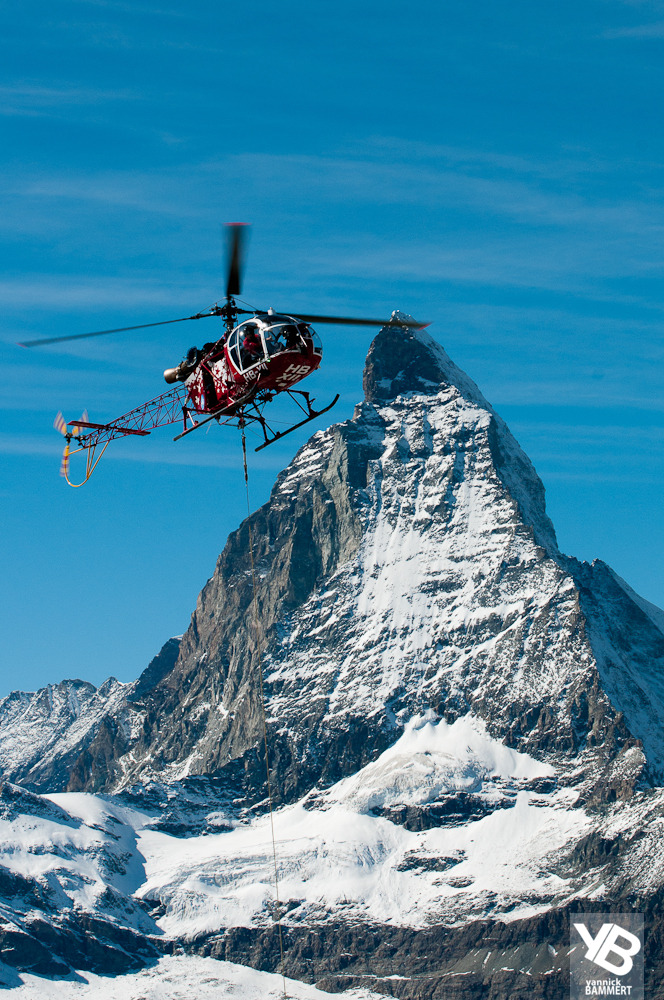
On April 8, 1981, an Air Zermatt AG helicopter, registration HB-XII, was engaged in a commercial ski transport operation. The pilot had previously flown a group of twelve skiers from Mörel to the Ebnefluh mountain landing site. After dropping off four passengers on his first leg, he returned solo toward Mörel under good weather conditions.
During the cruise phase, the helicopter experienced a sudden forward pitch followed by severe vibrations. The pilot partially lost control but managed to execute maneuvers to avoid colliding with the Grossen Fusshorn's southwest flank. He successfully executed a forced landing on the lower section of the Oberaletsch glacier.
The investigation
The Swiss Transportation Safety Investigation Board (SUST) examined the aircraft, which had accumulated 1426 operating hours and was airworthy at the time. The pilot held valid commercial helicopter ratings with extensive experience. The investigation focused on the mechanical failure that caused the loss of control.
Inspection of the wreckage revealed that the right horizontal stabilizer had detached and struck the tail rotor, destroying it. The root cause was identified as a fatigue fracture of the stabilizer spar near the right mounting bracket. Laboratory analysis confirmed that the fracture originated from pre-existing cracks at an unwelded gap in the weld seam connecting the bushing to the spar tube.
Findings
The primary causal factor was fatigue failure of the stabilizer spar. The investigation determined that the incomplete bonding at the weld seam created a stress concentration point. Although the manufacturer had issued Service Bulletin 0515 in May 1980 requiring dye penetrant inspections every 100 flight hours, the inspection performed by Air Zermatt on March 30, 1981, failed to detect the cracks.
Contributing factors included:
- Inspection limitations: Protective paint residue likely sealed the crack openings, reducing the sensitivity of the dye penetrant test used during the previous maintenance check.
- Maintenance procedure deviations: During reassembly after the March inspection, the operator omitted the required 0.05–0.25 mm play between the spacer bushing and the fuselage bracket to prevent rapid wear of fittings. This deviation increased stress on the welds.
- Design vulnerability: The unwelded gap in the seam was identified as a structural weak point susceptible to fatigue under operational vibrations.
The fracture occurred approximately 25 flight hours after the last inspection, indicating that the cracks had propagated significantly but were not visible due to the aforementioned maintenance and inspection issues.
Safety action
The investigation highlighted the critical importance of adhering to manufacturer service bulletins regarding structural inspections. The case underscored the need for precise maintenance procedures, particularly regarding dimensional tolerances like spacer play, and the potential limitations of dye penetrant testing when surface contaminants or coatings are present.