5 fatalities

2013-11-10: Swearingen SA227 Metro III (C-FFZN) — Bearskin Airlines - Bearskin Lake Air Services — Red Lake, Canada

Red Lake, CanadaLanding (descent or approach)

On November 10, 2013, a Swearingen SA227 Metro III (registration C-FFZN) operated by Bearskin Airlines - Bearskin Lake Air Services was involved in an aviation accident near Red Lake, Canada during landing or approach. 5 people were killed. Investigators recorded the probable cause as: A first-stage turbine wheel blade in the left engine failed due to a combination of metallurgical issues and stator vane burn-through. This summary draws on records from the Bureau of Aircraft Accidents Archives (B3A); 3 related events involving the same aircraft type or operator are linked below.

Sourcesthe Bureau of Aircraft Accidents Archives (B3A)Primary reportUpdated 1781193888Data APIEditorial standards
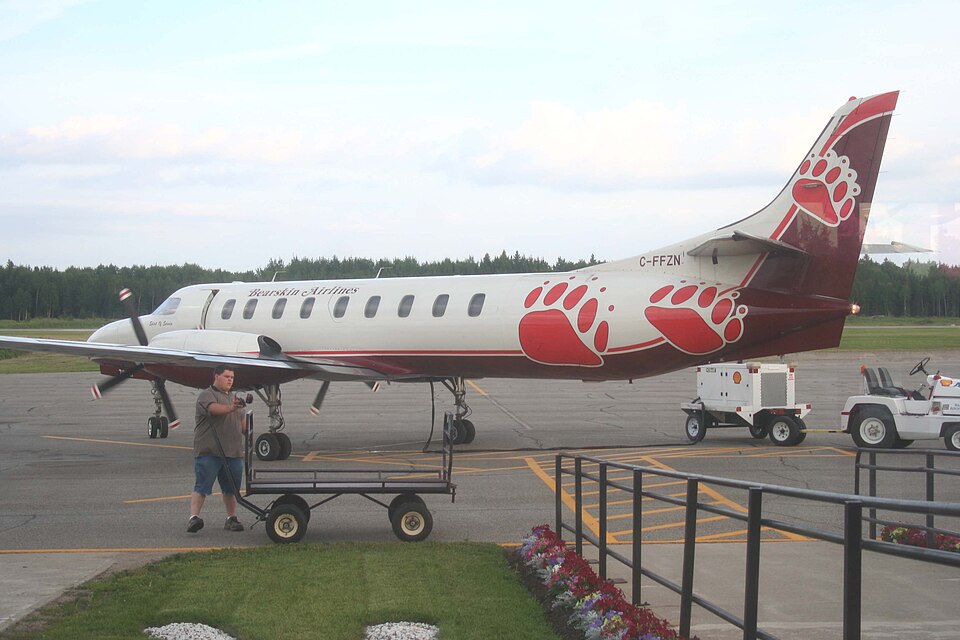
Aircraft registered C-FFZN
Aircraft registered C-FFZN. Photo: Bzuk ( talk ) / Public domain, via Wikimedia Commons

On a night flight in light snow, an aircraft struck power cables and crashed 800 meters south of Red Lake Airport. Two rear passengers were seriously injured; the other five occupants, including both pilots, were killed. The left engine lost power due to a turbine blade failure.

Accident Overview

A flight from Sioux Lookout to Red Lake proceeded without incident until the final descent, conducted at night in light snow conditions. The ceiling was 2,000 feet with visibility 8 statute miles. While on final approach to Runway 26, the crew reported being south of the airport and declared an emergency. Shortly after the mayday call, the aircraft struck power cables and crashed in flames in a dense wooded area located 800 meters south of the airport.

Occupant Injuries and Fatalities

Two passengers seated in the rear of the aircraft sustained serious injuries. All five other occupants, including both pilots, were killed.

Engine Failure and Loss of Control

According to the official investigation, the left engine experienced a first-stage turbine wheel blade failure due to a combination of metallurgical issues and stator vane burn-through. As a result, the left engine continued to operate but suffered a near-total loss of power at approximately 500 feet above ground level during the final approach to Runway 26 at Red Lake Airport. The crew was unable to identify the nature of the engine malfunction, which prevented them from taking timely and appropriate action to control the aircraft. The malfunction caused the left propeller to be at a very low blade angle; combined with the aircraft's landing configuration, this resulted in a high-drag and asymmetric state. When the aircraft's speed dropped below minimum control speed (VMC), the crew lost control at an altitude from which recovery was not possible.

Probable cause

A first-stage turbine wheel blade in the left engine failed due to a combination of metallurgical issues and stator vane burn-through. As a result of the blade failure, the left engine continued to operate but experienced a near-total loss of power at approximately 500 feet above ground level, on final approach to Runway 26 at the Red Lake Airport. The crew were unable to identify the nature of the engine malfunction, which prevented them from taking timely and appropriate action to control the aircraft. The nature of the engine malfunction resulted in the left propeller being at a very low blade angle, which, together with the landing configuration of the aircraft, resulted in the aircraft being in an increasingly high drag and asymmetric state. When the aircraft’s speed reduced below minimum control speed (VMC), the crew lost control at an altitude from which a recovery was not possible.