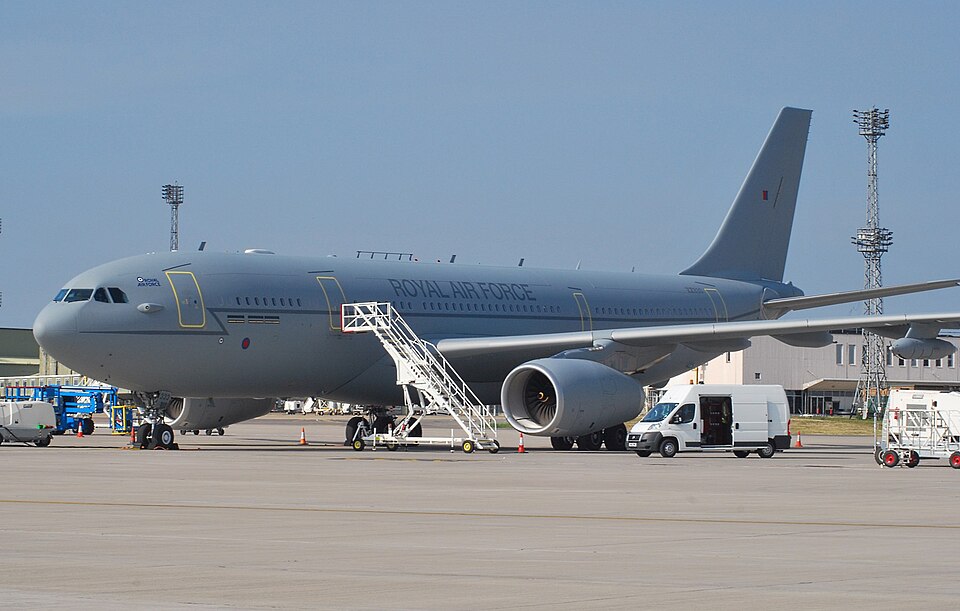
Incident Overview
On 9 February 2014, Voyager ZZ333, an Airbus A330-200 derived Multi Role Tanker Transport aircraft, experienced a sudden nose-down pitch while cruising at Flight Level 330 (33,000 ft). Within 27 seconds, the aircraft lost 4,440 ft of altitude before a self-protection system initiated recovery. The aircraft diverted to Incirlik Airbase in Turkey. The negative g-forces threw most unrestrained passengers and crew toward the ceiling, resulting in minor injuries.
Flight History
The aircraft departed RAF Brize Norton at 1200 UTC for a non-stop flight to Camp Bastion, Afghanistan, with a flight crew of 9 and 189 passengers. The departure was delayed approximately 20 minutes due to a transponder warning, which was quickly resolved. The flight progressed uneventfully apart from at least one instance of turbulence significant enough to illuminate seat belt signs.
At 1549 UTC, with the aircraft on autopilot 1 at FL330, the co-pilot had left his seat and was in the forward galley. The captain, in the left-hand seat, reported suddenly feeling weightlessness and a rapid pitch-down. He attempted to counter by pulling back on his side-stick and pressing the autopilot disconnect button, but these actions were ineffective. The co-pilot, having felt a jolt, experienced weightlessness and struck the cabin roof, then re-entered the flight deck. He reported audio alarms and violent shaking. Both pilots made simultaneous side-stick inputs, triggering a dual input warning. As the aircraft began recovering, the co-pilot called for idle thrust to reduce excessive speed. The captain then took control, setting take-off/go-around power and establishing level flight at FL310. The descent had a maximum rate of about 15,000 ft/min. The aircraft diverted to Incirlik without further incident.
Investigation Findings
The Flight Data Recorder showed no system failures that could have caused the pitch-down. The inquiry found no evidence of similar incidents across any A330 variants, deeming this event unique. The recorder data revealed that the captain's side-stick moved 1 minute 44 seconds before the event, introducing a sustained small pitch-down command of 0.8 degrees, and again at the onset of the event with a sustained fully-forward pitch-down command. Additionally, the captain's seat moved at the same times.
The panel found evidence linking seat movement to side-stick movement: a Digital SLR camera was positioned in front of the captain's left arm rest and behind the base of the side-stick. Analysis confirmed the camera was used in the three minutes prior. Forensic damage to the camera indicated significant compression against the side-stick base, consistent with being jammed between the arm rest and the side-stick unit. Crew interviews corroborated this. Simulations recreated the scenario, showing that objects can become lodged in the space between the arm rest and side-stick, generating an identical pitch-down command.
Probable Cause
The Service Inquiry states that the cause was human factors, specifically an inadvertent physical input to the captain's side-stick by a camera obstruction.