SpaceX's planned Falcon 9 phaseout could widen airspace restrictions for pilots
SpaceX's stated plan to eventually retire the Falcon 9 rocket in favor of Starship could mean larger and more frequent airspace closures affecting civil aviation, according to industry sources.
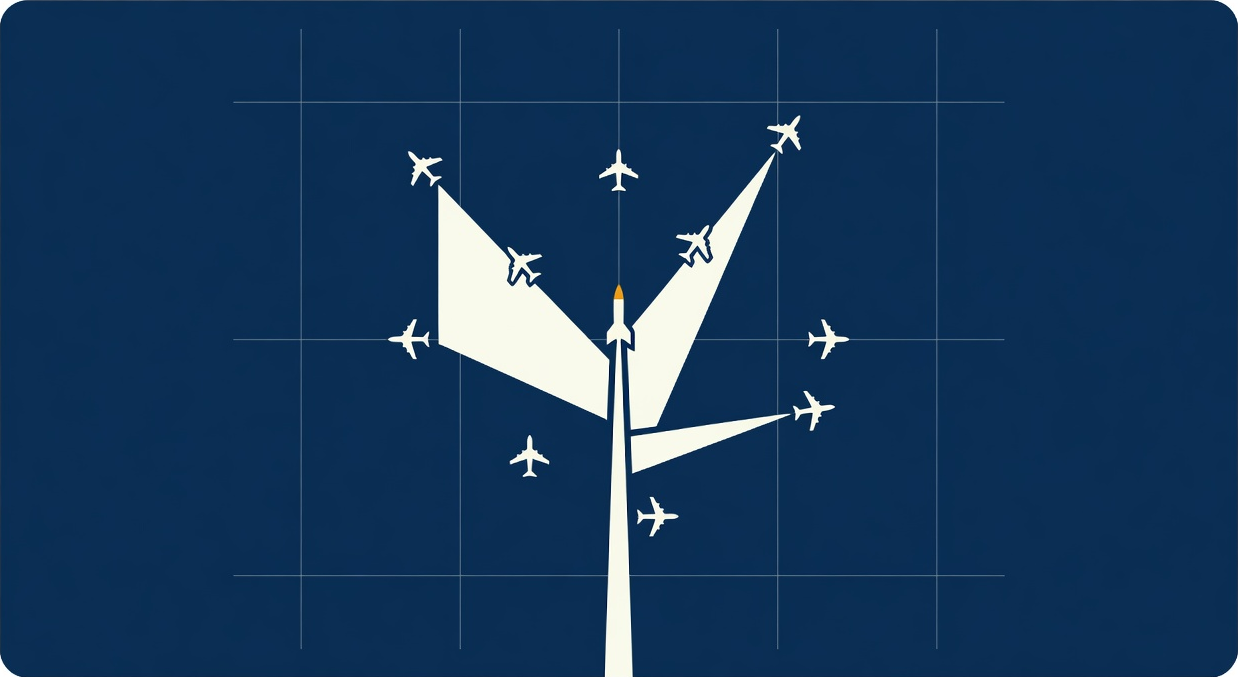
SpaceX has indicated it eventually intends to retire its Falcon 9 launch vehicle in favor of the larger Starship rocket, a shift that could have consequences for pilots and other users of the national airspace system.
Elon Musk, the company's chief executive, said in a social media post that once Starship is flying reliably several times a week, it would make sense to redirect resources toward it and begin winding down Falcon 9. Separately, a source told a space news outlet that the U.S. government is expected to end commercial Falcon 9 launches after 2028, reserving the rocket for a limited number of contracted missions.
The timeline remains uncertain. Reaching Musk's desired launch cadence depends on Starship and its Super Heavy booster achieving full reusability so they can be turned around quickly between flights, something not yet demonstrated.
The concern for aviation stems from how launches affect airspace. Operators coordinate with the Federal Aviation Administration to set up aircraft hazard areas, announced through Notices to Airmen as temporary flight restrictions or altitude reservations. These are calculated using a rocket's trajectory and potential debris dispersion.
Because Starship and its booster are substantially larger than Falcon 9 — over 400 feet tall compared with about 230 feet — and carry far more payload capacity, their hazard areas tend to be larger. Starship has also experienced anomalies in roughly half of its thirteen suborbital test flights so far, compared with a low failure rate for Falcon 9 over hundreds of launches. Both factors suggest wider or more frequent airspace closures if Starship takes over as SpaceX's primary vehicle.
Sources
- flyingmag.comSpaceX’s Falcon 9 Phaseout Could Have Ripple Effect for Pilots