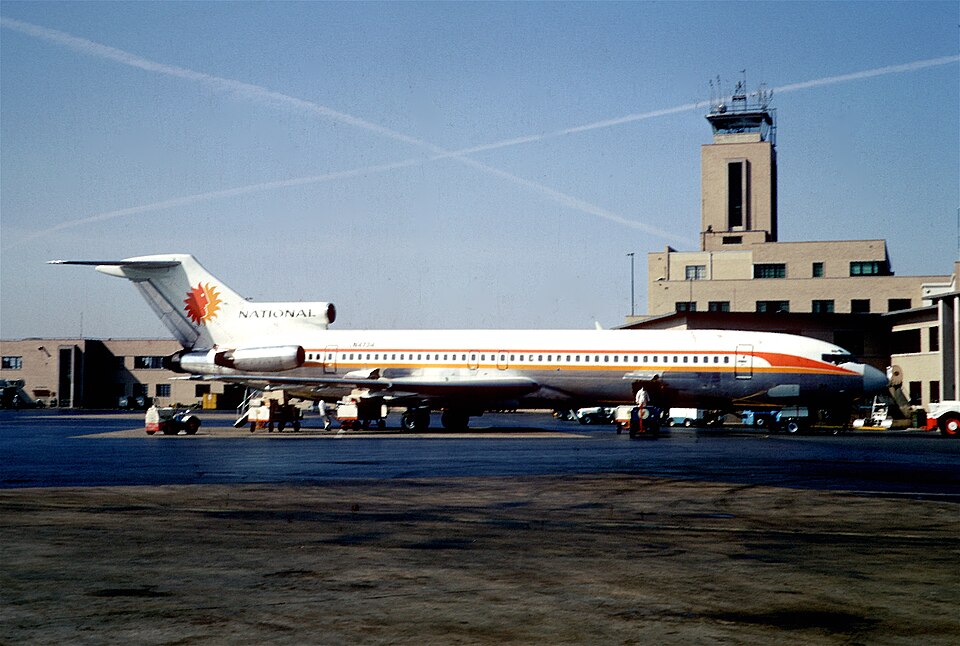
Engine Hub Fatigue Causes Fire During Takeoff

Casualties unknown • Miami, FL, US

A takeoff was aborted after a loud bang and tailfire were reported. An explosion in engine two, caused by a fractured compressor hub due to manufacturing defects, severed the fuel line.

What happened

During the takeoff roll, a loud bang was heard, prompting the crew to abort the departure. The tower immediately advised the flight of extensive fire in the tail area. The pilot cleared the active runway, and the aircraft was evacuated. One passenger suffered a fractured ankle, while another sustained a sprained ankle.

The investigation

An explosion had occurred in engine two due to a failed front compressor front hub. The main fuel supply line to engine two was severed, which caused the fire. A metallurgical examination revealed that the hub fractured radially through the bore and rim in two locations, releasing two sections. Fatigue had originated at a nonconforming circumferential groove at the rear of one tie rod hole. The surface of the groove exhibited a very rough, smeared appearance and there were numerous axial cracks.

Findings

The primary contributing factor was fuel exhaustion resulting from the severed fuel line. The root cause was a manufacturing defect in the engine component. The nonconforming groove at the tie rod hole initiated fatigue cracks that led to the catastrophic failure of the front compressor hub.

Probable cause

A failed front compressor front hub due to a manufacturing defect, which severed the main fuel supply line to engine two and caused an explosion and fire.

All Boeing 727-200 accidents →

Frequently asked questions

What happened in the 1982-02-17 Boeing 727-235 accident near Miami, FL?

A takeoff was aborted after a loud bang and tailfire were reported. An explosion in engine two, caused by a fractured compressor hub due to manufacturing defects, severed the fuel line.

What aircraft was involved and where did it happen?

The accident on 1982-02-17 involved a Boeing 727-235, registration N4734, operated by Pan American World Airways, IN, at Miami, FL.

What was the probable cause of the accident?

A failed front compressor front hub due to a manufacturing defect, which severed the main fuel supply line to engine two and caused an explosion and fire.

Investigation report by the U.S. National Transportation Safety Board (NTSB) historical archive. Original record: https://carol.ntsb.gov/event/20020917X02404. This page is a structured re-presentation; facts and quotes are in the National Transportation Safety Board (NTSB), United States.

Loading the flight search…