Casualties unknown

Aircraft Slides Off Ice-Covered Runway After Takeoff Aborted (N396UA)

Kansas City, MO, US

On January 8, 1991, a Boeing 737-322 (registration N396UA) operated by United Airlines was involved in an aviation accident near Kansas City, MO. Investigators recorded the probable cause as: IMPROPER USE OF THE THROTTLES, AND FAILURE TO MAINTAIN DIRECTIONAL CONTROL BY THE FIRST OFFICER. FACTORS RELATED TO THE INCIDENT ARE: ICE ON THE RUNWAY, LACK OF TOTAL EXPERIENCE IN THE TYPE AIRCRAFT AND OPERATION BY THE FIRST OFFICER, AND INADEQUATE… This summary draws on records from the U.S. National Transportation Safety Board (NTSB) historical archive; 6 related events involving the same aircraft type or operator are linked below.

Sourcesthe U.S. National Transportation Safety Board (NTSB) historical archivePrimary reportUpdated 2026-06-10Data APIEditorial standards
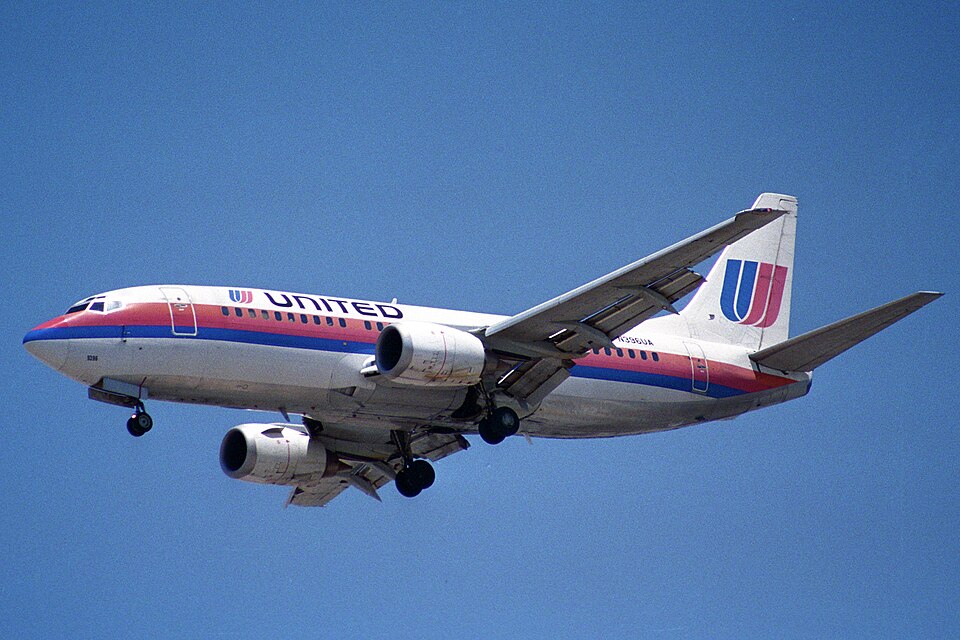
Aircraft registered N396UA
Aircraft registered N396UA. Photo: Aero Icarus from Zürich, Switzerland / CC BY-SA 2.0, via Wikimedia Commons

On an ice-covered runway, a jet began sliding left after throttle advancement. The captain took control but could not maintain direction; the aircraft came to a stop in mud and snow. An emergency evacuation followed. Investigation revealed a 10% N1 asymmetry between engines.

Incident Overview

A multi-engine aircraft experienced a loss of directional control during takeoff from an ice-covered runway. The first officer, who was on initial operating experience, had control of the aircraft when the throttles were advanced for takeoff. The aircraft rolled straight ahead for approximately two seconds before beginning to slide to the left.

Actions Taken

The captain then took control of the aircraft but was unable to maintain directional control or stop the aircraft. The aircraft departed the left side of the runway and came to a stop in the mud and snow. An emergency evacuation was conducted following the incident.

Investigation Findings

Investigation revealed that upon application of power for takeoff, the right engine had a 10% greater N1 (fan speed) than the left engine. The first officer was on his initial operating experience in the aircraft.

Investigation report by the U.S. National Transportation Safety Board (NTSB) historical archive. Original record: https://carol.ntsb.gov/event/20001212X16273. This page is a structured re-presentation; facts and quotes are in the National Transportation Safety Board (NTSB), United States.