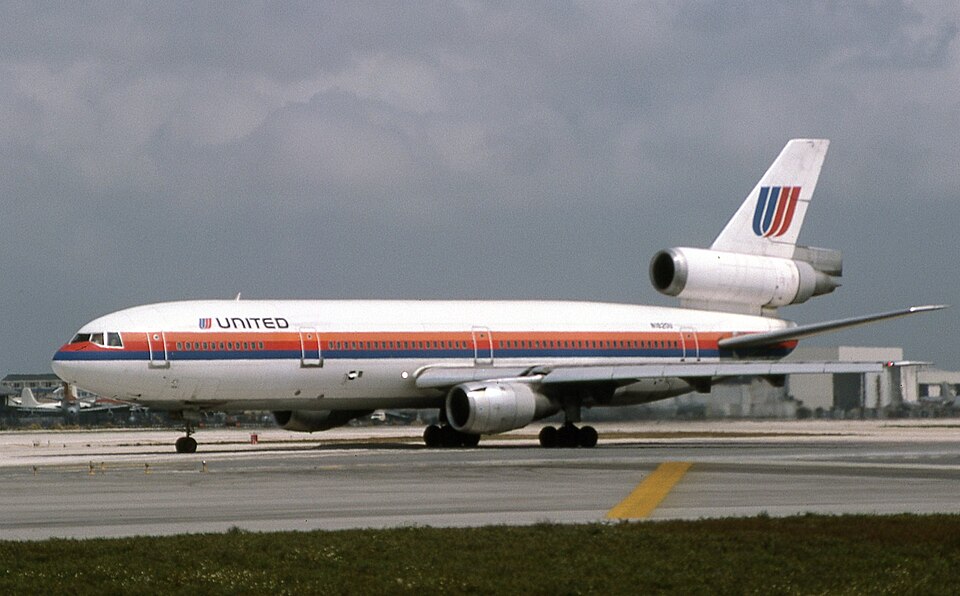
In-flight depressurization of United Airlines aircraft due to bulkhead failure

Casualties unknown • Las Vegas, NV, US

A United Airlines flight experienced a sudden loss of cabin pressure during climb while ascending to 37,000 feet, leading to an emergency descent and diversion.

What happened

While climbing through 35,000 feet toward a planned cruise altitude of 37,000 feet, the crew of the aircraft heard a loud thump, followed immediately by a loss of cabin pressure. As the flight crew initiated a descent to 11,000 feet, the cabin altitude rose to 30,000 feet. The flight was diverted to a nearby airport, where the aircraft landed safely with no injuries.

The investigation

An examination of the aircraft revealed that repetitive pressurization cycles had caused a fatigue crack to initiate, resulting in the rupture of a forward pressure bulkhead.

Records indicated that over 14 years prior, Douglas had issued service bulletins warning operators that leaks could occur in the forward pressure bulkhead area due to metal fatigue. The manufacturer's recommended corrective action involved either performing inspections at 1,500-hour intervals or implementing permanent structural airframe modifications. Unlike many other operators, United Airlines had elected not to perform the structural modifications, opting instead to rely on recurring visual inspections for leaks in the affected area. The rupture of the pressure bulkhead occurred 1,367 hours after the aircraft's last inspection.

Probable cause

The rupture of the forward pressure bulkhead caused by a fatigue crack resulting from repetitive pressurization cycles.

Frequently asked questions

What happened in the 1991-10-28 Mcdonnell Douglas DC-10-10 accident near Las Vegas, NV?

A United Airlines flight experienced a sudden loss of cabin pressure during climb while ascending to 37,000 feet, leading to an emergency descent and diversion.

What aircraft was involved and where did it happen?

The accident on 1991-10-28 involved a Mcdonnell Douglas DC-10-10, registration N1820U, operated by United Airlines, at Las Vegas, NV.

What was the probable cause of the accident?

The rupture of the forward pressure bulkhead caused by a fatigue crack resulting from repetitive pressurization cycles.

Investigation report by the U.S. National Transportation Safety Board (NTSB) historical archive. Original record: https://carol.ntsb.gov/event/20001212X18310. This page is a structured re-presentation; facts and quotes are in the National Transportation Safety Board (NTSB), United States.

Loading the flight search…