Casualties unknown

1992-04-23: Lockheed L-1011-385 (N721DA) — Delta Airlines, Inc. — Flushing, NY

Flushing, NY, US

On April 23, 1992, a Lockheed L-1011-385 (registration N721DA) operated by Delta Airlines, Inc. was involved in an aviation accident near Flushing, NY. Investigators recorded the probable cause as: Most likely, the tire failure was the result of excessive forces applied during the nosewheel touchdown. This summary draws on records from the U.S. National Transportation Safety Board (NTSB) historical archive; 7 related events involving the same aircraft type or operator are linked below.

Sourcesthe U.S. National Transportation Safety Board (NTSB) historical archivePrimary reportUpdated 1781061362Data APIEditorial standards
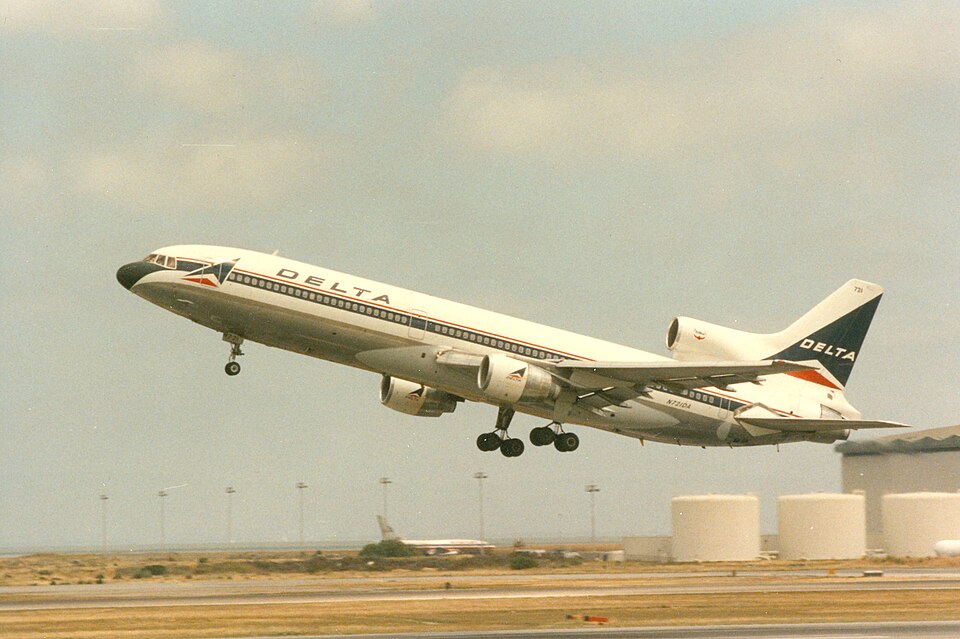
Aircraft registered N721DA
Aircraft registered N721DA. Photo: Bill Larkins / CC BY-SA 2.0, via Wikimedia Commons

Witnesses reported a hard landing of Flight 702, with nose tires blowing on touchdown. Investigation calculated a nosewheel sink rate of 14.66 ft/s, far exceeding the normal 1 ft/s, and tire manufacturer attributed failure to excessive forces.

Incident Overview

Flight 702 experienced a hard landing during which the nosewheel tires failed upon touchdown. Witnesses observed the aircraft land with considerable force, and the tires blew when the nosewheel contacted the runway.

Witness Observations

Multiple witnesses stated that the airplane landed hard and that the tires 'blew' at the moment the nosewheel touched down. Their accounts formed the initial basis for the investigation.

Sink Rate Analysis

The investigation examined the nosewheel's rate of descent at touchdown. The normal sink rate for a nosewheel is approximately 1 foot per second. However, for Flight 702, the calculated rate of sink was 14.66 feet per second—more than fourteen times the standard value. This extreme descent rate subjected the nose gear to forces far beyond design parameters.

Tire Examination

Post-incident examination of the failed tires revealed that the failure was not due to heat from over-inflation or under-inflation conditions. The tire manufacturer conducted a detailed analysis and concluded that the tire failure was 'most likely' the result of the excessive forces applied during the nosewheel touchdown. No other contributing factors were identified by the manufacturer.

Probable cause

Most likely, the tire failure was the result of excessive forces applied during the nosewheel touchdown.

Investigation report by the U.S. National Transportation Safety Board (NTSB) historical archive. Original record: https://carol.ntsb.gov/event/20001211X14499. This page is a structured re-presentation; facts and quotes are in the National Transportation Safety Board (NTSB), United States.