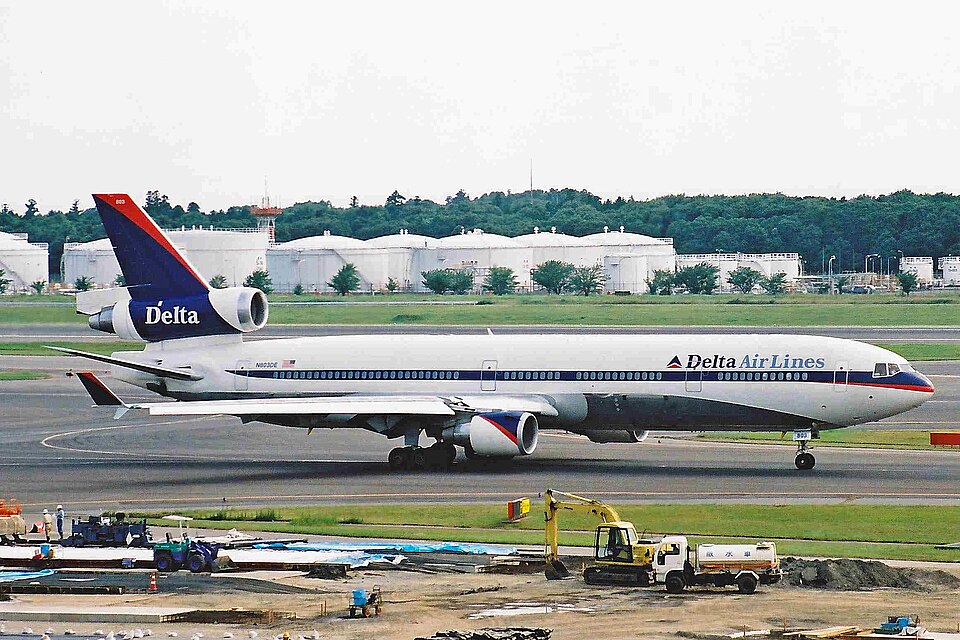
On May 1, 1993, a Mcdonnell Douglas MD-11 (registration N803DE) was involved in an aviation accident near Los Angeles, CA. Investigators recorded the probable cause as: The pilot allowed the airplane's descent rate to become excessive during the second approach. This summary draws on records from the U.S. National Transportation Safety Board (NTSB) historical archive.
During the second approach, the pilot allowed an excessive descent rate, causing a firm touchdown and bounce. The landing roll-out was controlled with brakes and reverse, but post-flight inspection revealed damage to nose gear tires and wheel rims, holes in the fuselage, and ingestion of tire rubber in the #1 engine.
Incident Overview
The pilot was instructed to perform a go-around on the first approach due to preceding traffic on the runway. The aircraft then conducted a second approach. During this approach, the pilot allowed the airplane's descent rate to become excessive, resulting in a firm touchdown. The airplane bounced, and the second touchdown was also firm.
Landing and Post-Flight Inspection
During the landing roll-out, the airplane vibrated but was controlled using brakes and engine reversing. After the flight, a post-flight examination revealed damage to both nose gear tires and wheel rims. Small holes were found in the fuselage aft of the nose gear. Additionally, tire rubber had been ingested into the #1 engine.
Probable cause
The pilot allowed the airplane's descent rate to become excessive during the second approach.