No fatalities

Engine Disc Rupture During Takeoff Leads to Fire and Aborted Departure (N303EA)

Fairbanks, AK, US

On March 1, 1994, a Lockheed L-1011 (registration N303EA) operated by Rich International Airways was involved in an aviation accident near Fairbanks, AK. No fatalities were reported. Investigators recorded the probable cause as: FAILURE OF THE SIXTH STAGE DISC ON THE INTERMEDIATE COMPRESSOR STAGE 6/7TH ROTOR SHAFT ASSEMBLY IN THE NUMBER THREE ENGINE, DUE TO CORROSION PITTING AND FATIGUE CRACKING OF THE FAILED DISC. This summary draws on records from the U.S. National Transportation Safety Board (NTSB) historical archive; 2 related events involving the same aircraft type or operator are linked below.

Sourcesthe U.S. National Transportation Safety Board (NTSB) historical archivePrimary reportUpdated 2026-07-04Data APIEditorial standards
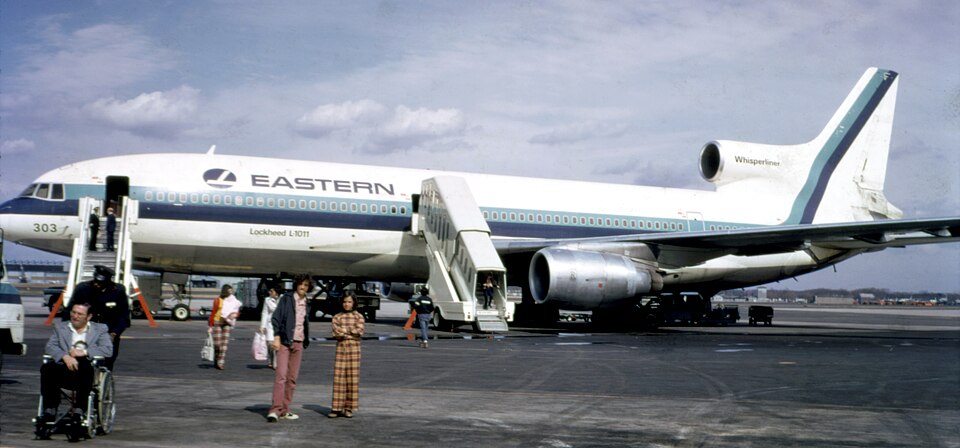
Aircraft registered N303EA
Aircraft registered N303EA. Photo: Versageek / CC BY 3.0, via Wikimedia Commons

During takeoff, the #3 engine's intermediate compressor disc ruptured, causing debris to strike the #1 engine and fuselage. Fire warnings activated, takeoff aborted, and residual fire extinguished by airport firefighters.

Incident Overview

As full power was applied for takeoff, the 6th stage disc on the intermediate compressor 6/7th rotor shaft assembly in the #3 engine ruptured. Pieces of the disc severed a fuel inlet line and penetrated the #1 engine and the fuselage. Fire warnings for both the #3 and #1 engines were activated, and engine fire bottles were discharged during the aborted takeoff. Residual fire in one engine was extinguished by airport firefighters.

Metallurgical Examination

Approximately 80% of the failed disc was recovered. Metallurgical examination revealed corrosion pitting and small fatigue cracks at the attachment holes. The largest crack measured 0.13 inches deep and 0.23 inches wide.

Overspeed Considerations

According to Rolls Royce calculations, the observed crack size would not have resulted in failure unless the N2 rotor RPM had reached 118%. A telltale marker for the flight engineer's #3 N2 gauge indicated 106% (red-line was 102.5%), but the marker was found to be out of calibration; therefore, overspeed was not verified. Maximum EPR for takeoff was within limits.

Service Bulletin Compliance

Service Bulletin (SB) RB.211-72-9569 required that rotors exceeding 14,000 cycles be removed by April 30, 1993. The failed rotor had accumulated 16,327 cycles. The SB was designated as 'S-mandatory' in the United Kingdom, but it was not mandatory in the United States.

Frequently asked questions

What happened in the 1 Mar 1994 Lockheed L-1011 accident near Fairbanks, AK?

During takeoff, the #3 engine's intermediate compressor disc ruptured, causing debris to strike the #1 engine and fuselage. Fire warnings activated, takeoff aborted, and residual fire extinguished by airport firefighters.

Were there any fatalities in the 1 Mar 1994 Lockheed L-1011 accident?

No fatalities were recorded in this accident.

What aircraft was involved and where did it happen?

The accident on 1 Mar 1994 involved a Lockheed L-1011, registration N303EA, operated by Rich International Airways, at Fairbanks, AK.

What was the probable cause of the accident?

FAILURE OF THE SIXTH STAGE DISC ON THE INTERMEDIATE COMPRESSOR STAGE 6/7TH ROTOR SHAFT ASSEMBLY IN THE NUMBER THREE ENGINE, DUE TO CORROSION PITTING AND FATIGUE CRACKING OF THE FAILED DISC. A FACTOR RELATED TO THE ACCIDENT WAS: FAILURE OF THE AIRLINE COMPANY TO FOLLOW PROVISIONS OF THE SERVICE BULLETIN. FOREIGN…

Investigation report by the U.S. National Transportation Safety Board (NTSB) historical archive. Original record: https://carol.ntsb.gov/event/20001206X00689. This page is a structured re-presentation; facts and quotes are in the National Transportation Safety Board (NTSB), United States.