On February 20, 1996, a Boeing 767-332 (registration N125DL) operated by Delta Air Lines was involved in an aviation accident near Portland, OR. No fatalities were reported. Investigators recorded the probable cause as: the passenger's unsuccessful (improper) evacuation of the aircraft. The malfunctioning APU was a related factor in that it torched and produced smoke, due to a faulty fuel control unit and/or gearbox shutoff valve, thereby prompting an emergency evacuation of… This summary draws on records from the U.S. National Transportation Safety Board (NTSB) historical archive; 2 related events involving the same aircraft type or operator are linked below.
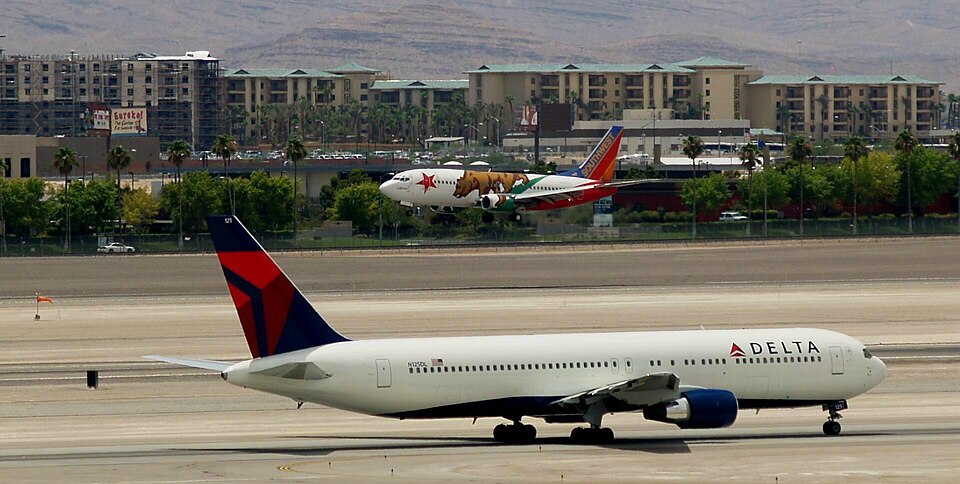
Aircraft registered N125DL. Photo: Bryan Correira from Las Vegas, USA / CC BY 2.0, via Wikimedia Commons
While taxiing for departure, a Boeing 767 received reports of smoke and flames from its APU exhaust. After shutting down the APU, smoke persisted, leading to a slide evacuation. One passenger was seriously injured. Replacement of the APU fuel control unit and gearbox shutoff valve resolved the issue.
Incident
During taxi for departure, a Boeing 767 was observed by another aircraft crew to have smoke and flames emanating from its auxiliary power unit (APU) exhaust. In response, the crew of the Boeing 767 shut down the APU and began coordinating with dispatch to return to the gate.
Evacuation
The tower subsequently directed the crew to hold their position and shut down the engines. Shortly after, the tower advised that the Fire Marshall had called for evacuation of the aircraft due to continued smoke from the APU exhaust. The aircraft was evacuated using the evacuation slides at the door exits. During the evacuation, one passenger sustained serious injuries.
Inspection and Resolution
Inspection of the APU revealed that the fuel control unit and the gearbox shutoff valve required replacement. After these components were replaced, the APU was test-run with no further discrepancies noted.
What happened in the 20 Feb 1996 Boeing 767-332 accident near Portland, OR?
While taxiing for departure, a Boeing 767 received reports of smoke and flames from its APU exhaust. After shutting down the APU, smoke persisted, leading to a slide evacuation. One passenger was seriously injured. Replacement of the APU fuel control unit and gearbox shutoff valve resolved the issue.
Were there any fatalities in the 20 Feb 1996 Boeing 767-332 accident?
No fatalities were recorded in this accident.
What aircraft was involved and where did it happen?
The accident on 20 Feb 1996 involved a Boeing 767-332, registration N125DL, operated by Delta Air Lines, at Portland, OR.
What was the probable cause of the accident?
the passenger's unsuccessful (improper) evacuation of the aircraft. The malfunctioning APU was a related factor in that it torched and produced smoke, due to a faulty fuel control unit and/or gearbox shutoff valve, thereby prompting an emergency evacuation of the aircraft.
A SkyWalk Join't 3 paraglider crashed into the ground near Las Vizcachas, Chile, on September 1, 2024. The pilot and passenger sustained serious spinal…
PARAPENTE (ULTRALIVIANO NO MOTORIZADO)·2024-09-01DGAC Chile
A Cessna 172N struck electrical cables while on final approach to land at Aucó Aerodrome in Chile. The pilot was uninjured, but the aircraft sustained damage…
A Bombardier DHC-8-402 suffered a tail strike during landing at Puerto Williams on September 9, 2024. All 76 occupants were unharmed, but the aircraft…
A MYD JS-MD 3 glider veered off the runway and struck a wall at Vitacura Aerodrome on January 6, 2025. The pilot was uninjured, but the aircraft sustained…
A recreational paraglider flight in Puchuncaví, Chile, ended with the pilot sustaining serious injuries after a rapid descent and impact with a hillside on…
PARAPENTE (ULTRALIVIANO NO MOTORIZADO)·2025-03-29DGAC Chile
A Tecnam P2006T landed on its belly at an aerodrome in Poland after the crew failed to confirm landing gear deployment. The incident resulted in no injuries…