Flight History
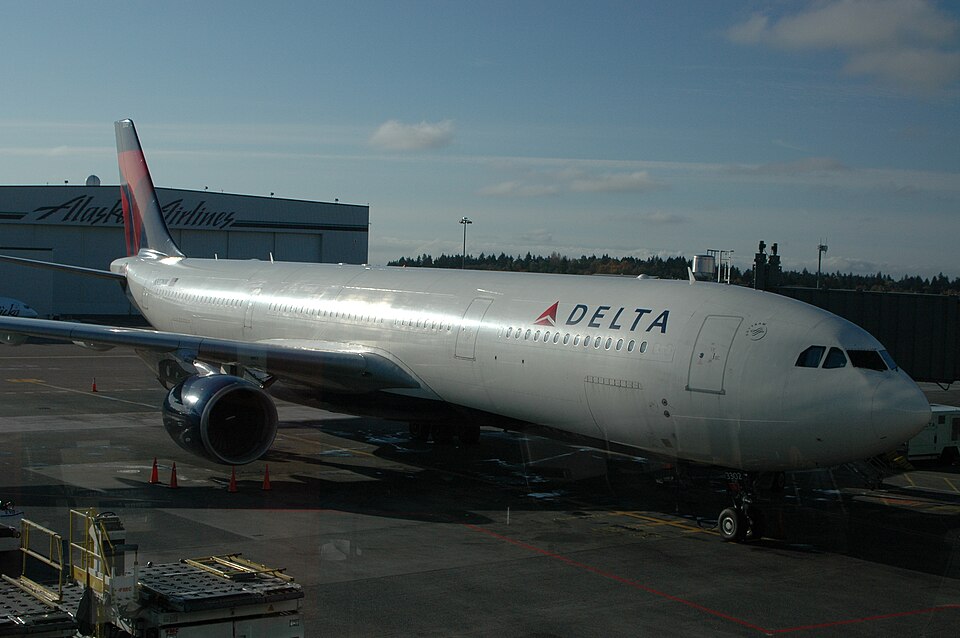
On 12 January 2023, an Airbus A330-300, registered N802NW, was on approach to Amsterdam Airport Schiphol (EHAM) after departing from Detroit Metropolitan Wayne County Airport (KDTW) the previous day at 18:51 local time. The aircraft carried 220 passengers, one captain, two first officers, and 10 flight attendants. At 07:52 local time, the rear wheels of the main landing gear touched down on the grass 11 metres before the threshold of Runway 22.
Conditions and Approach
The approach was conducted under strong gale-force winds with severe gusts, light drizzle, and visibility of 5,000 metres, one hour before sunrise. The aircraft followed the Instrument Landing System (ILS) glideslope and the Precision Approach Path Indicator (PAPI) initially indicated an accurate trajectory. Runway 22 has a length of 2,020 metres, which the flight crew perceived as short for the A330-300, influencing their approach strategy.
Manual Control and Trajectory
The captain disengaged the autopilot at 240 feet radio altitude and manually controlled the aircraft, causing a descent below the ILS glideslope and PAPI glide path. The crew focused on speed management due to concerns about a potential overrun, which was further intensified by their limited experience on short runways and understanding of the Ground Speed Mini function. At approximately 60 feet above ground level, the aircraft encountered a wind gust and downdraft, altering its trajectory and leading to the early touchdown before the runway threshold.
System Limitations
The ILS and PAPI on Runway 22 were designed for smaller aircraft and did not meet ICAO and EASA criteria for a minimum threshold crossing height for the A330-300’s main landing gear. This contributed to a reduced safety margin. The operator’s Standard Operating Procedures (SOPs) contained ambiguities, and training for landing on short runways like Runway 22 was limited. Fatigue analysis suggested the captain and first officers may have been affected, potentially impacting cognitive functions during critical phases.
Operator Risk Management
The operator’s risk management did not fully address the specific risks associated with Runway 22 for larger aircraft. The crew’s perception of overrun risk overshadowed the risk of an undershoot, possibly influenced by visual illusions. The incident highlighted the need for comprehensive risk analysis and pilot training tailored to specific operational scenarios.
Conclusions
The Dutch Safety Board concluded that the complex interplay of technical, environmental, and human factors led to the touchdown before the threshold. The crew’s skewed risk perception, lower than desired threshold crossing height, and operational decisions were central to the occurrence.