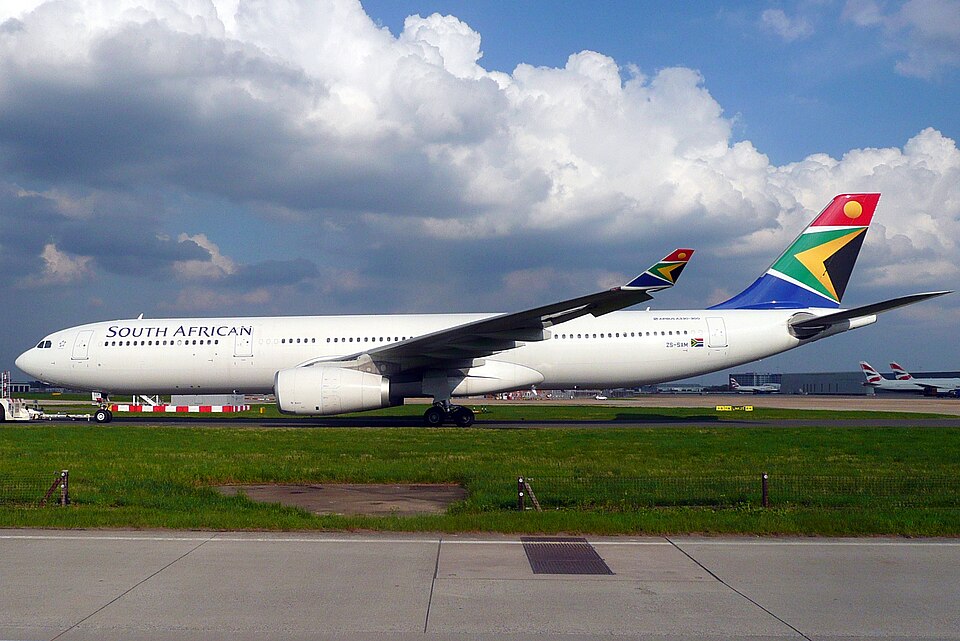
Synopsis
On 14-15 April 2022, a South African Airways A330-300, registration ZS-SXM, experienced a serious incident during refueling at Kotoka International Airport in Accra, Ghana, and subsequently during flight. The investigation by the Aircraft Accident and Incident Investigation and Prevention Bureau (AIB Ghana) found that water contamination during refueling led to the presence of water in the aircraft fuel tanks.
History of Flight
The aircraft was scheduled to operate flight SA9053 from Accra to Johannesburg. During refueling in Accra using Puma Energy fueller vehicles, the refueling process was interrupted multiple times. The flight crew reported issues with the fuel quantity indication and the refueling panel. To complete refueling, ground personnel applied pressure to the refuel panel, a procedure not in accordance with the Aircraft Maintenance Manual (AMM). The aircraft then departed for Johannesburg. During the flight, an in-flight event occurred when the Electronic Centralized Aircraft Monitor (ECAM) displayed warnings related to fuel system anomalies. The flight crew managed the situation and the aircraft landed safely at Johannesburg.
Analysis
AIB Ghana determined that water entered the aircraft fuel tanks during refueling from the Puma Energy fueller vehicles. The water was not adequately detected by the Electronic Water Sensor (EWS) system, which failed to indicate the quantity of water present. The fuel drain procedure performed before refueling was insufficient to remove the water. The quantity of water drained was not enough to eliminate the bulk of contamination. The refueling interruptions were a direct result of water in the tanks and the inadequate performance of the EWS. The deviation from standard refueling procedures by applying pressure to the refuel panel compounded the issue. Additionally, microbiological contamination (MBC) in the fuel tanks may have interfered with the EWS functionality.
Conclusion
The investigation identified that water contamination during refueling in Accra resulted in water in the fuel tanks. Contributory factors included inadequate fuel drain procedures, insufficient water drainage, unreliable EWS detection, and non-compliance with AMM procedures during refueling. The confirmation of fuel quality by the fuel supplier was not performed with proper water detection equipment.
Safety Recommendations
AIB Ghana issued safety recommendations to the fuel supplier (Puma Energy) to improve water detection and filtration processes, to the operator (South African Airways) to review fuel drain procedures and crew responses, and to Airbus to consider updates to the troubleshooting manual for refueling issues. The full report includes additional recommendations for regulatory oversight.