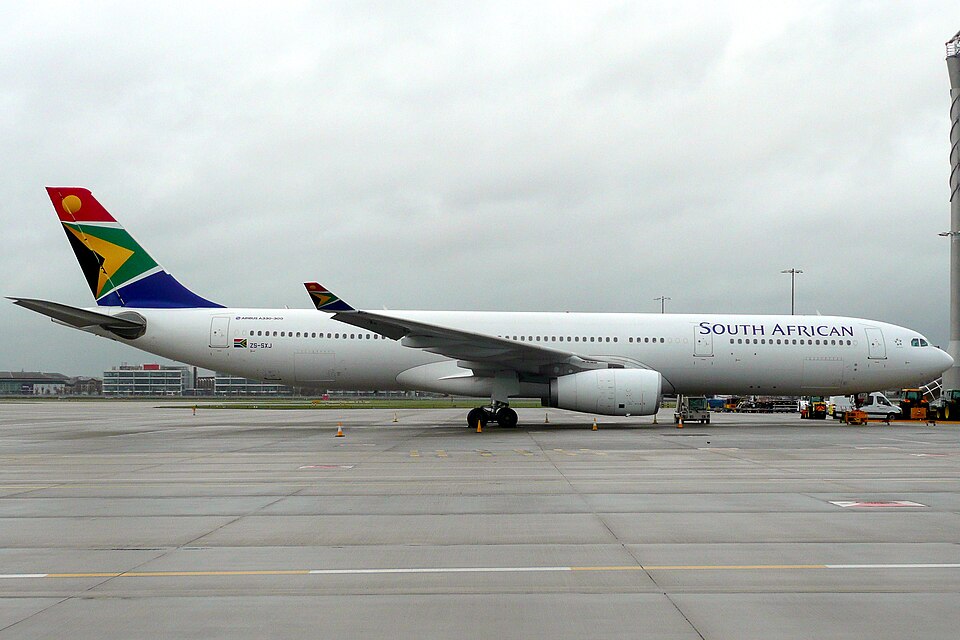
Incident Overview
On Sunday morning, 27 October 2024, an Airbus A330-300 aircraft with registration ZS-SXJ was operating a scheduled commercial flight under Part 121 of the South African Civil Aviation Regulations. The flight departed from Cape Town International Airport (FACT) en route to O.R. Tambo International Airport (FAOR). On board were two pilots, ten cabin crew members, and 211 passengers. Visual meteorological conditions prevailed during the daytime flight.
Events During Flight
While cruising at flight level (FL) 410, the aircraft began to exhibit pitch-up and pitch-down oscillations. The first officer, who was the pilot flying (PF), observed the speed trend vector increasing to approximately 40 knots into the overspeed (red barber pole) protection area. To prevent overspeed, the PF disconnected the autopilot and manually arrested the pitch movements. Subsequently, the PF instructed the pilot monitoring (PM) to request a descent from air traffic control to increase margins between high- and low-speed protections. The PM turned on the seatbelt sign and requested descent to FL390, which was accomplished without further incident. The oscillation, overspeed, and vertical indicators occurred within seconds.
Cabin Crew Injuries
At the time of the incident, cabin crew members were serving breakfast. The oscillations caused food and hot beverages to fall from trolleys and spill on the floor. As a result, four cabin crew members sustained injuries ranging from minor to serious. No other occupants were reported injured.
Aircraft Condition
A post-incident structural inspection revealed no damage to the aircraft.
Meteorological Information
No turbulence was indicated on synoptic charts or in the Aviation Routine Weather Report (ARMS). The aircraft weather radar did not show any significant weather in the vicinity.
Flight Crew Actions
The PF (first officer) had 809.6 hours on type and held an Airline Transport Pilot Licence. The report notes that the PF disregarded the Airbus Pilot’s Operating Handbook (POH) by disengaging the autopilot without proper communication to the PM, and that crew resource management was poor.