No fatalities

Boeing 737-200 Rudder Reversal Incident During Flight (N221US)

Richmond, VA, US

On June 10, 1996, a Boeing B-737-201 (registration N221US) operated by Eastwind Airlines was involved in an aviation accident near Richmond, VA. No fatalities were reported. Investigators recorded the probable cause as: The rudder reversed, moving to its right blowdown limit when the captain commanded left rudder, consistent with a jam of the main rudder power control unit servo valve secondary slide to the servo valve housing offset from its neutral position and overtravel… This summary draws on records from the U.S. National Transportation Safety Board (NTSB) historical archive.

Sourcesthe U.S. National Transportation Safety Board (NTSB) historical archivePrimary reportUpdated 2026-07-04Data APIEditorial standards
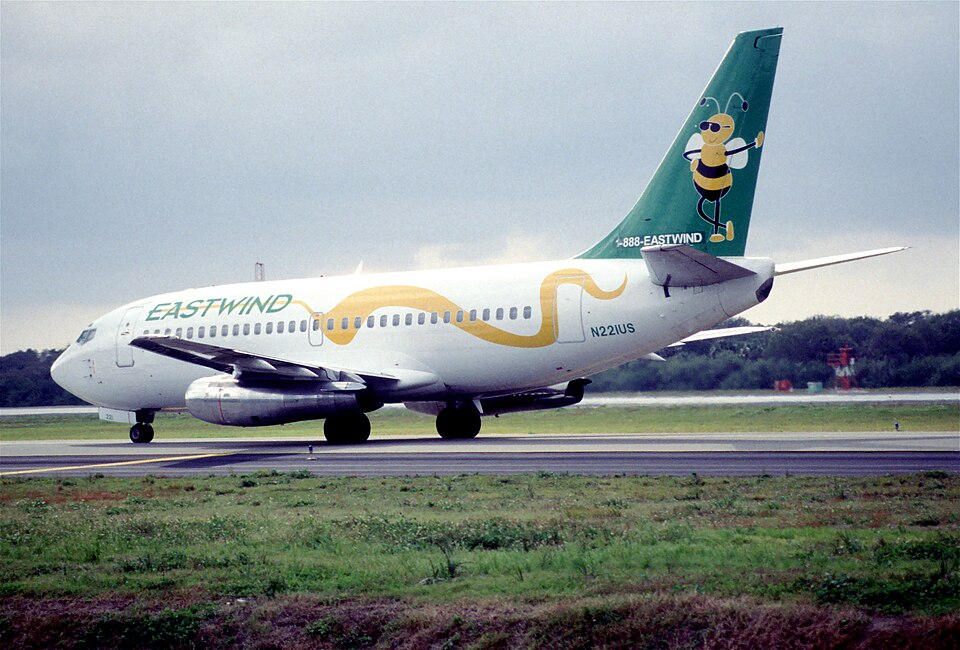
Aircraft registered N221US
Aircraft registered N221US. Photo: Aero Icarus from Zürich, Switzerland / CC BY-SA 2.0, via Wikimedia Commons

A Boeing 737-200 experienced a yaw/roll upset at 250 knots and 4,000 feet in VFR conditions. Pilots regained control and landed safely. Investigation attributed the event to a rudder reversal caused by a jammed servo valve secondary slide and overtravel of the primary slide.

Incident Overview

A Boeing 737-200 aircraft encountered a yaw/roll upset while operating at an airspeed of approximately 250 knots and an altitude of about 4,000 feet above mean sea level in visual flight rules (VFR) conditions. The flight crew successfully regained control of the airplane and completed a landing at the intended destination airport without any further incident.

Investigation Initiation

The Safety Board launched an investigation into this incident due to prior rudder anomalies on Boeing 737 aircraft, including the fatal accident of USAir flight 427, a Boeing 737-300, which entered an uncontrolled descent and struck terrain near Aliquippa, Pennsylvania, on September 8, 1994.

Investigation Scope and Methods

Investigators conducted detailed examinations of pertinent rudder control components, reviewed flight test data, performed a computer simulation, and completed an analysis of human performance data to determine the cause of the upset.

Findings

The Safety Board concluded that the rudder reversed, moving to its right blowdown limit when the captain commanded left rudder. This behavior was consistent with a jam of the main rudder power control unit servo valve secondary slide to the servo valve housing offset from its neutral position and overtravel of the primary slide.

Report Availability

The complete report of this incident investigation, including all analyses, is contained in the final report of the USAir flight 427 investigation, available on the NTSB website at http://www.ntsb.gov/publictn/1999/AAR9901.pdf.

Probable cause

The rudder reversed, moving to its right blowdown limit when the captain commanded left rudder, consistent with a jam of the main rudder power control unit servo valve secondary slide to the servo valve housing offset from its neutral position and overtravel of the primary slide.

Frequently asked questions

What happened in the 10 Jun 1996 Boeing B-737-201 accident near Richmond, VA?

A Boeing 737-200 experienced a yaw/roll upset at 250 knots and 4,000 feet in VFR conditions. Pilots regained control and landed safely. Investigation attributed the event to a rudder reversal caused by a jammed servo valve secondary slide and overtravel of the primary slide.

Were there any fatalities in the 10 Jun 1996 Boeing B-737-201 accident?

No fatalities were recorded in this accident.

What aircraft was involved and where did it happen?

The accident on 10 Jun 1996 involved a Boeing B-737-201, registration N221US, operated by Eastwind Airlines, at Richmond, VA.

What was the probable cause of the accident?

The rudder reversed, moving to its right blowdown limit when the captain commanded left rudder, consistent with a jam of the main rudder power control unit servo valve secondary slide to the servo valve housing offset from its neutral position and overtravel of the primary slide.

Investigation report by the U.S. National Transportation Safety Board (NTSB) historical archive. Original record: https://carol.ntsb.gov/event/20001208X05950. This page is a structured re-presentation; facts and quotes are in the National Transportation Safety Board (NTSB), United States.