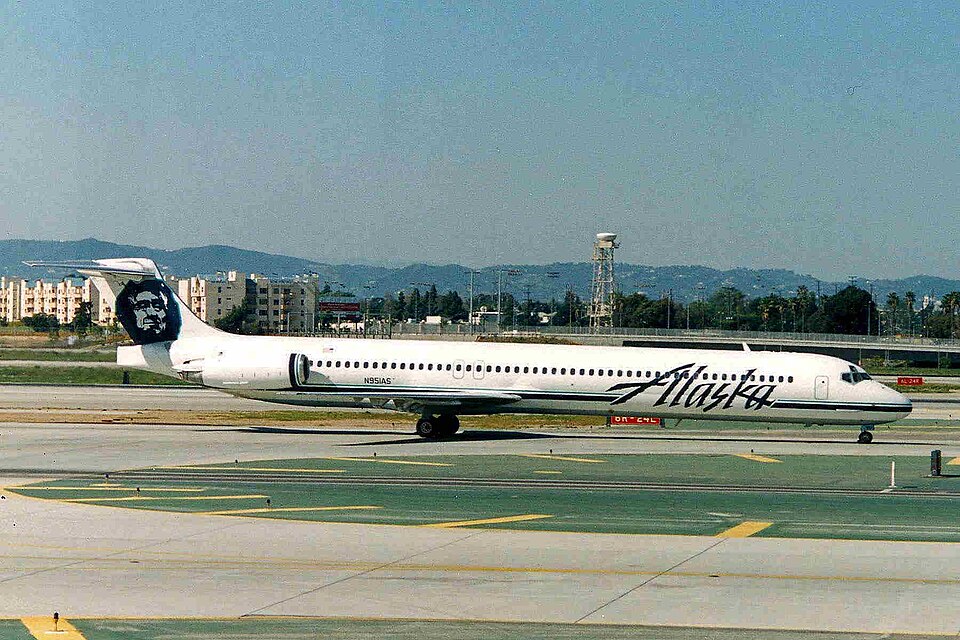
Incident
During the landing roll-out, the nose landing gear collapsed. The aircraft came to a stop on the runway with the nose gear retracted.
Examination
Examination of the nose landing gear revealed that the nose gear upper lock link, part number 3914464-503, had failed and separated into two pieces. Metallurgical analysis indicated that approximately 10,000 major fatigue progression cycles had occurred within about 0.6 inches of the crack progression.
Manufacturing and Inspection Issues
The failed link was one of a series manufactured from plate stock rather than being forged. Due to this changed process, the lack of draft angle allowances on the machined parts reduced the load-carrying cross-sectional area of the machined links to less than that of the forged links, resulting in a decrease in overall strength.
The link was subject to recurring non-destructive testing (NDT) every 5000 cycles per Airworthiness Directive 97-02-10. An eddy current inspection had been performed by the operator 1075 cycles before the accident. Based on two major stress cycles per gear retraction/extension cycle, the crack length at 1075 cycles before the accident would have been greater than 0.25 inches. The inspection procedure and process provided by the airframe manufacturer did not specify removal of the upper lock link from the aircraft before recurring NDT. During the investigation, NTSB investigators and FAA inspectors observed that access to the upper lock link for NDT was limited when the part remained installed on the airplane.
Findings
The collapse of the nose landing gear resulted from the failure of the upper lock link due to fatigue cracks that were not detected during inspection. The manufacturing change from forged to plate stock reduced the link's strength, and the inspection procedure did not require its removal, limiting the effectiveness of the eddy current inspection.