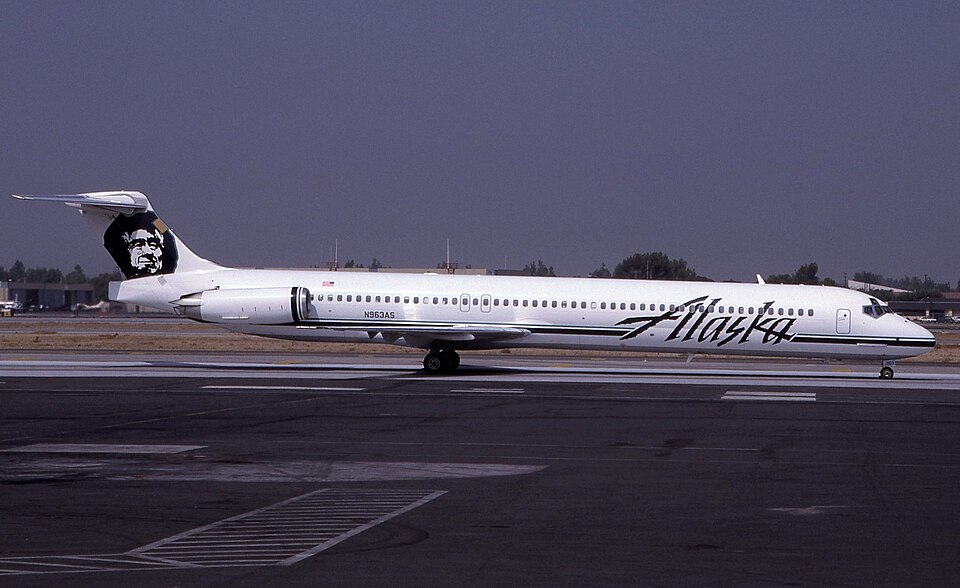
Accident Summary
On January 31, 2000, at approximately 1621 Pacific standard time, Alaska Airlines Flight 261, a McDonnell Douglas MD-83 (registration N963AS), crashed into the Pacific Ocean about 2.7 miles north of Anacapa Island, California. The accident claimed the lives of both pilots, three cabin crew members, and 83 passengers. The aircraft was destroyed by impact forces.
The flight was operating as a scheduled international passenger service under 14 CFR Part 121 from Lic Gustavo Diaz Ordaz International Airport in Puerto Vallarta, Mexico, to Seattle-Tacoma International Airport in Washington, with an intermediate stop planned at San Francisco International Airport in California. Visual meteorological conditions prevailed, and the flight was operating on an instrument flight rules flight plan.
Probable Cause
The official probable cause of the accident was a loss of airplane pitch control resulting from the in-flight failure of the horizontal stabilizer trim system jackscrew assembly's acme nut threads. This thread failure was caused by excessive wear due to Alaska Airlines' insufficient lubrication of the jackscrew assembly.
Contributing factors included Alaska Airlines' extended lubrication interval and the Federal Aviation Administration's (FAA) approval of that extension, which increased the likelihood that a missed or inadequate lubrication would lead to excessive wear of the acme nut threads. Additionally, Alaska Airlines' extended end play check interval and the FAA's approval of that extension allowed the excessive wear to progress to failure without detection. Also contributing was the absence on the MD-80 of a fail-safe mechanism to prevent the catastrophic effects of total acme nut thread loss.