Synopsis
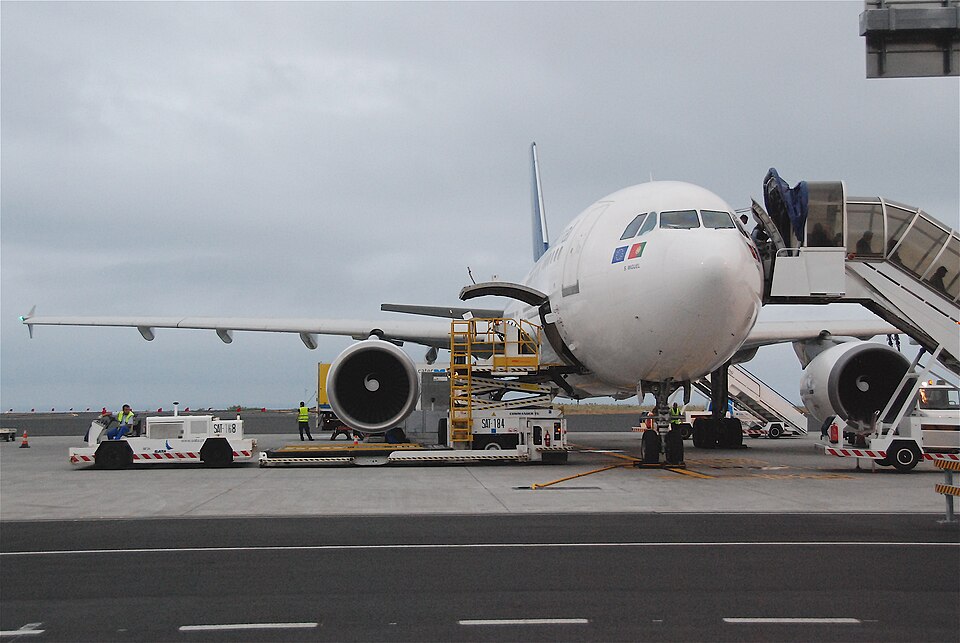
On 21 August 2007, an Airbus A310-304, registration CS-TGV, operated by SATA International as flight RZO-300 from Toronto (CYYZ) to Lisbon (LPPT) with a stop at Ponta Delgada (LPPD), Azores. The aircraft carried 195 passengers and 9 crew. After landing on runway 30 at Ponta Delgada at 06:50 UTC, the aircraft taxied to parking position W2 and shut down engines. Immediately, flames were observed coming from the inboard front wheel of the left main landing gear (wheel #2).
Fire and Response
The crew was alerted, and crew members from another aircraft parked at position W1 approached with portable extinguishers. Before they could reach the wheel, a ramp operator using a portable extinguisher from a motorized passenger stair vehicle extinguished the fire. Airport fire services arrived but were not needed. Maintenance personnel performed inspections per the aircraft maintenance manual, replaced the affected wheel, and the aircraft was deemed airworthy to continue its flight.
Investigation Findings
Examination revealed that the tire on wheel #2 had lost a complete layer of its tread during takeoff from Toronto. Debris from the separated rubber was later found on the runway at Toronto. After landing at Ponta Delgada, fragments of the tire were projected against the brake units, which were at high temperatures, causing ignition. The fire was quickly extinguished. No injuries were reported, and the aircraft sustained no damage.
Tire and Debris Analysis
The tire and recovered debris were sent to the manufacturer (Michelin) for analysis. The tire had been installed on 14 June 2007, with 3 landings since new. The debris found at Toronto was collected and sent to Michelin for investigation. The aircraft's Quick Access Recorder (QAR) data were sent to Airbus for decoding.
Conclusion
The incident was caused by a tire tread separation during takeoff, followed by fire after landing when tire fragments contacted hot brake assemblies.