Introduction
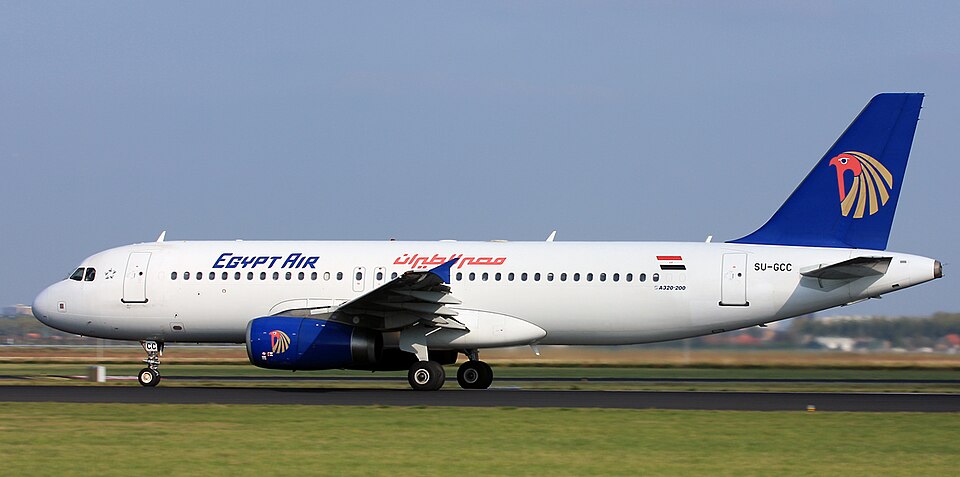
On 18 May 2016, an EgyptAir Airbus A320-232, registered SU-GCC, operated as flight MSR804 from Paris Charles de Gaulle Airport to Cairo International Airport. The aircraft carried 66 persons onboard. It took off at 21:21 UTC.
Flight Sequence
At 23:22, at an altitude of 37,000 feet, the aircraft entered Greek airspace and was cleared to proceed direct to position KUMBI, the boundary between Greek and Egyptian airspace. At 00:30, approximately seven nautical miles south of KUMBI and after entering Egyptian airspace, the aircraft disappeared from radar. Multiple attempts by Greek and Egyptian ATC to contact the aircraft were unsuccessful. The aircraft's Emergency Locator Transmitter (ELT) activated, and search and rescue operations were initiated.
Fire Events
According to the Cockpit Voice Recorder (CVR), the co-pilot called out "Fire," followed by a cabin flight attendant in the cockpit calling "fire," and the captain simultaneously calling "fire" and requesting a fire extinguisher. The Flight Data Recorder (FDR) showed that a "lavatory smoke warning" was triggered first, followed by an "avionics smoke warning" 46 seconds later. Subsequently, several computers failed sequentially.
Investigation
The investigation, conducted by the Egyptian Aircraft Accident Investigation Directorate (EAAID) with participation from France, the USA, and Greece, involved recovery of wreckage, human remains, and flight recorders. Forensic analysis indicated the presence of explosive material on human remains and attached wreckage pieces. A report from the Egyptian judicial authority concluded that an explosive device had been placed inside catering trolleys in the galley behind the cockpit. Examination of cabin wreckage near the forward galley showed thermal effects suggesting fire outside the cockpit. Correlation of FDR and CVR data indicated the fire originated outside the cockpit before triggering the lavatory and avionics smoke warnings.
Conclusion
The investigation committee concluded that fire and smoke due to explosive materials located in the forward galley, just aft of the rear section of the cockpit, generated pressure that propagated and affected the cockpit's right-hand side crew oxygen system. The oxygen flow enriched the fire. The aircraft and flight crew were severely affected by fire and smoke, rendering the flight path uncontrollable. The aircraft crashed into the sea with no survivors.
Safety Recommendations
The investigation committee issued four safety recommendations to enhance aviation safety.