What happened
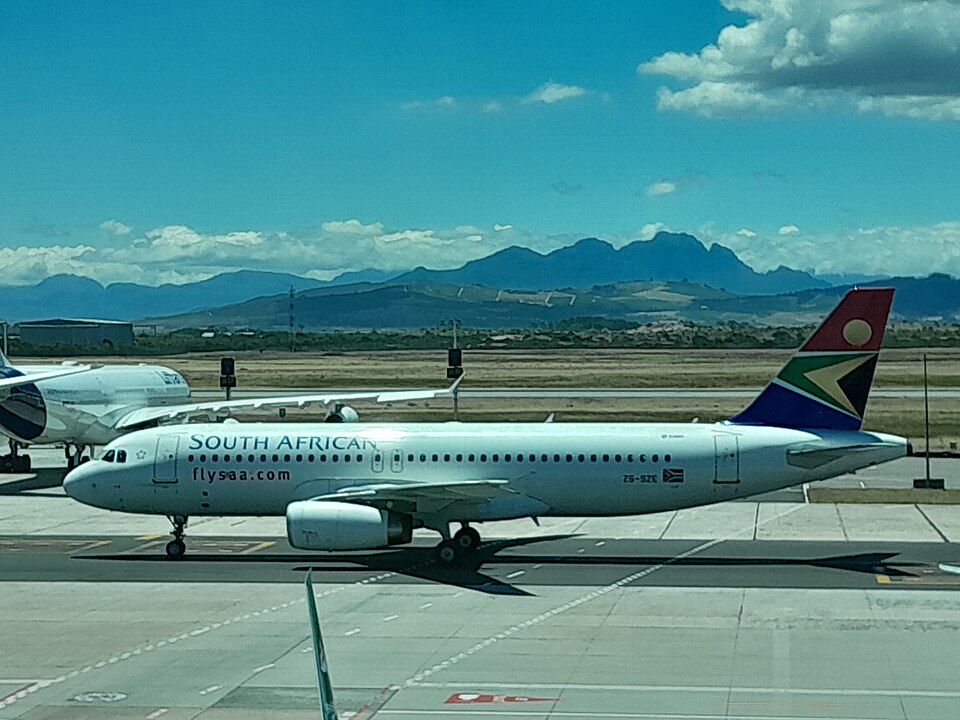
On 11 May 2026, a South African Airways Airbus A320 with registration ZS-SZE was conducting scheduled passenger flight SA327 from O.R. Tambo International Aerodrome (FAOR) to Cape Town International Aerodrome (FACT). The aircraft departed FAOR carrying six crew members and 137 passengers.
En route, air traffic control advised the crew that weather conditions at George Aerodrome (FAGG) were unsuitable for landing, leading to diversions of other traffic to FACT. Consequently, the ZS-SZE crew was instructed to enter a holding pattern near the Sutherland VOR beacon at 36,000 feet before being cleared to proceed to Cape Town.
As the aircraft descended to approximately 6,000 feet above mean sea level (AMSL) on approach to Runway 01, it encountered severe turbulence and negative wind shear with speeds between 20 and 40 knots. This triggered the auto-throttle's Alpha Floor mode, which automatically commanded maximum thrust to prevent a stall. In response, the crew selected Flaps 1.
Simultaneously, the aircraft's flight control system degraded from Normal Law to Alternate Law due to a fault in the Elevator Aileron Computer (ELAC) pitch channel. This fault caused the autopilot to disconnect, and the crew was unable to re-engage it. Shortly after, the aircraft encountered positive wind shear, causing rapid acceleration and an overspeed warning. The crew retracted the slats to reduce speed, but the warning persisted.
The remainder of the approach was flown manually in Alternate Law, later degrading to Direct Law with the landing gear extended. The aircraft landed safely on Runway 01 at FACT. There were no injuries to the 143 occupants and no damage to the aircraft.
The investigation
The SACAA Accident and Incident Investigations Division (AIID) classified the event as a Serious Incident. While the Digital Flight Data Recorder (DFDR) data was secured and shared with Airbus and the Bureau of Enquiry and Analysis for Civil Aviation Safety (BEA), critical cockpit voice recorder (CVR) data was lost because it was not quarantined immediately after landing, violating reporting timelines.
The investigation established that the crew had valid licenses and medical certificates. The pilot-in-command had 21,217 total hours, and the first officer had 6,020 total hours. The aircraft was airworthy with a valid Certificate of Airworthiness expiring in October 2026.
Findings
The primary causal factors identified were:
- Severe Weather: The aircraft encountered significant negative and positive wind shear, leading to rapid changes in airspeed and attitude.
- System Failure: A faulty Elevator Aileron Computer (ELAC) pitch channel caused the flight control law to degrade from Normal to Alternate Law, resulting in autopilot disengagement.
- Operational Response: The crew successfully managed the Alpha Floor activation, overspeed warning, and manual flight in degraded control laws without injury or damage.
Safety action
The investigation highlighted a procedural failure regarding data preservation. The cockpit voice recorder was not quarantined within the required timeframe, resulting in the loss of essential audio data. This contravention of Civil Aviation Regulations underscores the need for strict adherence to immediate post-incident data protection protocols by flight crews and operators.