Incident Overview
The French Bureau of Enquiry and Analysis for Civil Aviation Safety (BEA) has published an interim report covering three separate incidents involving Airbus A320 and A321 aircraft. All three were related to failures of the Digital Radio and Audio Integrated Management System (DRAIMS), resulting in unavailability of transponders, ACAS, and difficulties or loss of radiocommunication and datalink.
Incident 1: Aer Lingus A320 (20 September 2024)
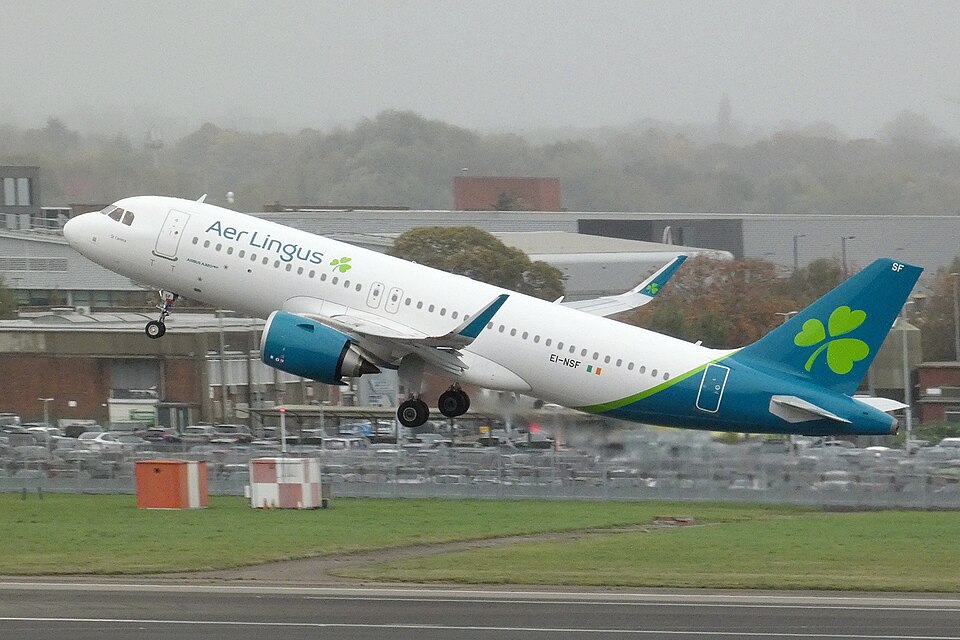
On 20 September 2024, an Airbus A320-251N registered EI-NSF, operated by Aer Lingus, was en route from Dublin to Bordeaux-Mérignac. Approximately 15 minutes before descent at FL 330, the captain heard crackling in his headset. Radio Management Panel (RMP) screens showed intermittent faults, and ECAM alerts indicated transponder, TCAS, and COM failures. At 07:22, the aircraft disappeared from radar. Radio contact was lost, and the crew attempted resets but could not select squawk 7600. The controller initiated alert phases. The crew, in VMC, followed the air-ground communication failure procedure and descended per the flight plan. Radio contact was re-established on 121.5 MHz with a military controller, and later with Bordeaux ACC. A loss of separation occurred with another aircraft, with a minimum of 3.2 NM horizontally and 175 ft vertically. The crew performed two holding patterns and landed without further incident. Post-flight tests on the transponder and RMPs revealed no anomalies.
Incident 2: Transavia A321 (13 January 2025)
On 13 January 2025, an Airbus A321-252NX registered PH-YHA, operated by Transavia, was en route from Granada to Amsterdam. At FL 340, ECAM alerts for NAV LS TUNING DISAGREE, NAV ATC/XPDR STBY, and TCAS STBY appeared. The STBY NAV function activated without crew action, and radio frequencies desynchronized. The aircraft disappeared from radar six times with random transponder codes. Audio was lost intermittently on the co-pilot side. The alert phase was activated. The crew could not process ECAM messages and reset RMPs. At 21:07, the crew attempted to change frequency but their transmission was heard on the previous frequency.
Incident 3: Transavia A321 (29 April 2025)
The report also lists a third incident on 29 April 2025 involving an Airbus A321-252NX registered PH-YHC, operated by Transavia. No further details are provided in this interim report.
The BEA notes that this interim report is based solely on information known at this stage and does not prejudge any final conclusions.