Event
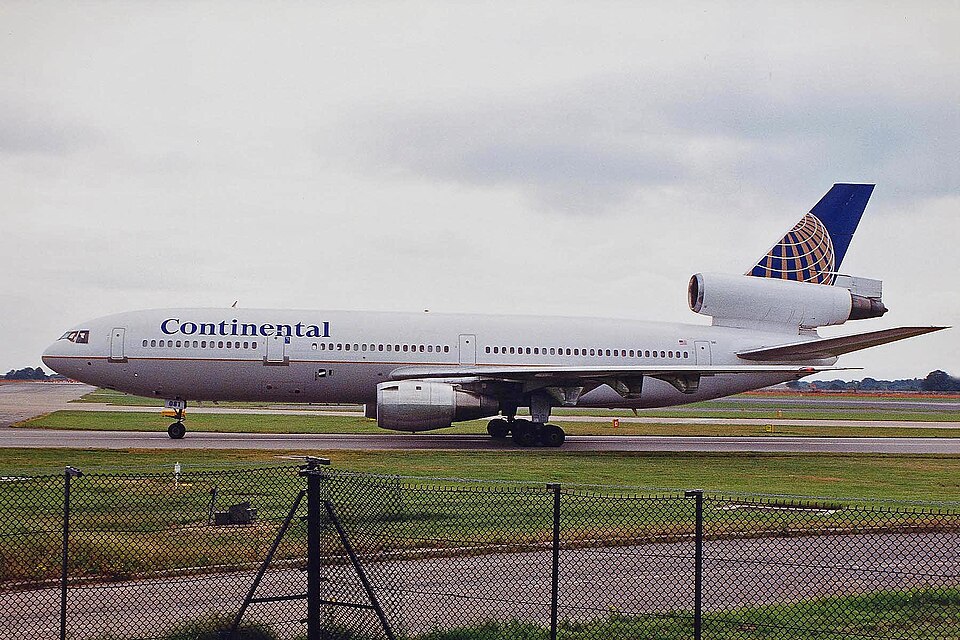
During takeoff at V1, the number 1 engine of a DC-10-30, a General Electric CF6-50C2, sustained a casing breach. The breach occurred in the turbine plane, between approximately the 3 o'clock and 9 o'clock positions. Debris from the breach caused collateral damage to the numbers 2 and 3 engines, the fuselage, and the left landing gear.
Failure Mechanism
The casing breach was initiated when the second-stage low pressure turbine (LPT) anti-rotation nozzle locks failed. The locks were designed to prevent rotation of nozzle segments within the LPT case.
Service Bulletins
In May 1993, the engine manufacturer issued a service bulletin to replace existing nozzle locks with ones featuring thicker posts and arms. This change required modification of the LPT case nozzle lock holes. In March 1994, the manufacturer issued another service bulletin, SB 72-1082, which introduced a newly designed nozzle lock. The new locks utilized original diameter stud shanks but were manufactured from a different material and did not require modification of the LPT case. The accident engine was equipped with these SB 72-1082 locks.
Previous Occurrences
Two previous failures of SB 72-1082 LPT nozzle locks had been reported, discovered during routine under-cowl inspections. In one case, all of the second-stage nozzle locks were broken, and the nozzle segments had rotated 120 degrees within the LPT case, but the case itself was not breached. In the second case, two fourth-stage nozzle locks had failed without collateral damage.
Examination
The Safety Board examined the only two recovered second-stage nozzle locks from the accident engine, along with a section of casing with a nozzle lock stud attached. The examination revealed intergranular fracture features, degradation at the surface of the fracture features, and grain boundaries typical of oxidation damage. These findings were consistent with stress rupture. An examination of a cracked second-stage nozzle lock from a comparison engine also revealed oxidation and intergranular fracture features consistent with stress rupture. According to the engine manufacturer, the failures were intergranular, suggesting either stress rupture or sustained peak low cycle fatigue.