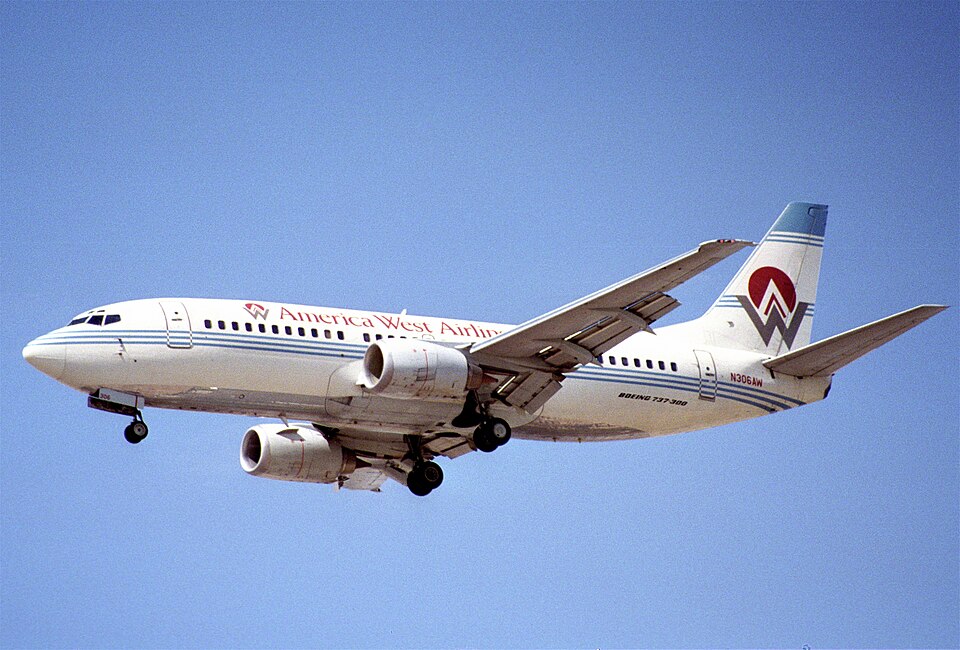
Accident Sequence
The airplane sustained substantial damage during landing when it veered off the left side of runway 27 at 0111 central standard time. Both engines experienced foreign object damage (FOD). The first officer was the flying pilot. According to flight data recorder information, the airplane was on a stabilized instrument approach with the autopilot engaged until about 200 feet above ground level (agl), at which point the autopilot was disconnected and the airplane was flown manually. After the autopilot disconnection, the airplane began drifting left and above the glide slope. The airplane crossed the runway threshold at approximately 57 feet agl, offset about 65 feet left of the centerline, but the ground track was being corrected back toward centerline. A flare was initiated about 600 feet past the runway threshold and about 35 feet agl. During the flare, the ground track reached the centerline, but then deviated back to the left before main gear touchdown, which occurred about 3,200 feet past the runway threshold. At touchdown, the left main gear was about 56 feet left of centerline with an airplane ground track of about 5 degrees to the left. Within two seconds of touchdown (about 300 feet of travel), the left main gear crossed the white runway edge stripe, and within five seconds of touchdown (about 1,000 feet of travel), the left main gear departed the paved surface. A nearly full right rudder input was made at about 3,450 feet from the runway threshold after main gear touchdown. The airplane departed the runway surface before the ground track altered back to the right.
Weather Conditions
Level 4 and 5 thunderstorms were in the vicinity of the airport at the time of the accident. The Automated Surface Observing System (ASOS) rain gauge on the airport indicated 0.42 inches of rain fell between 0100 and 0111. The wind was from the northwest at less than 10 knots, and no significant low-level wind shear was present at the time of the accident.
Company Procedures
The company's Operations Manual states: "Control Glidepath so that touchdown occurs on the 1000 foot point (Fixed Distance Marker)...If an unsatisfactory approach is likely to result in a long landing, GO AROUND and make a second approach."