Casualties unknown

2002-02-20: Boeing 737-724 (N24736) — Beaumont, TX

Beaumont, TX, US

On February 20, 2002, a Boeing 737-724 (registration N24736) was involved in an aviation accident near Beaumont, TX. Investigators recorded the probable cause as: An inadvertent encounter with convective induced turbulence, which injured a flight attendant. Factors were the failure of the airline to supply direction to the flight crew to indicate when the flight attendants could begin cabin service, and the convective… This summary draws on records from the U.S. National Transportation Safety Board (NTSB) historical archive.

Sourcesthe U.S. National Transportation Safety Board (NTSB) historical archivePrimary reportUpdated 1781061362Data APIEditorial standards
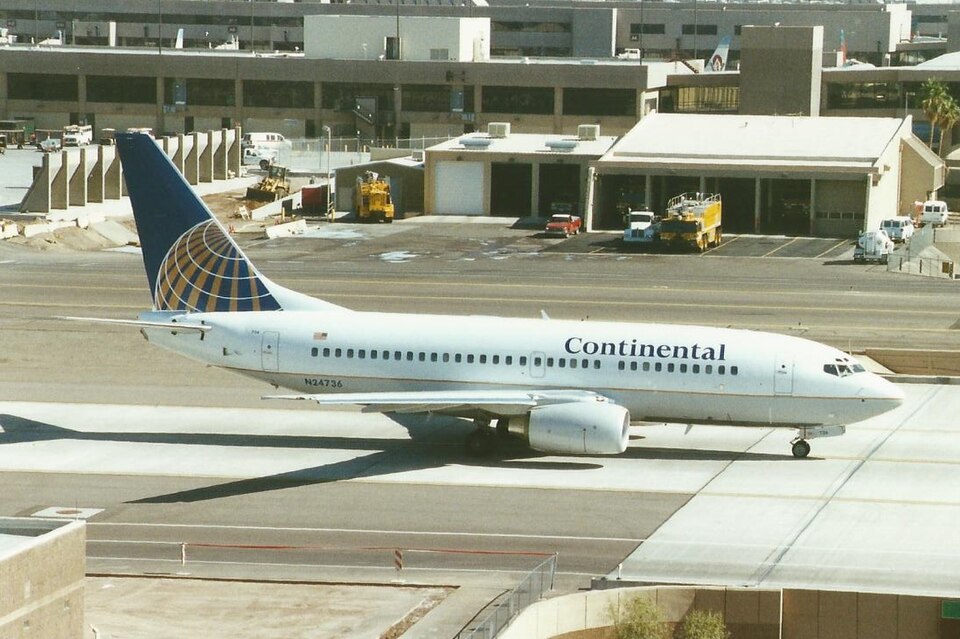
Aircraft registered N24736
Aircraft registered N24736. Photo: simon butler from halesowen, uk / CC BY 2.0, via Wikimedia Commons

A Boeing 737 encountered turbulence while flying through a cumulus cloud in an area of known thunderstorms, causing a flight attendant to fracture an ankle. The crew had not received specific instructions about delaying cabin service.

Incident Details

A Boeing 737 was involved in an incident during which a flight attendant sustained a fractured ankle. The event occurred after the aircraft departed and climbed to an altitude of 15,000 feet. The flight was operating in and out of clouds at the time.

Weather and Flight Conditions

The aircraft had departed into an area of known thunderstorms. The pilot reported that no significant weather radar returns were detected ahead of the airplane. However, after clearing a layer of clouds, the pilot observed a cumulus cloud that was too close to avoid. The airplane flew through the top of the cloud.

Turbulence and Injury

While inside the cloud, the airplane encountered turbulence. The turbulence caused a flight attendant located in the rear of the airplane to be thrown into the air. Upon falling, the flight attendant fractured his ankle.

Crew Actions and Company Policies

The captain had briefed the crew prior to departure. However, the briefing did not include specific comments about delaying the start of cabin service until clear of the thunderstorms, nor was such a briefing specifically required. The airline did not have a written direction for flight attendants regarding when they could leave their seats and begin cabin service.

Conclusion

The incident highlights the circumstances surrounding the flight attendant's injury. No further analysis or causal links are provided in the source.

Investigation report by the U.S. National Transportation Safety Board (NTSB) historical archive. Original record: https://carol.ntsb.gov/event/20020306X00308. This page is a structured re-presentation; facts and quotes are in the National Transportation Safety Board (NTSB), United States.