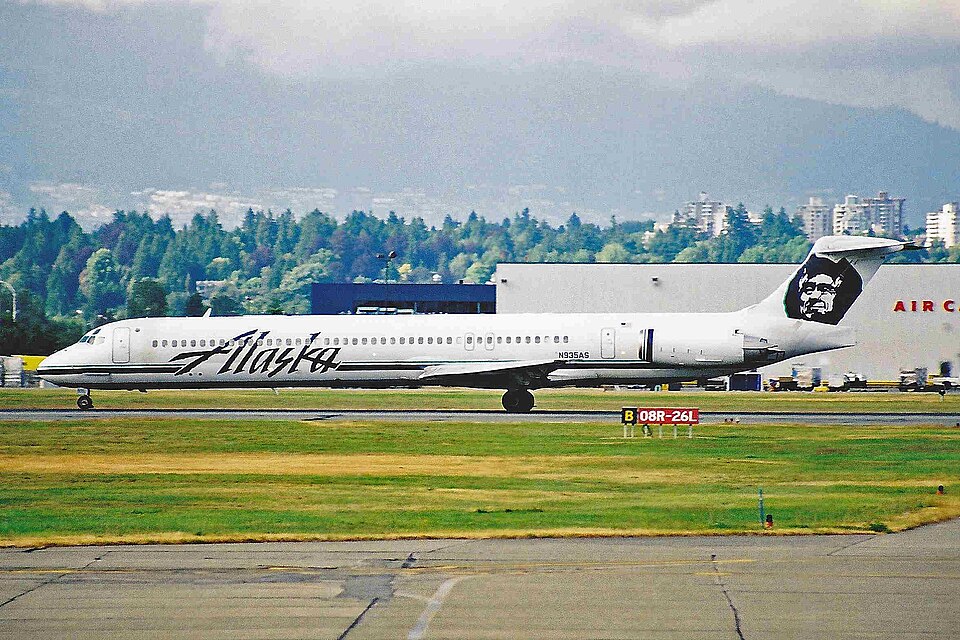
Incident Overview
A McDonnell Douglas MD-82 sustained substantial damage in an on-ground collision with a McDonnell Douglas MD-11. The collision occurred as the MD-82 was being pushed back from its gate, while the MD-11 was taxiing to a parking position. The MD-11 was not damaged.
Sequence of Events
The captain of the MD-82 reported that before pushback, the air traffic control tower ground controller instructed him to "remain clear of taxiway Kilo during pushback from the gate." The captain relayed this instruction to the tug driver, who acknowledged it. Taxiway Kilo runs adjacent to and south of the ramp area used by the MD-82's operator.
As the pushback progressed, the tug driver noticed the MD-11 moving westbound on Taxiway Kilo behind the tail of the MD-82 and stopped the pushback. A ground-marshaling attendant positioned on the east side of the MD-82's right wing proceeded to the rear of the airplane to check clearance between the MD-82's tail and the MD-11's right wing.
The tug driver stated that he saw the ground-marshaling attendant on his left, near the MD-82's tail, using a red flashlight wand to signal him to move the parked MD-82 toward the gate. Immediately after observing that signal, the taxiing MD-11's right wing struck the MD-82's tail.
Crew and Ground Personnel Actions
The MD-11 captain reported taxiing slowly westbound on Taxiway Kilo with the recessed green centerline lights visible through the snow. He kept the nose wheel on the centerline. As the MD-11 approached the stopped MD-82, the relief captain in the right seat and an additional first officer stood up to assess clearance between the MD-11's right wingtip and the MD-82's tail. The MD-11 captain noted that heavy snow accumulation on the right side window limited their view.
The MD-11 crew then focused on the MD-82's ground-handling staff, who held red flashlight wands. The captain stated he did not see a stop or emergency signal from any ground-marshaling attendant. Subsequently, the MD-11's right winglet collided with the upper portion of the MD-82's rudder.
During an interview, the MD-82's ground-marshaling attendant was asked if he attempted to give an emergency stop signal (crisscrossed red flashlight wands) to the MD-11 crew before the collision. He responded "no."
Environmental Conditions
At the time of the accident, heavy snowfall with reduced visibility prevailed. The ramp around the gate had an estimated 8 inches of loose snow. A Douglas DC-8 was following the MD-11 to parking; its flight crew reported reduced visibility due to heavy snowfall and blowing snow from the MD-11's jet blast. The DC-8 crew noted that the recessed green taxiway centerline lights were visible through 3 to 4 inches of loose snow directly ahead but became obscured several hundred feet in front. The DC-8 first officer wrote that as they approached the MD-82, they were concerned about its proximity to the taxiway but felt it had not entered the taxiway, or if it had, it had already been tugged back.
No injuries or fatalities were reported in the source.