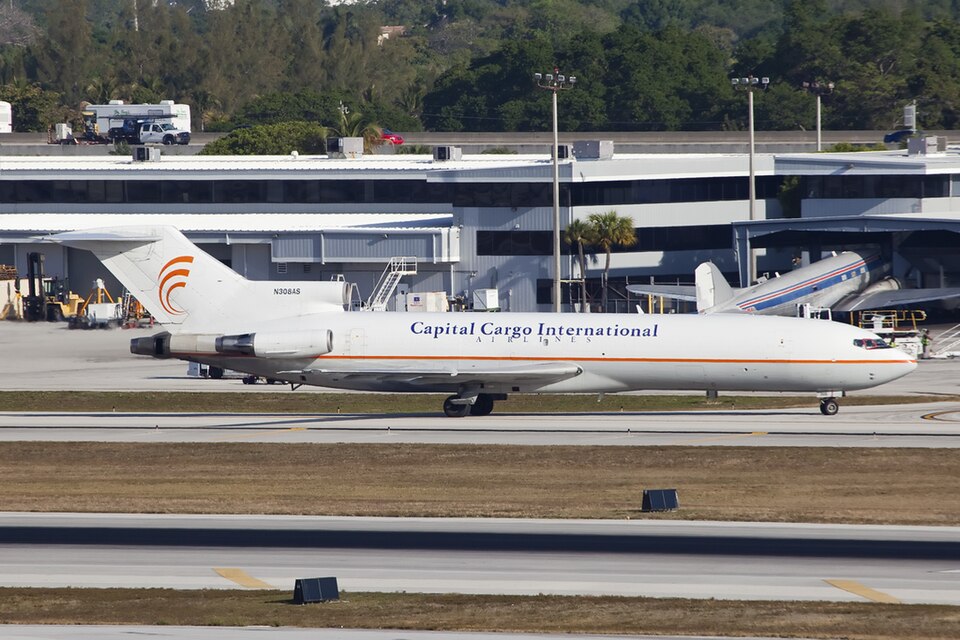
Aircraft Excursion Following Thrust Reverser Failure

Casualties unknown • Seattle, WA, US

An aircraft drifted off the runway and onto a grassy area after a thrust reverser failed in the open position during landing.

What happened

Upon touchdown of the main gear, the crew placed the thrust levers into the idle reverse position. Once the nose gear made contact with the runway, the pilot applied braking and full reverse thrust. During this process, the aircraft began to drift to the left of the runway centerline.

In an attempt to maintain control, the pilot utilized asymmetrical braking, which resulted in no change in directional control. The pilot then attempted to use a combination of asymmetrical braking and asymmetrical reverse thrust. As a final effort to prevent the aircraft from departing the runway, the captain used the tiller. Despite these actions, the aircraft exited the runway and came to rest on a grassy area located between parallel runways.

The investigation

The aircraft was equipped with lightweight clamshell thrust reversers. During the inspection of the number 2 engine, the right-hand thrust reverser was found failed in the open (forward thrust) position. Although the failure occurred, the thrust reverser lights did not indicate any abnormalities.

Metallurgical examination of the hardware revealed an overstress fracture of the lower inner hinge, along with a fatigue fracture through the flange of the upper outer hinge.

Probable cause

The failure of the right-hand thrust reverser on the number 2 engine to transition to the reverse position, remaining in the forward thrust position, caused asymmetrical thrust and subsequent loss of directional control.

All Boeing 727-200 accidents →

Frequently asked questions

What happened in the 1988-06-13 Boeing 727-200 accident near Seattle, WA?

An aircraft drifted off the runway and onto a grassy area after a thrust reverser failed in the open position during landing.

What aircraft was involved and where did it happen?

The accident on 1988-06-13 involved a Boeing 727-200, registration N308AS, operated by Alaska Airlines, Inc., at Seattle, WA.

What was the probable cause of the accident?

The failure of the right-hand thrust reverser on the number 2 engine to transition to the reverse position, remaining in the forward thrust position, caused asymmetrical thrust and subsequent loss of directional control.

Investigation report by the U.S. National Transportation Safety Board (NTSB) historical archive. Original record: https://carol.ntsb.gov/event/20001213X26073. This page is a structured re-presentation; facts and quotes are in the National Transportation Safety Board (NTSB), United States.

Loading the flight search…