Accident Details
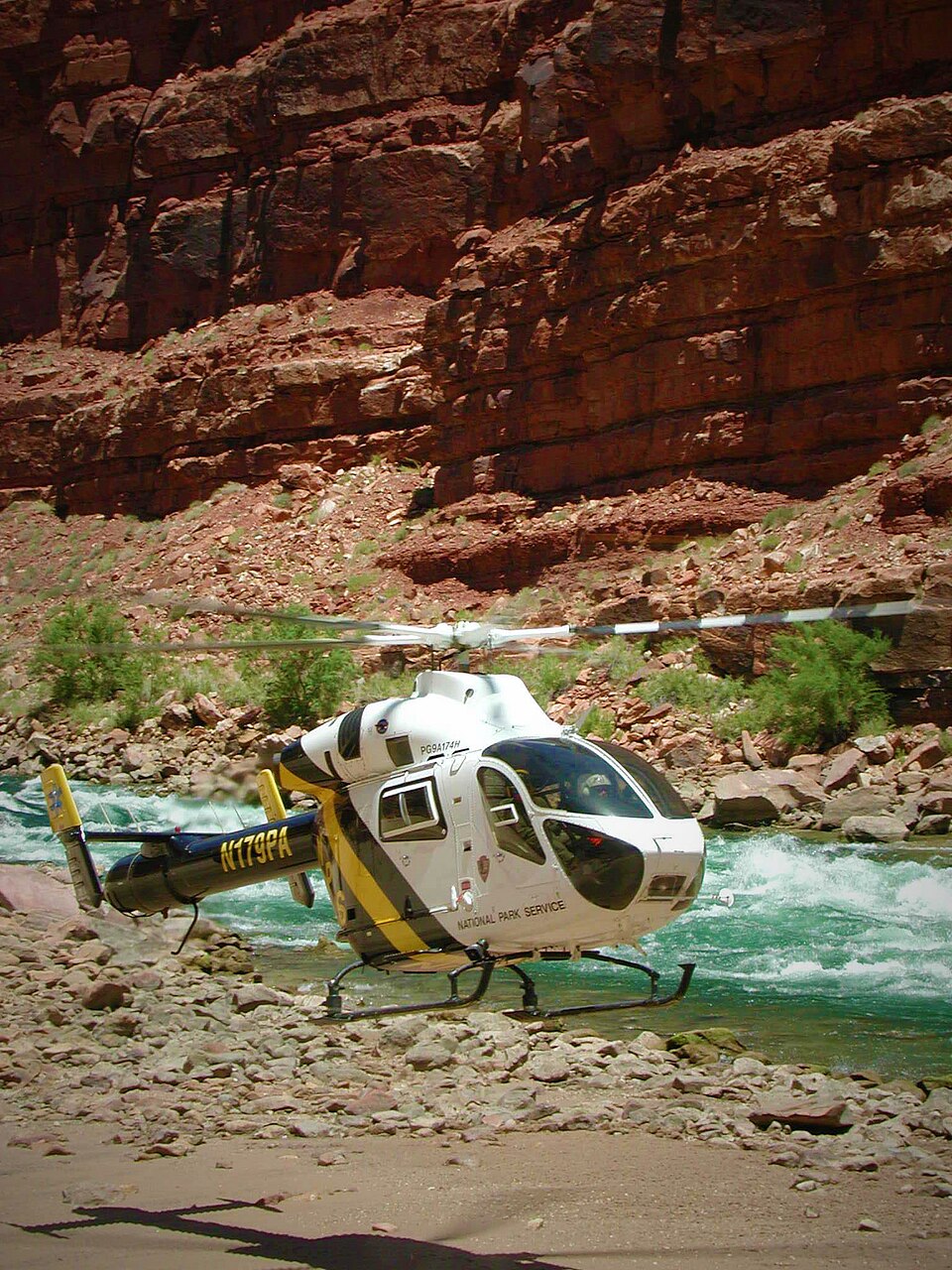
A NOTAR (No Tail Rotor) helicopter experienced a loss of control during a normal descent for landing after the anti-torque system failed. The helicopter entered an uncommanded and uncontrollable right spin as it descended to ground impact. During the approach, after passing over a group of trees, while the helicopter was approximately 15 to 30 feet above ground level and 60 feet from the intended touchdown location, it began a rapid, uncommanded right yaw. The pilot applied full left pedal pressure in an effort to stop the rotation, but the control inputs had no effect on the spin rate. The pilot then retarded the left engine throttle and maneuvered the helicopter away from the trees as it continued to descend. Upon touchdown, the helicopter rolled onto its left side, and the main rotor blades impacted the terrain.
NOTAR System Description
The helicopter's NOTAR anti-torque yaw control system uses a transmission-driven fan with variable pitch blades to supply air to circulation control slots on the tail boom and a pilot-controlled directional jet thruster nozzle. Movement of the anti-torque control pedals changes the fan blade pitch to produce more airflow to the circulation control slots and the anti-torque thruster nozzle. As the pedals are displaced from center toward either extreme of travel, the airflow increases proportionally.
Examination Findings
During post-accident examination of the NOTAR control system, a fracture and separation was found in the force limiting control rod. With the rod assembly disconnected, the NOTAR fan blades assume a neutral pitch, preventing sufficient airflow in the tail boom to provide anti-torque control and maintain heading. The helicopter had previous mechanical problems with the rod assembly, and it was replaced approximately 779 flight hours prior to the accident. Using a scanning electron microscope, examination of the fracture surface revealed that the rod separated due to a fatigue crack originating from the base of the thread roots, followed by final tension overload. No evidence of damage sites, foreign material inclusions, or other potential fracture-initiating conditions was found.