Casualties unknown

Aircraft Strikes Tree During Night ILS Practice Approach (N75844)

Gig Harbor, WA, US

On March 3, 2004, a Cessna 172N (registration N75844) was involved in an aviation accident near Gig Harbor, WA. Investigators recorded the probable cause as: The pilot's failure to follow the published IFR procedure resulting in failure to maintain clearance from objects during an instrument approach. Trees and an inoperative glide slope receiver were factors. This summary draws on records from the U.S. National Transportation Safety Board (NTSB) historical archive; 1 related events involving the same aircraft type or operator are linked below.

Sourcesthe U.S. National Transportation Safety Board (NTSB) historical archivePrimary reportUpdated 2026-07-05Data APIEditorial standards
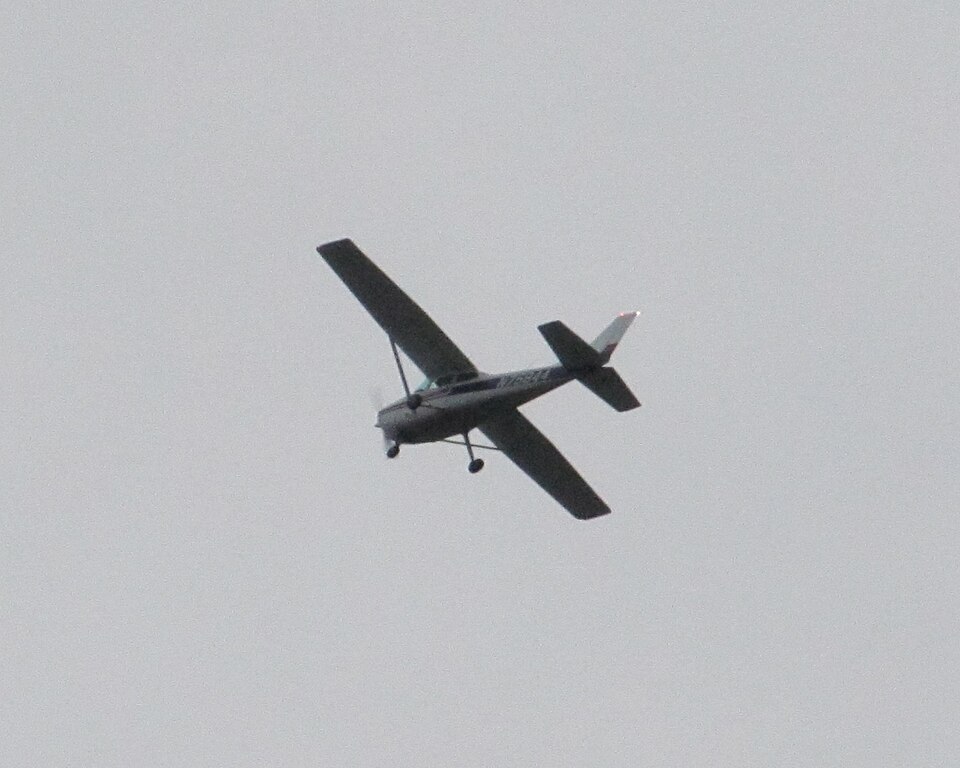
Aircraft registered N75844
Aircraft registered N75844. Photo: Ewkada / CC BY 3.0, via Wikimedia Commons

During night ILS practice in VMC, a pilot struck a tree on the third approach. Radar showed descents below MDA. Aircraft's #1 ILS glide slope had low sensitivity, and localizer was off by one and a half dots.

Incident Overview

A pilot was practicing night instrument landing system (ILS) approaches in visual meteorological conditions when the aircraft collided with an object during the third practice approach. The pilot executed a missed approach and returned to the base airport, where an inspection revealed that the left wing had contacted a tree.

Approach Data

Air traffic communications and radar data indicated that the aircraft was established on the localizer during all three approaches. However, on the first approach, the aircraft descended to 500 feet below the minimum descent altitude (MDA) of 2,000 feet when crossing the final approach fix (FAF). On the second approach, it was 900 feet below the MDA at the FAF. The FAF is identified via a radial from a VOR.

During the third approach, radar data showed the aircraft tracking on the localizer but continuing to descend to 500 feet approximately 1.7 nautical miles prior to the FAF. Shortly after that point, a climb was observed.

Equipment Testing

Testing of the airport approach equipment revealed normal operation. Testing of the aircraft's #1 ILS system found that the glide slope had extremely low sensitivity and could not pick up a signal. The localizer was within tolerance but was off by one and a half dots.

Safety Pilot Observations

The safety pilot reported that he never saw the airport during the third approach and thought that everything was normal.

Probable Cause

The source does not provide a stated probable cause.

All Cessna 172 accidents →

Frequently asked questions

What happened in the 3 Mar 2004 Cessna 172N accident near Gig Harbor, WA?

During night ILS practice in VMC, a pilot struck a tree on the third approach. Radar showed descents below MDA. Aircraft's #1 ILS glide slope had low sensitivity, and localizer was off by one and a half dots.

What aircraft was involved and where did it happen?

The accident on 3 Mar 2004 involved a Cessna 172N, registration N75844, at Gig Harbor, WA.

What was the probable cause of the accident?

The pilot's failure to follow the published IFR procedure resulting in failure to maintain clearance from objects during an instrument approach. Trees and an inoperative glide slope receiver were factors.

Investigation report by the U.S. National Transportation Safety Board (NTSB) historical archive. Original record: https://carol.ntsb.gov/event/20040311X00317. This page is a structured re-presentation; facts and quotes are in the National Transportation Safety Board (NTSB), United States.