Incident Overview
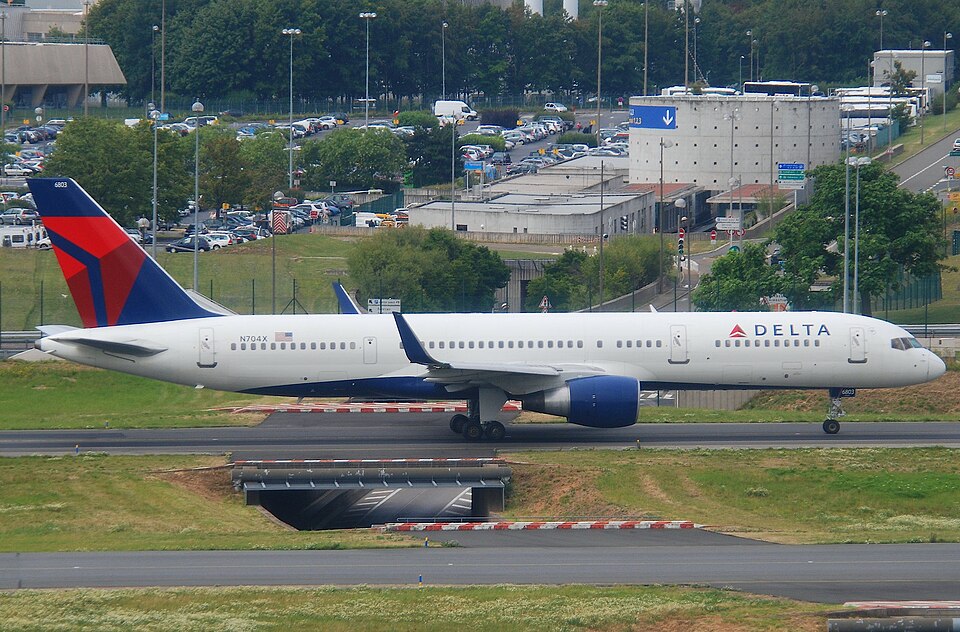
On February 9, 2011, at about 0630 central standard time, a Boeing 757-2Q8, registration N704X, operated by Delta Air Lines as flight 9931, experienced a tailpipe fire in the No. 2 (right) engine while being started at the Minneapolis-St. Paul International Airport (MSP), Minneapolis, Minnesota. The flight was the first since the No. 2 engine had been installed. The airplane had been pushed back from the gate, and the No. 1 (left) engine was started first. After clearing the ground crew, the pilots started the No. 2 engine, which lit off immediately. The pilots observed an orange glow on the right side and heard a low-frequency rumble and radio communications about a fire. Engine instruments showed fuel flow at 8,300 pounds per hour, prompting an immediate shutdown. The pilots continued to motor the engine on the starter for at least 30 seconds. Airport fire department personnel responded but the fire was out upon arrival. A fuel puddle was found in the No. 2 engine's tailpipe. The airplane taxied back to the gate under its own power, and the two pilots deplaned normally. The flight was conducted under 14 CFR Part 121 as a repositioning flight to John F. Kennedy International Airport, New York.
Injuries and Damage
The two pilots were the only occupants and were not injured. Damage was limited to thermal distress and soot on the right wing aft of the No. 2 engine and the wing root fairing. The left side of the fuselage, right side forward of the wing, left wing, and empennage were undamaged. Specific damage included blistering, charring, and delamination of the lower surfaces of the inboard flaps and fixed trailing edge panels, as well as the inboard flap track fairing. Internal damage was not indicated.
Personnel Information
The captain, age 54, held an airline transport pilot certificate with 10,935 total flight hours, including 7,104 hours in Boeing 757/767 aircraft. He had flown 223 hours in the previous 90 days and his last line check was on August 4, 2010. The first officer, age 50, also held an airline transport pilot certificate, with 6,951 total hours, including 2,134 hours in the 757/767. He had flown 208 hours in the last 90 days and 1 hour in the previous 24 hours. His last line check was on May 25, 2010.
Aircraft and Engine Details
The Boeing 757-2Q8, serial number 28163, had a maximum takeoff weight of 255,000 pounds. At the time, weight was 153,865 pounds with about 18,000 pounds of fuel. The aircraft had accumulated 47,209 hours and 14,839 cycles since new. The engines were Pratt & Whitney PW2037 turbofans. The No. 2 engine, serial number 728843, had 24,778 hours and 7,758 cycles since new. It had been overhauled at Delta's Technical Operations Center (TOC) in Atlanta and installed on the aircraft at MSP on February 6, 2011, with 0 hours since overhaul. The engine was removed from service on August 14, 2010, due to a hung start and high exhaust gas temperature.
Meteorological Conditions
At 0553, MSP weather was clear skies, visibility 10 miles, wind from 270 degrees at 8 knots, altimeter 30.24 inches of mercury, temperature -20°C, dew point -25°C.
Communications
Prior to pushback, the intercom cannon plug on the nose landing gear was found broken. Maintenance deferred the item in the logbook, and ground coordination was conducted via radio. No issues were reported with communications between pilots and ground personnel, MSP ground control, or fire department.
Flight Recorder Data
The cockpit voice recorder (CVR) and flight data recorder (FDR) were sent to the NTSB. The CVR audio had been overwritten. The FDR captured the engine start. The No. 1 engine started first, with N2 rpm reaching 26% over 34 seconds, then stabilizing at 57% after fuel introduction. The No. 2 engine started about 1 minute 40 seconds later. When N2 reached 25%, fuel was introduced. N2 continued to 40% without stabilization; N1 peaked at 10%. Fuel flow recorded about 8,000 pph. After fuel shutoff, N2 decreased to 30% before dropping to zero.
Fire and Examination
The tailpipe fire damaged portions of the right wing aft and left of the No. 2 engine. The lower surfaces of the main and aft inboard flaps were blistered, charred, and delaminated. The inboard flap track fairing was similarly damaged. Grease on interior surfaces was not melted, indicating no internal damage. The engine was removed and disassembled at Delta's TOC, revealing no mechanical issues but heavy sooting in turbine and exhaust components.
Post-Incident Engine Testing
The Electronic Engine Control (EEC) passed acceptance, thermal cycle, and vibration tests. The Fuel Control Unit (FCU) was tested. A technician noted the channel A wire harness connector was hand tight but the red indicator band was covered; channel B was tight. FCU electrical tests passed at room temperature but after cold soaking to -10°F, channel A and B FMV resolver angles were over high limit (2.4 and 7.55 degrees), and resistances were below limits. The FMV translated smoothly from full open to idle, but resolver angles at idle were over limit. Flow test met all requirements except overspeed trip flow was 375 pph below minimum. Disassembly at the manufacturer revealed surface corrosion and axial scratches on the FMV slide and sleeve. The aircraft had been parked outside for about 36 hours in subzero temperatures after a satisfactory preflight test.