Incident Summary
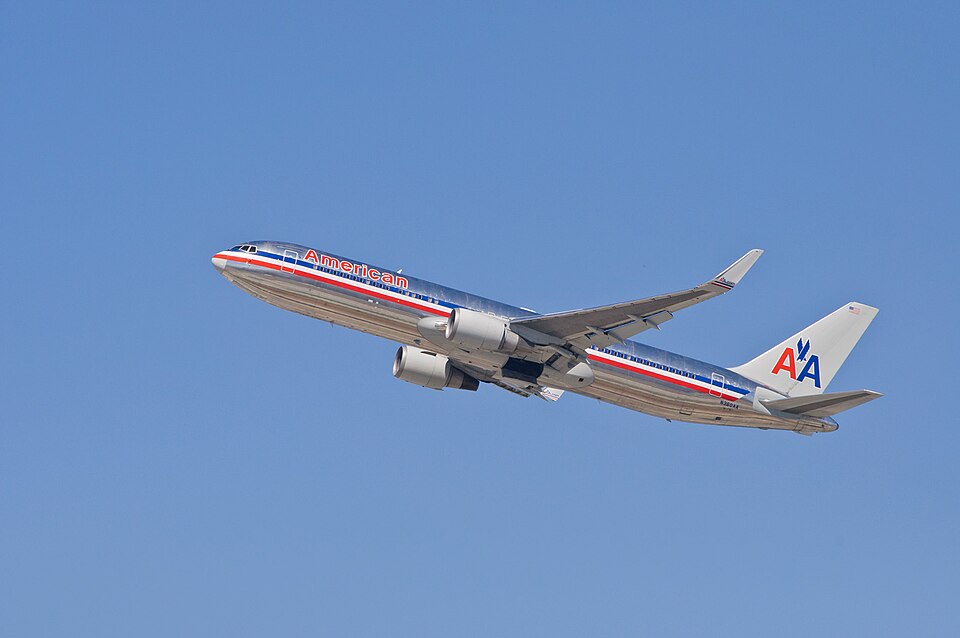
On February 8, 2012, about 1109 eastern standard time, an American Airlines Boeing 767-323ER, registration N360AA, operating as flight 837, experienced an undercowl engine fire in the right engine shortly after takeoff from John F. Kennedy International Airport (JFK) in Jamaica, New York. As the airplane climbed through 9,000 feet, the pilots heard a bang followed by a right engine fire warning. They shut down the engine, discharged one fire bottle, and declared an emergency with air traffic control, leveling off at 10,000 feet. After 30 seconds the warning remained, so a second fire bottle was discharged, extinguishing the warning. The captain directed the first officer to continue flying and communicate with ATC while the captain and second first officer performed checklists and coordinated with the lead flight attendant. ATC cleared the flight for an immediate approach to runway 4R at JFK. The crew prepared the cabin for an emergency landing. The flight attendants reported no visible fire from the right engine. The airplane made an overweight, single-engine landing with minimal sink rate, rolled out to the end of runway 4R, and stopped at taxiway FB for fire department inspection. After confirmation the fire was out, the airplane taxied to the gate, where all 3 pilots, 9 flight attendants, and 201 passengers deplaned normally with no injuries. The airplane was operating as a scheduled international passenger flight under 14 CFR Part 121 from JFK to Port-au-Prince, Haiti.
Investigation
The right engine showed evidence of fire. Externally, soot was visible at the split line of the thrust reverser cowls, and internal thermal barrier charring and discoloration were noted. The left side of the engine was covered with soot; the right side was mostly clean except near the fuel flow transmitter and integrated drive generator (IDG) fuel-oil heat exchanger. Insulation and chaff guards below the horizontal centerline were charred and partially melted; above, wires were sooted. Examination of the engine while on the airplane included wet-motoring, which revealed fuel leaking from under the spray shield on the forward end of the IDG fuel-oil heat exchanger. The forward end had a two-piece bracket and spray shield, with the bracket over the spray shield instead of the spray shield over the bracket. When the IDG fuel-oil cooler was removed, all retaining bolts had proper torque. The O-ring on the front side of the seal was missing a 0.9-inch arc; the remainder was in good condition. The airplane's logbook showed the right engine's fuel flow transmitter had been replaced the previous night at Miami International Airport, along with the fuel tube between the IDG fuel-oil heat exchanger and the fuel flow transmitter, per Airworthiness Directive 2000-04-14. The replaced fuel tube had a barely legible part number but was correct. The AD had been complied with. No other maintenance on the right engine occurred at JFK before the incident flight.
Previous Incident
A similar event occurred on July 12, 2006, involving a Delta Air Lines Boeing 767-300ER, N153DL, which experienced a left engine fire shortly after takeoff from Rio de Janeiro, Brazil. The pilots discharged one fire bottle, extinguished the warning, and returned for an overweight single-engine landing. Damage to the Delta engine was virtually identical, with soot, melted insulation, and a fuel leak from the front of the IDG fuel-oil heat exchanger. Examination revealed the two-piece bracket and spray shield had been misassembled with the spray shield under the bracket, and a 0.375-inch section of the seal was missing.
Maintenance Issues
General Electric issued Service Bulletin (SB) 73-0242 on May 17, 1996, introducing a one-piece bracket and spray shield to replace the two-piece configuration, aiming to improve maintainability and eliminate misassembly potential. Initially a Category 7 (optional) bulletin, it was elevated to Category 3 (recommended at next shop visit) on March 9, 2007, after the Delta incident. American Airlines' affected engine underwent a heavy maintenance shop visit on November 5, 2009, but retained the two-piece configuration. American stated that their CF6-80C2 engines had operated with a mix of both configurations for 20 years without issue, and they saw no economic reason to replace the two-piece based on reliability data. The SB was not mandated by regulation. On July 12, 2012, the NTSB issued Safety Recommendation A-12-47, urging the FAA to require installation of the one-piece bracket and spray shield per GE SB 73-0242. The FAA subsequently issued a notice of proposed rulemaking on August 13, 2012.
[Note: The original source included sections on flight recorders and communications; no anomalies were noted.]