History of Flight
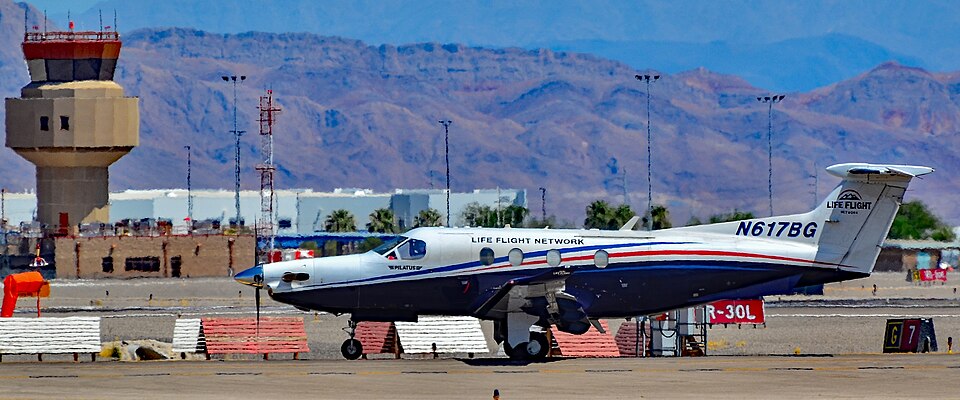
On September 12, 2013, about 1600 central daylight time, a Pilatus Aircraft Ltd PC-12/47E, N617BG, operated by FlighTime Business Jets, LLC under 14 CFR Part 135 as an on-demand passenger flight, experienced an aborted takeoff at Austin-Bergstrom International Airport (AUS), Austin, Texas. The airplane began to settle onto the runway after lift-off, stopped on the remaining runway, and sustained minor damage due to thermal damage of the right main landing gear wheel. The airline transport pilot and eight passengers were uninjured; one passenger sustained minor injuries. The flight was destined for Lubbock Preston Smith International Airport (LBB) under an IFR flight plan in visual meteorological conditions.
The FlighTime Business Jets, LLC Trip Schedule listed a planned departure time of 1515 with nine passengers. Three passengers were replaced but the Trip Schedule was not updated. The pilot reported that after a normal taxi and takeoff roll, at rotation speed he rotated to establish a positive rate of climb. As the aircraft accelerated to 95 knots, airspeed stagnated, the aural stall warning and stick shaker activated, followed by the stick pusher pitching the nose down. The pilot overrode the stick pusher to avoid nose wheel impact, leveling at 20-30 feet AGL. The scenario repeated three times, with stall warnings and stick pusher activations. After the third recovery, the pilot aborted the takeoff, settled the aircraft on the mains in a normal landing attitude, and applied normal to moderate braking. The flying portion lasted about 20 seconds.
Passengers stated that their weights were not verified before the flight, and several coolers aboard were not tied down. They were not asked about the weight of cargo or carry-on items, and did not receive a passenger briefing.
Personnel Information
The pilot held an airline transport pilot certificate with multiple type ratings and commercial privileges with an airplane single-engine land rating. He was hired by FlighTime Business Jets on July 19, 2013, and completed Pilatus PC-12 initial training from July 29 to August 1, 2013, using a Level D simulator at FlightSafety International. He passed an oral examination on August 9, 2013, and an airman competency/proficiency check on August 16, 2013, conducted by FAA inspectors. The incident airplane was used for the check. The pilot had accumulated 24.7 hours in PC-12 airplanes and had no prior FAA record of incidents, accidents, or enforcement actions.
Wreckage and Impact Information
The incident was initially reported as a flat tire during a rejected takeoff by the former Director of Operations on September 13, 2014. It was not reported to the FAA or NTSB until September 16, 2013. On September 17, 2014, FAA inspectors examined the airplane; a mechanic was removing the right main tire, wheel, and brake assembly. The right wheel fuse plugs were melted, and cracks and melted metal were found in the right tire sidewall. No other damage was noted. Fuel onboard was 1,485 lbs. The cockpit pitch trim indicator was at the "green diamond." The aircraft weight and balance, as required by FAA regulations, was not in the airplane flight manual nor on board.
On September 26, 2013, the Lightweight Data Recorder (LDR) was removed under FAA supervision and shipped to the NTSB Vehicle Recorders Laboratory. The operator had downloaded the LDR prior to removal without knowledge of the NTSB or FAA.
Additional Information
The LDR contained about 25 hours 35 minutes of flight data and 2 hours of cockpit audio; however, the incident flight audio was overwritten. An NTSB Pilot/Operator Accident/Incident Report was not received from the pilot.
Tests and Research
The FlighTime Business Jets Operations Specifications required actual weights for determining aircraft weight and balance. The PC-12/47E maximum ramp weight is 10,495 lbs, takeoff weight 10,450 lbs, landing weight 9,921 lbs, and maximum zero fuel weight 9,039 lbs. The Trip Schedule listed total passenger weight of 1,750 lbs, but three passengers had been replaced without update. The pilot's weight and balance plot, not including carry-on items, showed a CG of about 239 inches and weight of 10,369 lbs. The FAA inspector stated that about 490 lbs of carry-on items (including coolers and food) were not included in the weight and balance. Actual passenger weights from interviews totaled 2,031 lbs. A weight and CG plot showed the flight was about 4 inches aft of the aft CG limit and about 100 lbs above maximum ramp weight.
A plot of the incident flight showed seven peaks in pitch at a radio altitude of less than 20 feet, with the last five peaks having corresponding stick shaker activations. There was no activation of the stick pusher.