History of Flight
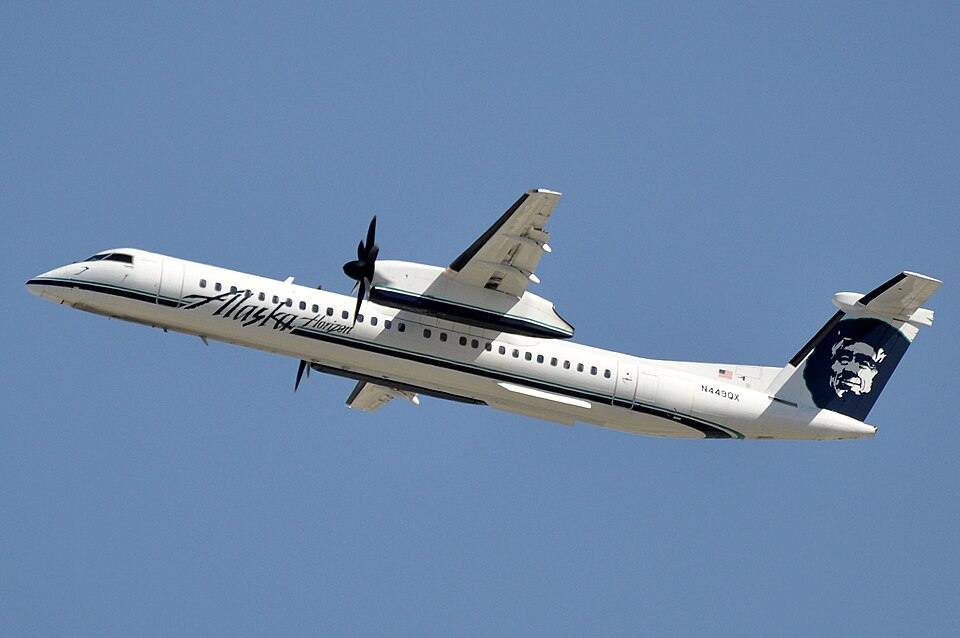
On September 29, 2013, at 0922 Pacific daylight time, a Bombardier DHC-8-402, registration N449QX, operated by Horizon Air as flight 2441 under Part 121, encountered moderate to severe turbulence while descending to Reno/Tahoe International Airport, Reno, Nevada. The flight originated from Seattle, Washington at 0747. Visual meteorological conditions prevailed, and an instrument flight rules flight plan was filed.
The flight crew was aware of strong winds from the west as they approached Reno. Air traffic control initiated the descent earlier than expected, with the aircraft at 25,000 feet. The captain made an announcement to the cabin crew at approximately 22,000 feet, instructing them to be seated due to the high likelihood of turbulence during descent. The first officer, who was not flying, communicated with air traffic control, which advised of moderate turbulence below 12,000 feet. The first officer noted the approach checklist and planned to chime the cabin crew at 14,000 feet for landing.
As the flight descended below 12,000 feet, little turbulence was encountered. However, around 10,000 feet, while leveling out, a series of escalating turbulent jolts occurred, each lasting one to two seconds, with the strongest categorized as severe. The severe turbulence disengaged the autopilot, and the captain took manual control. The flight crew contacted the cabin crew to check on everyone and was informed that one flight attendant and two passengers required medical attention. After the severe encounter, the flight continued with occasional moderate turbulence for the remainder of the descent.
Injuries and Cabin Crew Actions
The cabin crew consisted of a forward flight attendant (A) and an aft flight attendant (B). They had finished cabin service and were cleaning up when they received the landing chime at about 15,000 feet.
Flight attendant A was picking up service items and went to check on a passenger in seat 11B who had been told twice to fasten their seat belt. While at row 9 or 10, the severe turbulence hit. She attempted to reach an open seat but was thrown to the ceiling and struck the overhead bin. The passenger in 11B was ejected from his seat and landed on the armrest of seat 11D, occupied by a female passenger. Flight attendant A ensured the passenger returned to his seat before proceeding to her jump seat.
Flight attendant B was in the aft galley making the final approach announcement. As she attempted to sit and buckle into her jump seat, the first hard turbulence struck, knocking her onto the floor. Before she could regain her seat, a second severe jolt threw her to the ceiling and back to the floor. A passenger assisted flight attendant B, who was seriously injured, back to her seat before reseating himself. One flight attendant and two passengers sustained injuries: the flight attendant seriously and the two passengers minor. The pilots, other cabin attendant, and 55 remaining passengers were not injured. The aircraft was not damaged.
Meteorological Conditions
A National Transportation Safety Board specialist reviewed weather conditions for the time of the accident. Conditions indicated a mountain wave event at 10,000 feet mean sea level and for several layers above. Satellite imagery showed wavy clouds, suggestive of mountain wave activity, and the upper air sounding identified an inversion at 10,000 feet. SIGMET Yankee series was in effect, issued for severe turbulence for the entire day.
The surface weather report from Reno at 0855 recorded wind from 210 degrees at 19 knots, gusting to 24 knots, with few clouds at 8,000 feet, scattered at 10,000 feet, and broken at 15,000 feet. An Airmet for turbulence throughout Nevada indicated turbulence, strong winds, and low-level wind shear valid through 0900, with moderate turbulence between 18,000 and 41,000 feet continuing through 1500.