History of the Flight
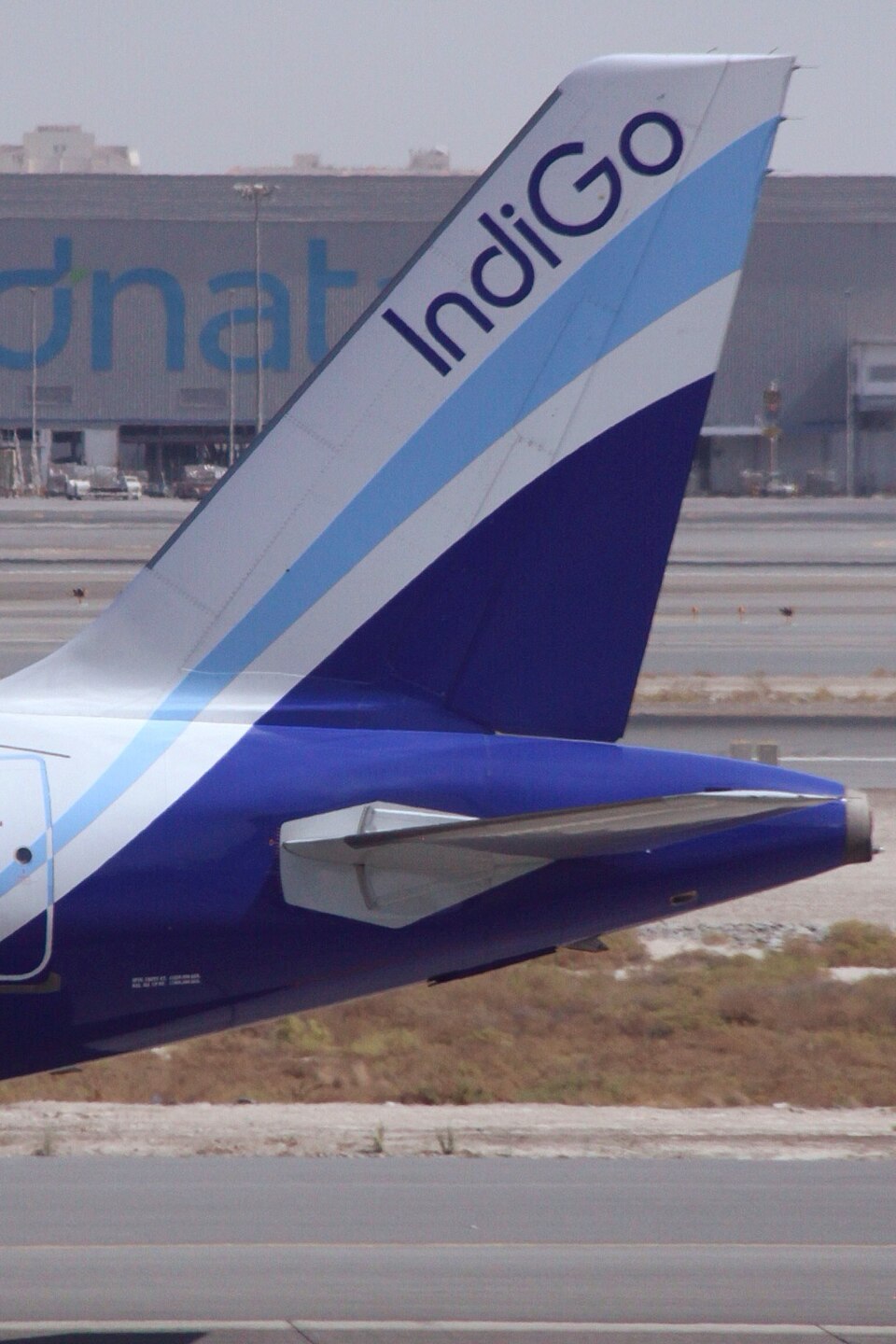
On 28 January 2018, Indigo flight IGO334, an Airbus A320 (registration VT-IEH), was operating from Hyderabad to Raipur, while Emirates flight UAE353, a Boeing 777-300 (registration A6EPJ), was operating from Singapore to Dubai. Both aircraft were under the control of Nagpur Radar South (RSR-South) on frequency 133.65 MHz. At the time, UAE353 was cruising at flight level (FL) 300, and IGO334 was at FL330 on a direct track to Raipur. At 05:50:03 UTC, IGO334 requested descent. The Planning Controller, acting in the absence of the Radar Controller, cleared IGO334 to descend to FL250, which required crossing the level of UAE353 at FL300. The cleared flight level was not entered into IGO334's data block by the Radar Controller.
At 05:52:28 UTC, IGO334 began its descent. A Level Burst (LB) appeared on the radar situation data display (SDD) at 05:51:32 UTC when IGO334 passed FL319. A Short Term Conflict Alert (STCA) in red appeared at 05:52:36 UTC when IGO334 passed FL309; no yellow predicted STCA had appeared. The relieving Radar Controller (Radar Controller 2) had reported for duty, and a handover procedure was in progress. At 05:52:47 UTC, Radar Controller 2 instructed IGO334, "Re-cleared FL310," as IGO334 passed FL307. Despite taking over, Radar Controller 2 then handed the headset back to Radar Controller 1 at 05:52:49 UTC and stood behind, observing the scope. At 05:52:56 UTC, IGO334 stopped descent at FL307, and UAE353 was maintaining FL300, with their radar position symbols nearly superimposed.
At 05:52:51 UTC, UAE353 reported receiving a TCAS Resolution Advisory (RA) to ATC; IGO334 reported a Traffic Advisory (TA) and RA at 05:53:05 UTC. UAE353 followed its RA and descended to FL296. IGO334 descended to FL307 and then climbed to FL311. At 05:52:58 UTC, Radar Controller 1 resumed transmitting and at 05:53:22 UTC issued "IGO334 Radar re-cleared FL305" while both aircraft were following their RAs. At 05:55:29 UTC, UAE353 confirmed its RA. Radar Controller 1 remained on the frequency for over two hours, despite the handover. Non-standard language was used in inter-unit coordination.
Personnel Information
Both flights were operated by scheduled airlines with appropriately qualified and licensed flight crews. The RSR South Radar Controller was authorized to handle radiotelephony in a radar environment, and the Planning Controller was authorized for procedural control. The Planning Controller also served as the Watch Supervisory Officer (WSO) for the shift.
Communications
Both aircraft were in positive contact with Nagpur RSR-South on 133.65 MHz throughout the incident. Two-way communication was maintained, although VHF range was reported to be poor. A transcript of the relevant ATC transmissions was included in the investigation report.
Findings and Probable Cause
The investigation identified several factors. The Probable Cause of the serious incident was inadequate situational awareness of the Planning Controller and the Radar Controller, which resulted in an unwarranted descent clearance to IGO334 through the level of UAE353. The clearance was issued by the Planning Controller in the absence of the Radar Controller, and the cleared flight level was not entered on the data block. The handover between controllers was conducted improperly, with the relieving controller returning the headset and remaining in a supervisory role. No predicted STCA warning appeared, and the loss of separation occurred at the point where the radar position symbols of the two aircraft were almost superimposed.