Introduction
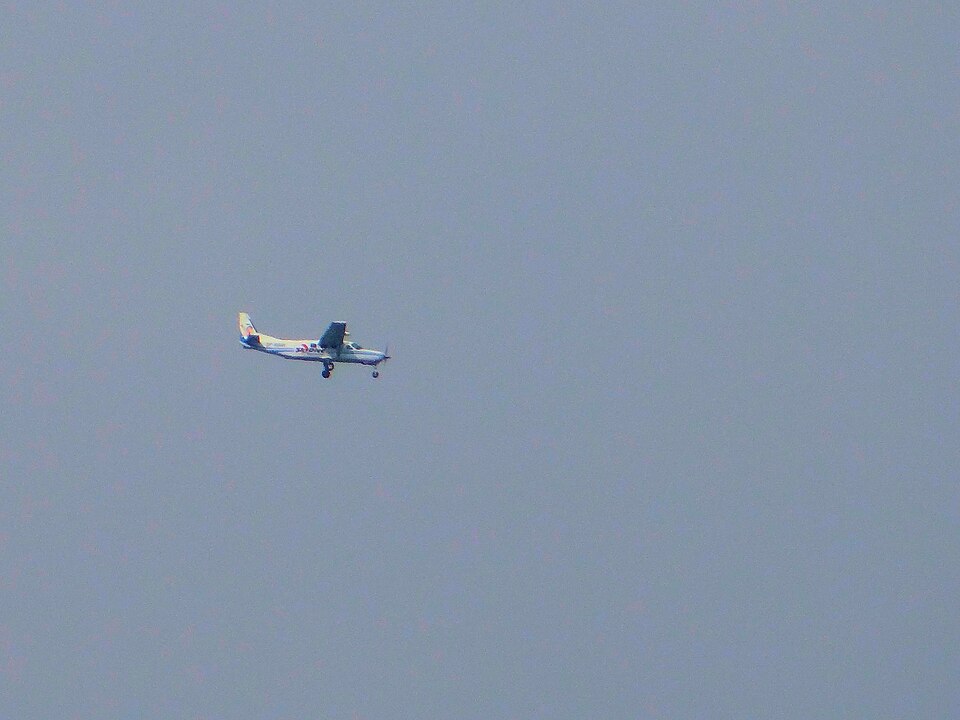
On 14 June 2019, a serious incident occurred involving a Cessna 208B Caravan, registration SP-WAW, operated by Aeroklub Warszawski. The aircraft was performing skydiving flights at landing site EPNC.
Flight History
The day's operations included 13 planned sorties for parachute drops. The first series of two flights ended at 12:47. The second series, starting at 12:59, consisted of four flights for vertical formation skydives (VFS). The incident occurred during the sixth flight of the day, which was the fourth flight of the second series.
Events Leading to Loss of Control
The aircraft carried a single pilot and 15 skydivers: a 14-person VFS formation and one solo jumper. At approximately 4000 m AGL, 11 skydivers from the formation moved simultaneously toward the rear door. Before the jump, 7 skydivers positioned themselves outside the aircraft, holding onto handholds on the fuselage, while 4 others stood in the doorway. This movement shifted the aircraft's center of gravity aft of the permitted limit. Consequently, the aircraft exceeded its critical angle of attack and lost pitch control.
The aircraft rolled left around its longitudinal axis. During the roll, 9 skydivers separated from the fuselage. The aircraft then entered a steep descent, and another 5 skydivers left the aircraft. Two skydivers collided with the horizontal stabilizer, damaging the horizontal stabilizer and jamming the elevator.
Recovery and Landing
The aircraft descended rapidly while the pilot made multiple attempts to regain control. Control was regained at approximately 1000 m AGL. After leveling the aircraft and checking controllability, the pilot performed a landing without further consequences.
Conclusions
The incident was classified as a serious incident (LOC-I and SCF-NP). The cause was the aft shift of the center of gravity beyond the allowable limit, leading to exceeding the critical angle of attack and loss of control.