History of the Flight
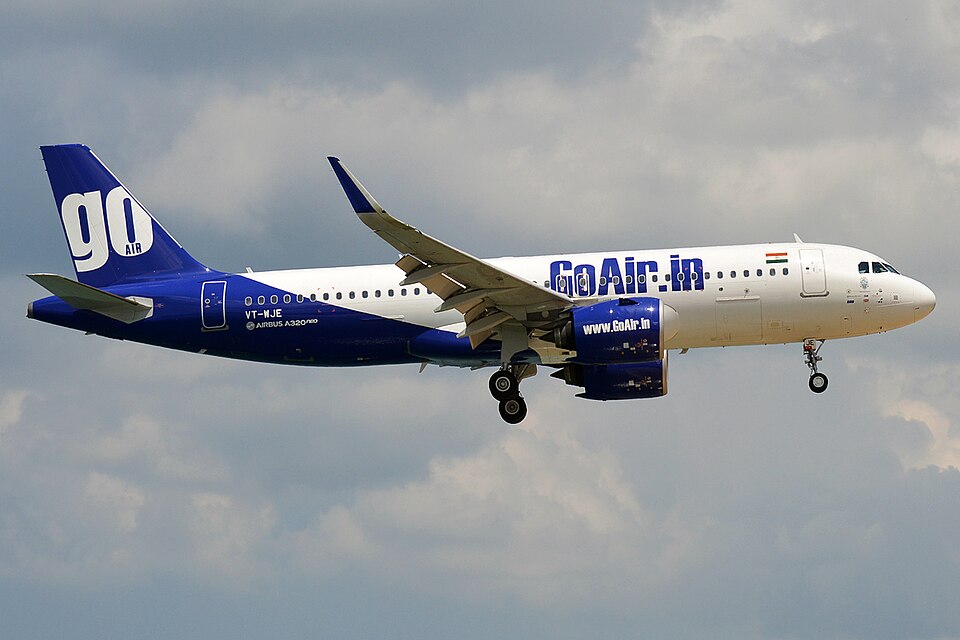
On 22 December 2019, Go Airlines (India) Limited operated flight G8-2506 from Mumbai to Chandigarh using Airbus A320 (NEO) aircraft VT-WJE. The aircraft carried 172 passengers, two cockpit crew, and four cabin crew. After take-off from Mumbai at approximately 12:22 UTC, while climbing through flight level 210 to 220, the ECAM displayed "Engine Stall" followed by "High Engine Vibration" warnings for Engine #1. At 12:30:40 UTC, N2 vibration on Engine #1 reached the maximum of 10 units, and N1 vibration also reached maximum. The highest recorded EGT was 1134°C at 13:31:01 UTC. The crew executed ECAM actions and QRH procedures for high engine vibration, gradually reducing Engine #1 power to idle at 12:31:11 UTC, after which vibrations and EGT dropped within limits. The crew decided to return to Mumbai and informed ATC at 12:31:44 UTC. Engine #2 power was changed from CLIMB to MCT at 12:33:08 UTC. Between 12:34:49 and 12:37 UTC, the crew advanced Engine #1 throttle lever angle from 1° to 10°, but vibrations increased again, so they kept the engine at idle. The aircraft landed safely on Runway 27 at 12:50 UTC without requiring an overweight landing. Passengers disembarked normally; no fire or injuries occurred.
Damage to Aircraft
Damage was limited to the left engine. Visual inspection of the exhaust area revealed that all blades of the third stage low-pressure turbine (LPT) were broken and burnt at the tips. The LPT 3rd stage blades of the left engine were found damaged.
Personnel Information
The pilot-in-command held an ATPL with 9561:09 hours total flying experience, including 5650:29 hours on the A320. The co-pilot held a CPL with 2988:51 hours total flying experience, including 2756:12 hours on the A320. Both had valid licenses and medical certificates.
Aircraft and Engine Information
The aircraft was an Airbus A320 (NEO) fitted with two Pratt & Whitney PW1127G-JM turbofan engines. The PW1127G-JM is an axial-flow, twin-spool turbofan with an ultra-high bypass ratio and a gear-driven fan. The engine consists of multiple modules including fan rotor, low compressor, high compressor, combustor, high turbine, low turbine, and exhaust case groups.
Investigation
The Aircraft Accident Investigation Bureau (AAIB) classified the occurrence as a serious incident and appointed an Investigator-in-Charge and an Investigator. The investigation included analysis of flight data and engine component examination. The probable cause could not be established; the exact reason for the failure of the 3rd stage LPT blade(s) resulting in high engine vibration was not determined.