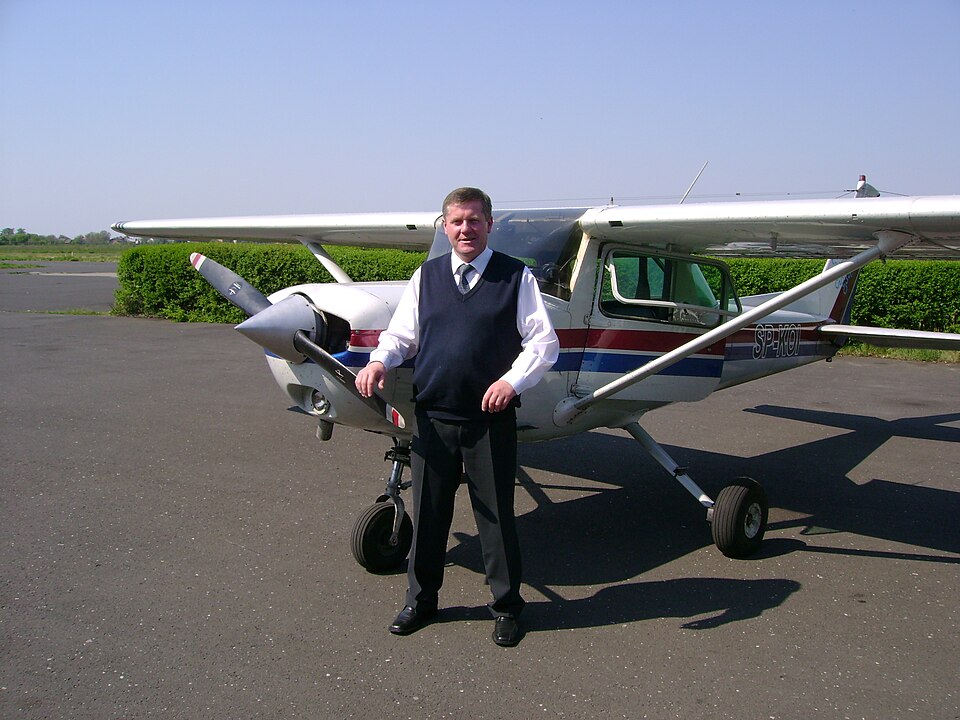
Accident Details
On 22 May 2020, at approximately 11:15 local time, a Cessna C-152 (registration SP-KOI) operated by ATO Royal-Star was conducting circuit training at Mielec Airport (EPML). The aircraft was on its fourth solo flight of the day under the supervision of an instructor pilot.
Flight and Landing
The student pilot, a 32-year-old male with 24 hours and 52 minutes of solo flight time, had completed three previous circuits without incident. After turning onto final approach, the student assessed the aircraft as high on the glidepath and configured flaps to 30°. He maintained an airspeed of 65 knots. The instructor, positioned near taxiway B1, observed the touchdown. The aircraft initially touched down on all three points, then bounced gently. A second, higher bounce followed, and then a third, even higher bounce. During the second bounce, the instructor grabbed the radio and issued the command "pull back on the yoke." The student acknowledged hearing the command but did not execute it. After the third bounce, the aircraft impacted the runway hard on the nosewheel, resulting in the nose gear leg being torn off, along with damage to the propeller, engine cowling, exhaust collector, and air filter.
Aftermath
The aircraft came to a stop. The instructor radioed the student to close the fuel valve, turn off magnetos, and electrical power. The student complied but quickly de-energized the electrical system, preventing further radio communication. The student exited the aircraft unaided and sustained no injuries. About ten minutes later, emergency services and police arrived. Both the student and instructor tested negative for alcohol.
Analysis
The investigation determined that the aircraft was airworthy and properly insured. The student was rested and met the requirements for the training flight. Weather was not a factor. The instructor noted that the student had previously been instructed on proper recovery from bounces, including adding power and going around or maintaining yoke position during descent. However, during the incident, the student failed to respond appropriately.
Probable Cause
The Polish State Commission on Aircraft Accident Investigation (PKBWL) stated the cause as the student pilot's lack of reaction to the aircraft bouncing off the runway (kangaroo) during landing.