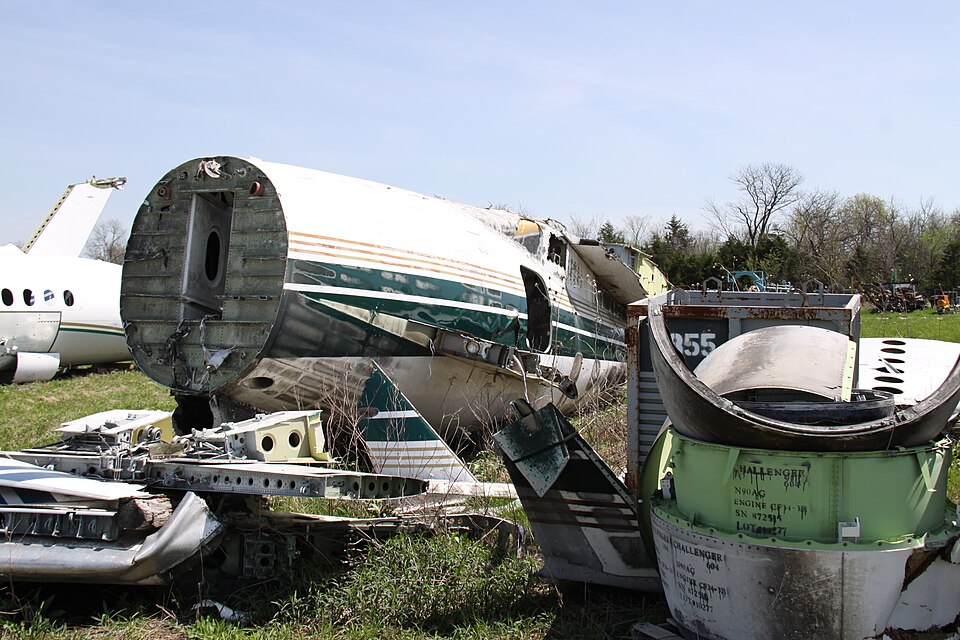
Frost contamination leads to fatal Challenger 604 crash at Birmingham

Casualties unknown • Birmingham International Airport, GB

A Bombardier CL600-2B16 Series 604 crashed during takeoff at Birmingham International Airport after frost on the wing caused an unexpected stall.

What happened

On 4 January 2002, a Bombardier CL600-2B16 Series 604, registration N90AG, was involved in a fatal accident during takeoff from Birmingham International Airport. The aircraft had been parked overnight in subzero temperatures, which allowed frost to accumulate on its lifting surfaces.

As the aircraft commenced its takeoff roll and lifted off, the left wing experienced a stall at an abnormally low angle of attack. This triggered a rapid roll to the left that the crew could not counteract, despite applying full corrective rudder and aileron inputs. The left wing tip struck the ground, causing the aircraft to crash in an inverted position. The impact resulted in fatalities and severe structural damage to the airframe, which subsequently caught fire. The accident was determined to be non-survivable.

The investigation

Investigators examined the aircraft's condition, the meteorological environment, and the crew's physiological state. The examination of the wreckage and flight data revealed that while the aircraft's weight and center of gravity were within limits, and no mechanical failures or structural collapses occurred, the presence of frost on the wing was critical.

Analysis showed that the roughness caused by the frost disrupted airflow, leading to a wing stall at an angle of attack lower than what the aircraft's stall protection system was designed to detect. Furthermore, the investigation looked into the crew's performance, noting that traces of diphenhydramine—a non-prescription sleep aid—were found in both the commander and the handling pilot. It was suggested that the combination of fatigue, jet lag, and the effects of this medication may have impaired the crew's judgment regarding the necessity of de-icing.

Findings

  • The primary cause of the accident was that the crew failed to ensure the wings were clear of frost prior to departure.
  • Frost contamination on the wing surface significantly reduced the stall angle of attack, making the stall protection system ineffective.
  • The aircraft's ice detection systems did not provide an adequate warning of the frost buildup on the wings.
  • The crew's ability to identify and rectify the contamination may have been compromised by the combined effects of fatigue and the use of non-prescription medication.
  • Existing regulatory guidance regarding 'polished frost' was found to be inappropriate and dangerous.

Probable cause

The accident was caused by the failure to remove frost from the aircraft's wings before takeoff, which led to a wing stall at an unexpectedly low angle of attack. This was compounded by the potential impairment of the crew due to fatigue and the use of sleep-aid medication.

Frequently asked questions

What happened in the 2002-01-04 Bombardier CL600-2B16 Series 604 accident near Birmingham International Airport, GB?

A Bombardier CL600-2B16 Series 604 crashed during takeoff at Birmingham International Airport after frost on the wing caused an unexpected stall.

What aircraft was involved and where did it happen?

The accident on 2002-01-04 involved a Bombardier CL600-2B16 Series 604, registration N90AG, at Birmingham International Airport, GB.

What was the probable cause of the accident?

The accident was caused by the failure to remove frost from the aircraft's wings before takeoff, which led to a wing stall at an unexpectedly low angle of attack. This was compounded by the potential impairment of the crew due to fatigue and the use of sleep-aid medication.

Loading the flight search…

What you can do on Flight Finder

  • Search flights between any two airports with live fares.
  • By aircraft — pick a plane model (e.g. Boeing 787, Airbus A350) and see every route it flies from your origin.
  • Route map — click any airport worldwide to explore its destinations, or draw a radius to find nearby airports.
  • Global aviation safety — aviation accident database, 40,000+ records since 1980, with map and rankings by aircraft and operator.
  • NTSB safety feed — recent U.S. aviation accidents and incidents from the official NTSB CAROL database, updated daily.