Accident
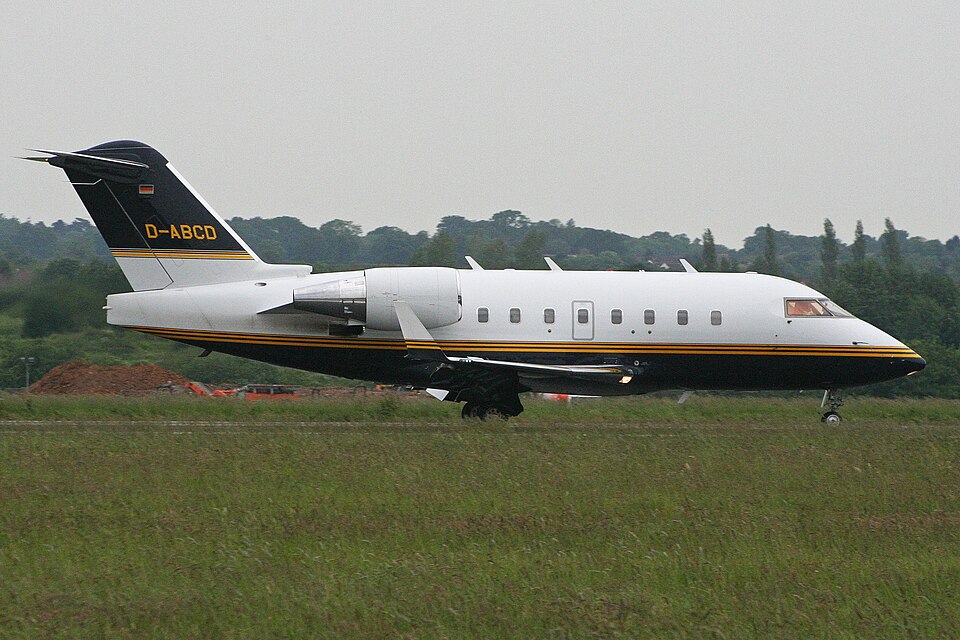
On 5 February 2006 at 1233 hrs UTC, a Bombardier Challenger 604, registration D-ABCD, overran Runway 26 at London Luton Airport during a non-scheduled commercial passenger flight. The aircraft had departed from Geneva carrying one passenger and returned to Luton. The approach was flown using the autopilot and autothrottle. At about 40 ft above the runway, engine thrust increased to 64% N1 and was not reduced before touchdown. The aircraft floated along the runway in an unusual manner, touching down approximately 800 metres before the stop end. After touchdown, spoilers deployed, reverse thrust was selected, and braking was applied, but the aircraft continued to the end of the paved surface and onto soft ground, coming to rest about 30 metres beyond the stopway. The nose and right main landing gear struck concrete lighting bases, causing damage to the landing gear and approach lights. The flight attendant and passenger were unaware of the incident until the aircraft was nearly stopped. The airport fire service responded but no rescue was needed.
Aircraft
The aircraft was a Bombardier Challenger 604, serial number 5565, built in July 2003. It was powered by two General Electric CF34-3B turbofan engines. Examination after the accident found no technical defects that could have affected the approach or landing phase. The flaps were retracted after landing, and the aircraft had been shut down normally. The flight data recorder and cockpit voice recorder were recovered and analysed.
Flight Crew
The crew consisted of two pilots and a flight attendant. The left-seat pilot, a freelance Type Rating Examiner over 60 years of age, was providing instruction. The right-seat pilot, nominated as commander and pilot flying, had 9,041 total flying hours. They had not flown together before. Both pilots stated they aimed for a smooth touchdown, which they considered important for passenger comfort. They acknowledged that on short runways, accurate touchdown placement was critical.
Investigation
The investigation found that the engine thrust remained at 64% N1 during the flare and float. The aircraft touched down 1,310 metres from the runway threshold, leaving insufficient distance to stop. No evidence of technical defects was found before the aircraft left the paved surface. Human factors were identified that may account for the accident, but no specific probable cause was stated.