Incident Overview
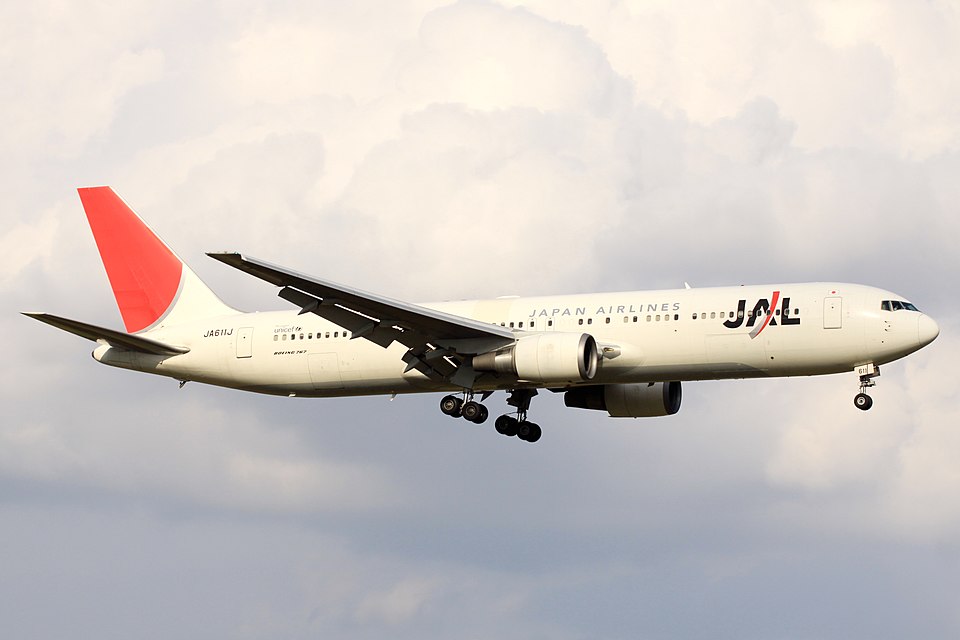
On October 27, 2007, Japan Airlines International Co., Ltd. flight JAL636, a Boeing 767-300 registered as JA611J, encountered severe turbulence while approaching Narita International Airport. The aircraft was operating a scheduled service from Hangzhou Xiaoshan International Airport, China. At approximately 17:31 JST, at an altitude of about 9,400 feet and 75 kilometers southeast of Narita, the turbulence caused one passenger to sustain serious injuries when her seatbelt came unfastened. The cabin interior sustained partial damage. There were 246 persons on board: the pilot in command, 11 other crew members, and 234 passengers.
Flight History
The flight departed Hangzhou at 14:45 JST and proceeded according to its flight plan under instrument flight rules. After holding at 29,000 feet over Miyakejima VOR/DME, as instructed by Tokyo Area Control Center, it left the holding point at around 17:13:15 and began its descent. The aircraft first encountered turbulence at approximately 22,500 feet at 17:24:16. At 17:26:30, the crew turned the heading to 060° to avoid significant weather. Continuing the descent, at 17:30:10 the aircraft turned left to a heading of 270° as directed by Narita Radar Approach Control.
At 17:30:48, while at about 10,500 feet, the aircraft entered intense turbulence. Over the next 19 seconds, vertical acceleration intermittently exceeded +1.5G, with a minimum of -0.29G, and the roll angle reached a maximum of 66.8° leftward at 17:30:53. At 17:30:58, from approximately 10,000 feet, vertical acceleration exceeded +2G and peaked at +3.34G at 17:31:01, with a minimum of -0.27G two seconds later. The intense turbulence subsided at 17:31:07 at about 9,700 feet, but the aircraft continued in lighter turbulence and landed at Narita at 17:51. During the 19-second period, the stick shaker and stick nudger activated momentarily. The autopilot and autothrottle remained engaged; the autopilot switched from FLCH to ALT HOLD mode. DFDR and QAR data recorded the aircraft’s major parameters during this interval.
Crew Statements
The pilot in command stated that the day involved a round trip between Narita and Hangzhou. A morning briefing at the company operation center indicated that a typhoon was approaching the Kanto region but would not affect the outbound flight; however, it was expected to influence the return. After arrival in Hangzhou, updated weather information from the local operation officer indicated the typhoon was predicted to move rapidly.