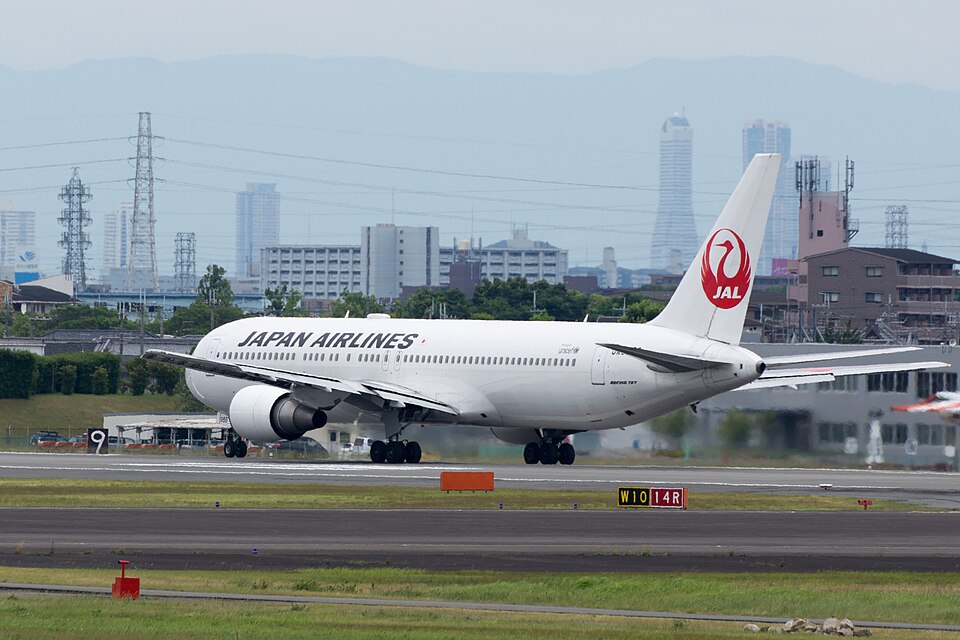
Nose Gear Damage Forces Runway Excursion at Tokyo International Airport

Casualties unknown • Tokyo International Airport, JP

A Japan Airlines International Boeing 767-300 became unable to taxi following a nose gear failure during landing at Tokyo International Airport.

What happened

On June 15, 2005, a Japan Airlines International Boeing 767-300, registered JA8986, was operating a scheduled flight from New Chitose Airport to Tokyo International Airport. As the aircraft approached Runway 34L, the flight crew was managing a landing sequence with a north-northeast wind.

During the final stages of the approach, flight data indicates significant fluctuations in the control column and lateral movement of the control wheel. Upon touchdown, the aircraft experienced a heavy vertical impact. Shortly after the main landing gear made contact, the nose gear struck the runway with excessive force. This impact caused the left tire to burst and the nose gear assembly to sustain structural damage, including a bent axle. The damage was severe enough that the aircraft was unable to taxi under its own power, resulting in a runway excursion where the aircraft came to a stop approximately 1,585 meters from the threshold. While 17 passengers sustained minor injuries, there were no fatalities among the 222 people on board.

The investigation

The Japan Transport Safety Board (JTSB) conducted a detailed examination of the aircraft's flight recorders, including the digital flight data recorder (DFDR) and cockpit voice recorder (CVR). Investigators performed a teardown inspection of the nose gear, which revealed a bent axle and destroyed wheel components. The investigation also included a thorough analysis of the runway surface, where debris from the wheels and tires was recovered, and a study of the tire's structural integrity. Flight simulators were utilized to research the specific movement characteristics of the Boeing 767-300 during landing sequences to understand how the aircraft's pitch and roll responded to the impact.

Probable cause

The aircraft experienced a heavy touchdown where the nose gear struck the runway before the aircraft's weight had been fully transferred to the main landing gear. This was primarily caused by **excessive forward operation of the control column**, which placed an unsustainable load on the nose gear assembly.

All Boeing 767-300 accidents →

Frequently asked questions

What happened in the 2005-06-15 Boeing 767-300 accident near Tokyo International Airport, JP?

A Japan Airlines International Boeing 767-300 became unable to taxi following a nose gear failure during landing at Tokyo International Airport.

What aircraft was involved and where did it happen?

The accident on 2005-06-15 involved a Boeing 767-300, registration JA8986, operated by Japan Airlines International, at Tokyo International Airport, JP.

What was the probable cause of the accident?

The aircraft experienced a heavy touchdown where the nose gear struck the runway before the aircraft's weight had been fully transferred to the main landing gear. This was primarily caused by **excessive forward operation of the control column**, which placed an unsustainable load on the nose gear assembly.

Investigation report by the Japan Transport Safety Board (JTSB). Original record: https://jtsb.mlit.go.jp/eng-air_report/JA8986.pdf. This page is a structured re-presentation; facts and quotes are in the Japan Transport Safety Board (JTSB) - Ministry of Land, Infrastructure, Transport and Tourism.

Loading the flight search…