Summary
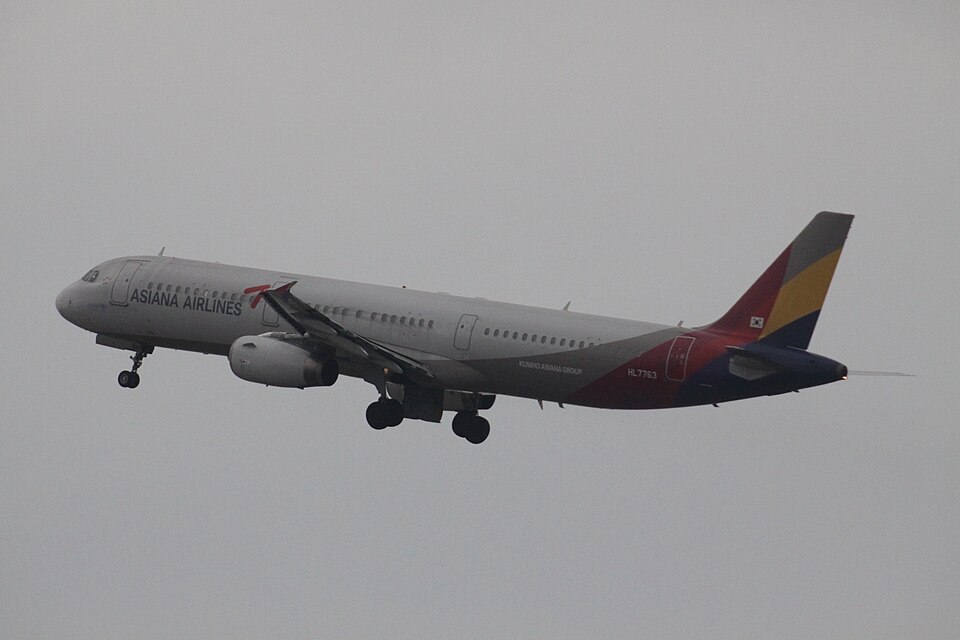
On October 28, 2009, at about 10:08 Japan Standard Time, an Airbus A321-200 registered HL7763, operated by Asiana Airlines Inc. as non-scheduled Flight 1125, struck its aft fuselage on the runway during landing at Kansai International Airport. The aircraft was on a flight from Gimpo International Airport in the Republic of Korea. There were 147 persons on board, including the captain, eight other crewmembers, and 138 passengers. No injuries occurred, and no fire broke out. The aircraft sustained substantial damage.
Flight History
The flight departed Gimpo International Airport at approximately 08:51 with an instrument flight rules plan. The captain served as the pilot not flying (PNF) and the first officer as the pilot flying (PF). The approach to runway 06L was normal until about 30 feet radio altitude. According to DFDR data, at 1,000 feet the autopilot was disengaged and auto thrust set to speed maintaining mode at 137 knots. At 100 feet, the descent rate was 736 feet per minute with a pitch angle of 2.1 degrees, which then decreased. At 33 feet, the first officer began nose-up sidestick input. The main landing gears touched down at 10:07:56, and the spoilers extended. The pitch angle increased to 4.6 degrees and continued rising. At 10:07:58, the pitch angle reached 10.2 degrees, and radio altitude showed -4 feet. At 10:08:02, the pitch angle peaked at 10.5 degrees. The aircraft then became airborne again; the crew initiated a go-around by moving thrust levers to TOGA and retracting the landing gear. The captain reported the go-around to air traffic control at 10:08:10. After re-establishing approach, the aircraft landed normally on runway 06L at about 10:18.
Crew Statements
The captain stated that the first officer's flare was delayed and insufficient, resulting in a hard landing and a single bounce. The captain noted that the tailstrike angle for the aircraft is 9 degrees with compressed main landing gear struts and 11 degrees with extended struts. He believed the first touchdown occurred between 1,000 and 1,500 feet from the runway threshold, but tailstrike marks suggested a point closer to the threshold. The captain did not call attention to the delayed flare, which he considered his only mistake. The first officer reported that he felt a faster sink rate than usual and believed his flare input was late and insufficient. After the hard touchdown and bounce, he decided to go around to avoid a potentially harder second impact.
Damage
The aircraft sustained substantial damage to the aft fuselage structure, but no fire occurred. The extent of damage is not further detailed in the report.
Probable Cause
The investigation report does not state a probable cause.