Summary
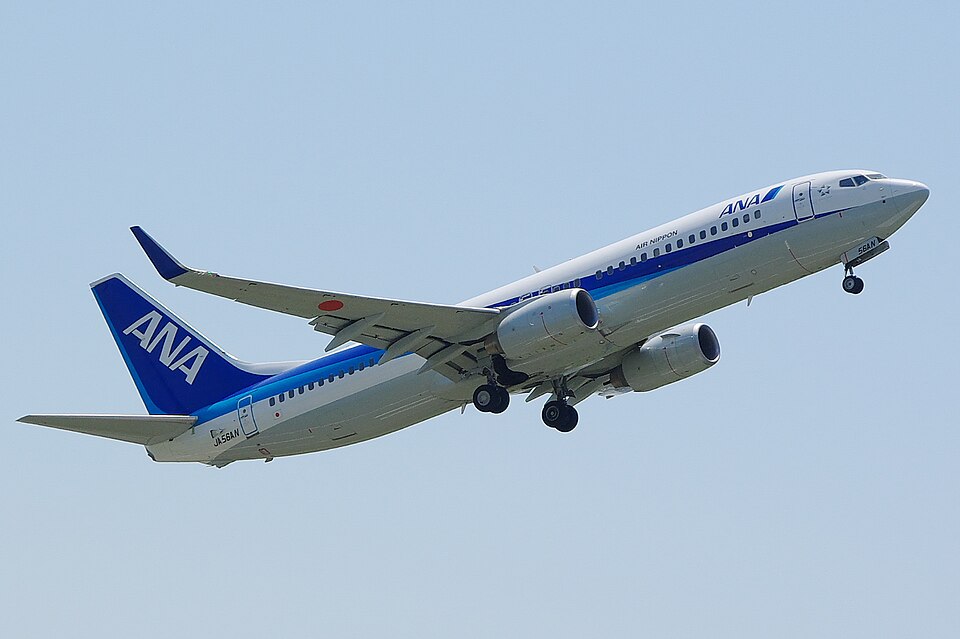
On August 10, 2009, at around 20:23 Japan Standard Time, a Boeing 737-800 (registration JA56AN) operated by Air Nippon Co., Ltd. as All Nippon Airways flight 298, a regularly scheduled service under a joint transportation agreement, struck the tail on runway 22 at Tokyo International Airport during landing. The aircraft was substantially damaged, but no fire broke out. None of the 153 persons on board—the pilot in command, five crew members, and 147 passengers—were injured.
Flight History
The aircraft departed Tottori Airport at 19:12 and was cleared for a non-precision approach to runway 22. The pilot in command (PNF) occupied the left seat, and the first officer (PF) the right seat. According to DFDR and CVR data, the autopilot and autothrottle were disengaged at approximately 20:21:41. At 20:22:07, the aircraft descended through 500 ft at about 140 kt. Between 20:22:45 and 20:22:49, automatic callouts of altitudes from 50 ft to 10 ft were recorded. The main wheels touched down around 20:22:50 with a pitch angle of about +6° and a descent rate of about 100 fpm, followed by a bounce. During the bounce, the control column moved from push to pull, and the pitch angle fluctuated. A second touchdown occurred around 20:22:53 with a vertical force of about 2.4G, and the pitch angle increased, exceeding +9° by 20:22:55. The nose gear touched down at approximately 20:22:58. Scratch marks on the runway extended about 67 m from a point 618 m from the threshold.
Crew Statements
The PIC stated that he set flaps to 30 at about 1,000 ft and noted a brief deviation below the glide path at 300 ft. He reported that the aircraft bounced after the first touchdown and then touched down again with shock. He said he had placed his hands and feet near the controls to intervene if needed but did not take control. The FO stated that he deactivated the autopilot and autothrottle after visual contact with the runway, added power to correct a low glide path, and flared upon hearing "Thirty." He felt the duration between "Fifty" and "Forty" was shorter than usual, so he reduced the descent rate. After touchdown, the aircraft bounced; he held the control column in position and waited for the second touchdown.
A cabin attendant seated in the right aft cabin heard a grinding sound after the second touchdown, different from engine reverse noise.
Damage
The aircraft's lower skin panel, lower frames and stringers of the aft fuselage, and the tail skid assembly were damaged. Scratch marks were found on the runway surface.
Injuries
No injuries were reported.