Incident Overview
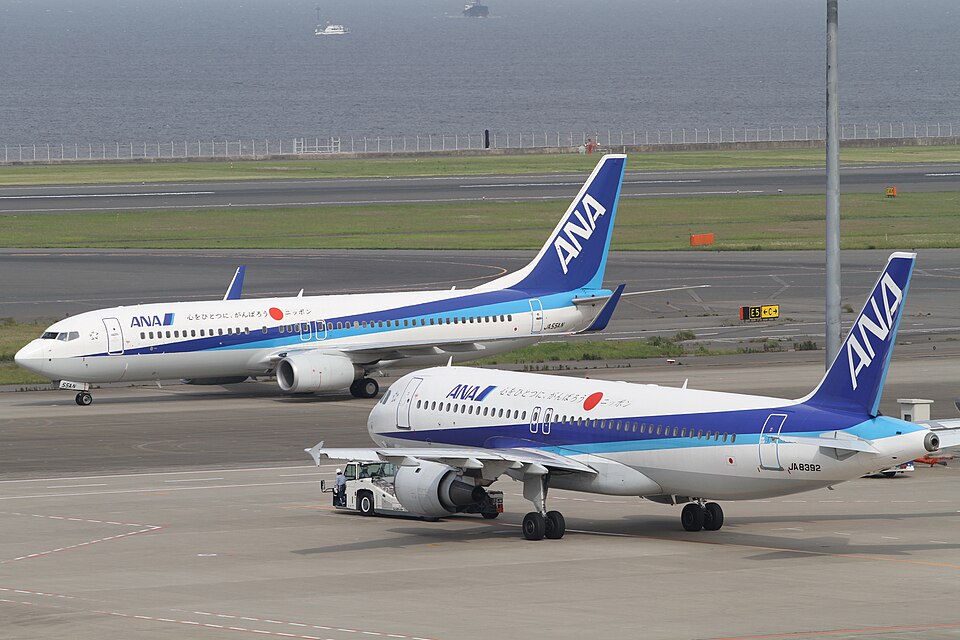
On October 26, 2010, a Boeing 737-800, registered JA55AN, operated by Air Nippon Co., Ltd., was conducting scheduled flight 325 of All Nippon Airways Co., Ltd. from Chubu Centrair International Airport to Asahikawa Airport. The aircraft took off at 12:21 JST with 57 persons on board, including two pilots, five other crewmembers, and 51 passengers. No injuries were reported.
Flight History
According to the investigation by the Japan Transport Safety Board (JTSB), the flight proceeded under instrument flight rules. Around 13:20, the aircraft began descent from FL 370 approximately 100 nm from Asahikawa. At 13:25, Sapporo Air Traffic Control Center instructed descent to 11,000 ft. At 13:27, the aircraft was instructed to hold over Asahikawa VOR/DME (AWE) with an expected approach time of 13:37.
At 13:33, as the aircraft descended through about 13,800 ft, ATC directed a descent to 9,000 ft and advised vectoring for approach. A right turn to heading 090° was instructed at 13:33:42. The aircraft crossed AWE at about 12,500 ft around 13:34 and continued descending on heading 090°.
Warning and Emergency Maneuver
At 13:35:55, ATC cleared the aircraft to descend to 5,000 ft. By 13:36:20, the aircraft was at about 9,200 ft, below the Minimum Vectoring Altitude (MVA) of 10,000 ft for the area. At 13:37:01, while descending through about 7,700 ft approximately 13 nm east of Asahikawa Airport, the flight crew requested a right turn to return to the airport. ATC instructed a heading of 200° at 13:37:06, and the right turn began at 13:37:14.
At 13:37:22, the Enhanced Ground Proximity Warning System (EGPWS) issued a "CAUTION TERRAIN" alert. At 13:37:32, a "TERRAIN" warning sounded, and at 13:37:34, a "PULL UP" warning was issued. The radio altitude at that time was about 3,200 ft. The autopilot and auto throttle were disengaged, the control column was pulled, and the throttle levers were advanced. The aircraft stopped descending and began to climb.
The EGPWS "PULL UP" warning stopped at 13:37:46, when the radio altitude was about 2,200 ft. At 13:38:02–03, another "TERRAIN" warning occurred, followed by a second "PULL UP" warning at 13:38:04. The aircraft came closest to the peak of Mt. Pippu (elevation 7,208 ft) at 13:38:05, with a radio altitude of 713 ft (about 217 m) per DFDR or 654.5 ft (about 200 m) per EGPWS. The "PULL UP" warning ceased at 13:38:07. The aircraft then continued to a normal landing at Asahikawa Airport at 14:05.
Investigation
The JTSB conducted interviews and a simulator reproduction. The report notes that the crew had set the navigation display range to 20 nm (PIC) and 40 nm (FO) before the warning; the FO later changed to 20 nm. The speed brake was deployed during descent and retracted after the first warning. No probable cause was stated in the report.