History of the Flight
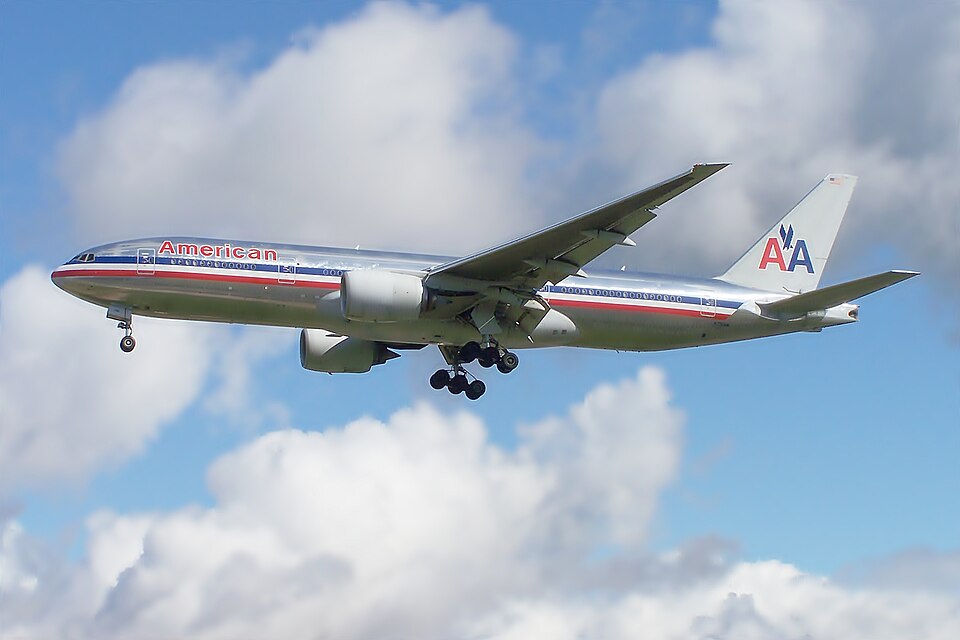
On December 16, 2014, at 09:15 UTC, a Boeing 777-200, registered N751AN, operated by American Airlines, Inc., as scheduled Flight 280, departed from Incheon International Airport bound for Dallas Fort Worth International Airport. The aircraft carried 255 persons: the pilot in command (PIC), 14 other crewmembers, and 240 passengers. The PIC occupied the left seat as the pilot not flying, and the first officer (FO) occupied the right seat as the pilot flying.
Before departure, a dispatcher in the U.S. prepared a flight plan and weather information, which the PIC reviewed with the FO and relief crew. The weather information included forecasts of turbulence over Japan. The PIC did not issue specific instructions to cabin attendants regarding in-flight service, expecting stable conditions.
After takeoff, the aircraft reached its initial cruising altitude of 27,000 ft. The PIC made a public address announcement regarding weather and turned off the seatbelt signs. Cabin attendants began meal service. Later, the PIC observed thrust lever movement via autothrottle, a premonitory sign of turbulence, and turned on the seatbelt signs. At that time, the cockpit was dark with occasional thin clouds, and the airborne radar showed no clouds expected to cause significant shaking. No actual shaking occurred initially, so the PIC did not make further announcements. In the cabin, attendants checked seatbelt compliance but continued service.
One passenger had left their seat and entered a lavatory after the seatbelt sign was illuminated. Cabin attendants did not urge the passenger to return due to the busy service.
Encounter with Severe Turbulence
At approximately 10:35 UTC, the first major shaking occurred. The PIC announced over the public address system for all to take seats and fasten seatbelts. The airborne radar still showed no clouds indicating severe turbulence. The passenger remained in the lavatory on the advice of a cabin attendant. Attendants secured service carts and took seats.
The PIC requested and received clearance from air traffic control to climb to a higher altitude to avoid turbulence. During the climb, a second major shaking occurred. The passenger in the lavatory and a cabin attendant in an aisle were seriously injured when they were thrown against the ceiling. The aircraft experienced vertical accelerations ranging from +1.8G to -0.88G.
Despite continuing altitude changes, severe shaking persisted for approximately 20 minutes after the second event. About one hour after the first shaking, the aircraft stabilized at 35,000 ft.
Injuries
One passenger and one cabin attendant sustained serious injuries. Additionally, eight passengers and two cabin attendants suffered minor injuries.
Damage
No damage to the aircraft was reported.
Meteorological Information
Weather information for the flight was provided by a contracted company, not the Japan Meteorological Agency (JMA). The PIC did not anticipate turbulence along the planned route based on the provided forecasts. The PIC did not access JMA's FBJP forecasts or three SIGMETs that indicated turbulence along the flight path.
Ground weather radar observations at the time of the first and second shakings showed weak rainfall intensity and cloud tops reaching altitudes near the aircraft's flight profile.
Flight Termination
After the turbulence subsided, relief crew and cabin attendants assessed the cabin condition. The PIC, considering the injuries, cabin state, and potential airframe concerns, decided to divert. At 12:09 UTC, the crew notified air traffic control of a destination change to Narita International Airport. The aircraft landed at Narita at 15:55 UTC with priority handling.