Background
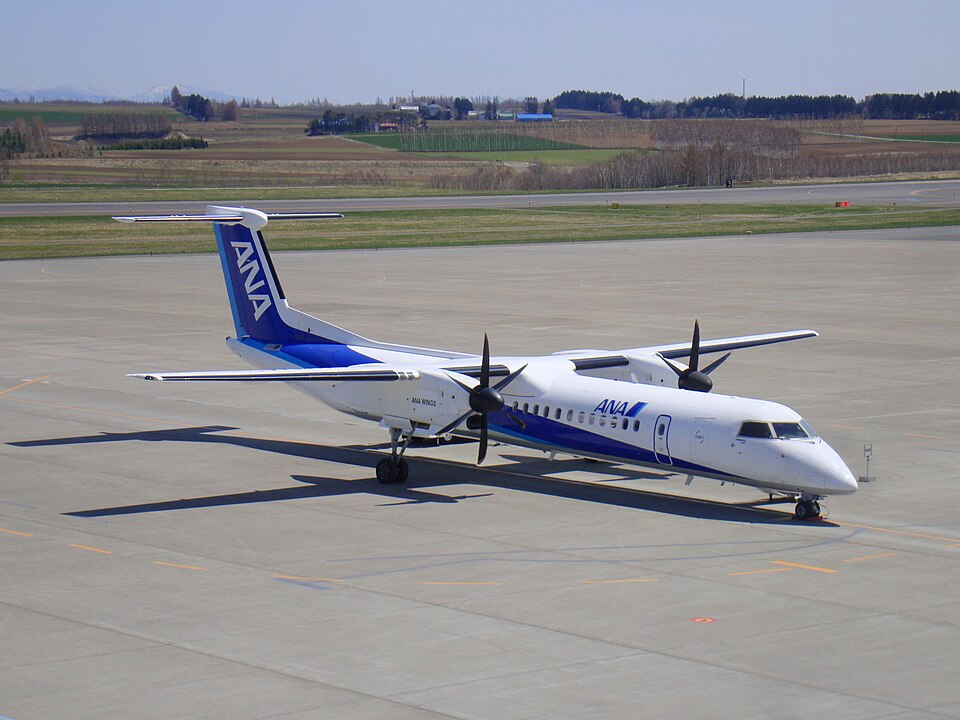
On June 25, 2022, a Bombardier DHC-8-402, registration JA854A, operated by ANA Wings Co., Ltd., was conducting scheduled flight 1626 from Kumamoto Airport to Osaka International Airport. The aircraft carried 74 occupants: a pilot in command, three other crewmembers, and 70 passengers.
Flight History
The aircraft took off at 12:51 Japan Standard Time. During climb, rain clouds and unfavorable air currents were present, and the fasten seat belt sign was initially on. At 13:04, the pilot in command turned off the belt sign after reaching FL 230, judging that no significant turbulence would occur. However, light turbulence persisted, and cabin crew members decided to limit in-flight service to distributing plastic water bottles. After finishing service, all cabin crew members took their attendant seats.
At 13:19, the aircraft was instructed to descend to FL 170. Approaching that level, echoes appeared on weather radar, so the belt sign was turned on again at 13:24. The aircraft then passed through an echo area, and the belt sign was turned off at 13:27. The cabin crew members began a round check; the L2 cabin crew member went to the aft galley to retrieve water.
Incident Details
While flying toward KAINA with heading 088°, the flight crew observed small echoes left of the flight path. To avoid them, they requested and received clearance to change heading to 100°, then 120°. During the heading change, about 3 to 5 nautical miles from the echoes, the aircraft suddenly encountered a strong vertical tremor. The autopilot disengaged, altitude rose to FL 174, and speed increased to 273 knots. The pilot reduced power and took manual control.
In the cabin, the L2 had just opened the aft galley door and was squatting to retrieve water bottles when the tremor occurred. The L2's feet left the floor, and the L2 fell sideways, landing on the floor from the lower back. The other cabin crew member (CIC) squatted and held onto passenger seat armrests during the shaking.
Aftermath
The first officer turned on the belt sign at 13:29. The CIC made an announcement instructing passengers to fasten seat belts. The L2, after falling, lay in the galley, then managed to get up by using the bulkhead for support and grabbed a seat armrest. The CIC crawled back to the attendant seat. The aircraft stabilized at heading 120° and FL 170 by 13:29:45. The flight crew reported moderate turbulence to air traffic control. When asked, the L2 reported pain in the lower back. The flight continued to Osaka International Airport.