Incident Overview
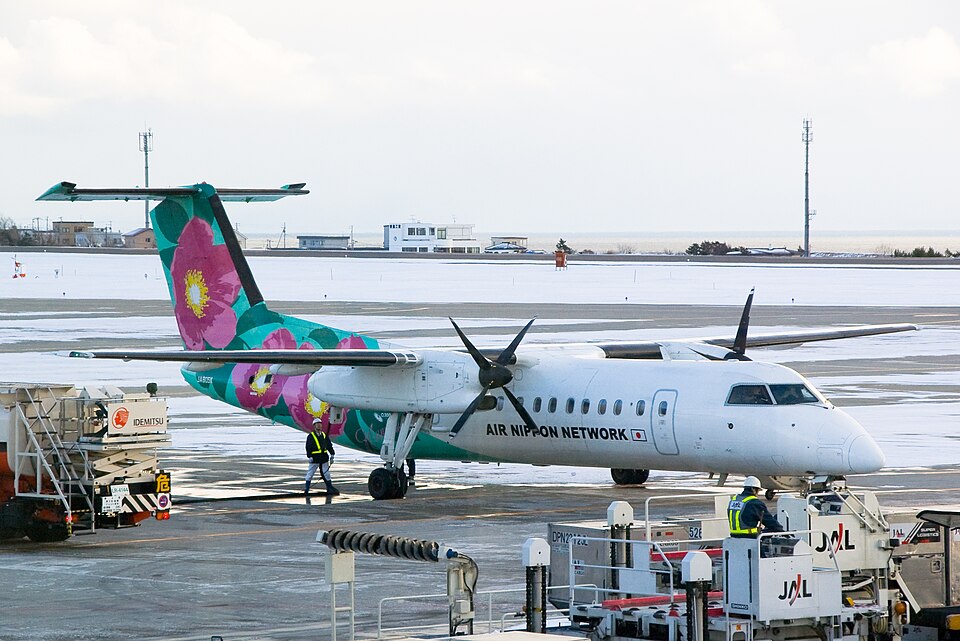
On June 27, 2011, a Bombardier DHC-8-314, registered JA805K, operated by ANA WINGS CO., LTD., was conducting scheduled flight 1613 of ALL NIPPON AIRWAYS CO., LTD. The aircraft took off from Osaka International Airport at 16:46 local time. During climb through 6,700 feet, at approximately 16:50, a loud noise was heard from the No. 1 engine. The inter-turbine temperature exceeded the limit of 950 °C and engine power decreased. The flight crew shut down the engine and decided to turn back. After declaring an emergency, the aircraft held near SHINODA VOR/DME before making an uneventful landing at Osaka International Airport at 17:18. On board were 34 persons: the pilot in command, three crewmembers, and 30 passengers. No injuries occurred.
Aircraft and Engine Details
The aircraft was a Bombardier DHC-8-314, serial number 592, manufactured in December 2002. It had accumulated 13,631 flight hours and 20,242 cycles. The No. 1 engine was a Pratt & Whitney Canada PW123B, serial number PCEAR0036, with 13,076 flight hours and 19,818 cycles since manufacture. The combustion chamber outer liner and high-pressure turbine blades had been replaced with overhauled or new parts 3,415 hours and 4,820 cycles prior to the incident.
Investigation Findings
A teardown inspection of the engine was conducted with the cooperation of the Transportation Safety Board of Canada. The inspection revealed fatigue cracks in both circumferential and axial directions on the cooling ring attached to the combustion chamber outer liner. A missing section approximately 63 by 13 millimeters was confirmed, resulting from crack propagation. Downstream damage included partial fracture of the high-pressure turbine vanes, total fracture of all high-pressure turbine blades, broken low-pressure turbine vanes and blades, and broken power turbine vanes and blades. Impact marks were found on the remaining sections of the blades, indicating impact damage from fractured pieces. Fuel nozzle functionality was found normal.
Probable Cause
The Japan Transport Safety Board determined that the probable cause of this serious incident was that, during the airplane's after-takeoff climb, a section of the cooling ring in the combustion chamber of the engine fractured due to the progress of fatigue cracks. The fractured piece then traveled downstream, damaging the fast-rotating turbine blades and other components, resulting in circumferential turbine blade damage on several downstream turbine stages.