Incident Overview
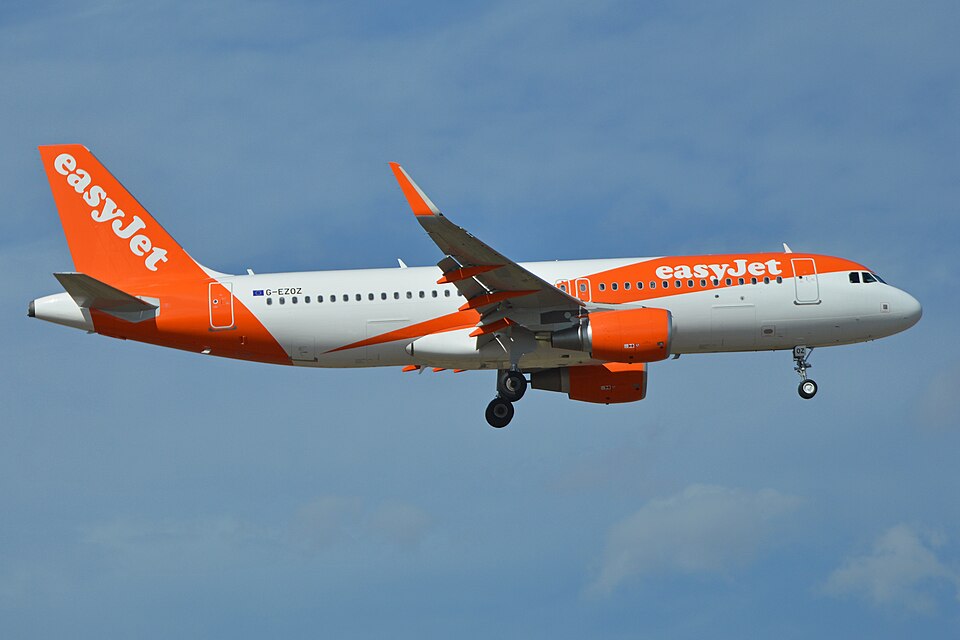
On 24 June 2018, an Airbus A320-214 (registration G-EZOZ) operated a commercial passenger flight from Liverpool John Lennon Airport to Paris Charles de Gaulle. The aircraft took off from Runway 27 with the co-pilot as the pilot flying. After lift-off, when the co-pilot called for "gear up", the commander reached for the landing gear lever but inadvertently placed her hand on the flap lever and selected flap 0 instead. She immediately realized the error and returned the flap lever to the flap 1 position. However, because the aircraft's flap logic had already begun retracting the flaps, they continued to retract while the slats re-extended.
Crew Response
Both pilots focused on flying the aircraft. They reduced the pitch attitude to accelerate, maintained a positive rate of climb, and then retracted the landing gear. They considered using TOGA thrust but decided it was unnecessary. The airspeed remained above VLS throughout the incident. Once stabilized, the autopilot was engaged and the slats were retracted. The flight continued without further incident. Neither pilot could identify any reason for the slip; they were not aware of distractions and did not report fatigue.
Recorded Data
The flight data recorder and cockpit voice recorder were not downloaded. Quick Access Recorder data showed that at 181 ft radar altitude and 162 kt, the flap and slat angles began to reduce. The slat angle decreased slightly from 18° to 17.2° then returned to 18°, while the flaps fully retracted to 0°. No flap lever movement was recorded (the lever position is sampled every two seconds, so the movement likely occurred within that interval). The landing gear was selected up at 330 ft radalt. The pitch angle was reduced to 10° at 600 ft radalt, and speed increased to 185 kt at 800 ft radalt, after which pitch increased to 15°. At 1,350 ft radalt, thrust was retarded to climb power and pitch reduced to 10°. Flap 0 was selected at 1,650 ft as speed passed 200 kt. By 2,000 ft radalt, the slats had fully retracted.
Aircraft Information
The flap system logic on the A320 is such that when the flap lever is moved from Config 1+F to 0 after takeoff, flaps and slats retract simultaneously if airspeed exceeds 148 kt. If the lever is moved from 0 back to 1 above 100 kt, the system commands Config 1 (slats extend, but flaps do not re-extend). Thus, in this incident, after the lever was moved to 0 and back to 1, the flaps continued to retract while the slats re-extended.
Operator Actions and Review
The operator had previously modified its standard operating procedures for flap and gear selection following similar incidents. The modified SOPs introduced a pause before moving the lever to allow the pilot monitoring to cognitively confirm the correct lever and allow the pilot flying to intervene if necessary. Following this incident, the operator reviewed its safety actions: training on low-energy handling, active monitoring training, amended SOPs for lever selection, distraction management training, and awareness articles. The operator's report classified the event as a "selection error", an action slip related to motor memory, and stated that fatigue was not a contributing factor. The report noted that the crew rapidly recognized the mis-selection and responded in accordance with upset recovery training.
Previous Similar Events
The AAIB had reported four similar flap mis-selection incidents in previous bulletins (G-EZEW and G-EZWM in 9/2017, and G-EZFA and G-EZTZ in 8/2016).
Investigation Outcome
The investigation was unable to determine why the inadvertent selection occurred.