Summary
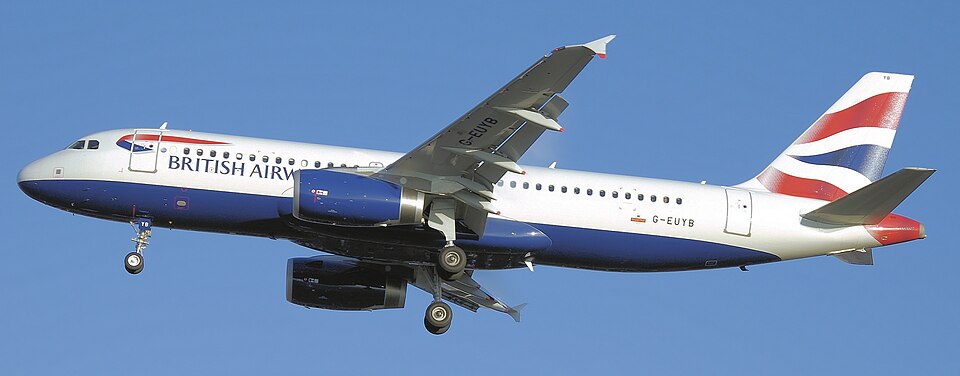
On 23 September 2019, an Airbus A320-232, registration G-EUYB, was on approach to London Heathrow Airport when the flight crew detected strong acrid fumes on the flight deck. Both pilots donned oxygen masks and continued to land at Heathrow. After shutting down on a taxiway and removing their masks, the co-pilot became incapacitated and the commander felt unwell. Both pilots were taken to hospital and released later that day. Investigations did not identify the source of the fumes.
History of the Flight
The incident crew operated three flights on the day prior to the incident using a different aircraft, including sectors from Heathrow to Paris Charles de Gaulle and from Heathrow to Zurich. They spent the night in Zurich. Both pilots had previously been involved in separate fume events on the same aircraft type and discussed these events during the evening.
G-EUYB was flown to Zurich by a different crew on the previous day, landing at 2043 hrs. The aircraft had no deferred defects. It rained overnight with a temperature of approximately 13°C.
The incident crew reported for the return sector at 0345 hrs for a scheduled departure at 0510 hrs, both well rested. Initial departure from Zurich was uneventful. Shortly after passing FL100, the flight crew detected a slight odour on the flight deck, described as a 'sweaty socks' smell. The smell dissipated after about 30 seconds, and the crew agreed to continue the flight.
The flight crew discussed actions in case the smell returned and reviewed the SMOKE / FUMES / AVNCS SMOKE checklist. The co-pilot was to fly the descent and approach for the commander's landing.
Initial descent into Heathrow was uneventful. As the aircraft intercepted the localiser for an ILS approach to Runway 27L at approximately 4,000 ft, both flight crew detected a sudden, very strong smell, described by the commander as a 'manure smell' and by the co-pilot as a 'strong sweaty socks' smell. There was no smoke or obvious source. The commander took control, instructed the co-pilot to don his oxygen mask, then donned his own mask.
The commander made a PAN call to Heathrow Tower requesting priority landing. The flight crew selected landing gear and flap, decelerated to final approach speed, and continued the approach. The aircraft landed at 0644 hrs, vacated the runway onto Taxiway A, and stopped.
After stopping, the co-pilot briefly removed his mask to confirm fumes were still present. Both engines were shut down, and the APU was started. The co-pilot became nauseous and vomited out the flight deck window. The commander requested steps to deplane passengers and for medical assistance. The fire service brought steps, but positioning took time due to limited space. The aircraft door opened at approximately 0706 hrs. Fire crews and paramedics entered but did not detect any unusual smells. The co-pilot and commander were taken to hospital and released later that day. No passengers or cabin crew reported ill effects.
Recorded Information
Analysis of the FDR, CVR, and Digital ACMS recorder did not identify any anomalous operation of the engine pneumatic bleed or air conditioning system during the incident flight.
Weight and Balance
The aircraft departed Zurich with 7,000 kg of fuel and a takeoff weight of 65,300 kg. Landing weight at Heathrow was approximately 62,000 kg. No dangerous goods were loaded.
Flight Crew
Both flight crew had previously been involved in separate fume events. The commander experienced a similar fume event on 21 December 2018 during a flight from Heathrow to Geneva and required hospital treatment after landing. The co-pilot was involved in a serious incident during landing at Valencia Airport on 5 August 2019, investigated by the Spanish State Investigation Authority.
Aircraft Information
The Airbus A320-232 is a twin-engine narrow-body passenger aircraft. The aircraft is fitted with a fully automatic Environmental Control System (ECS) that separates the fuselage into three independently controlled zones: flight deck, forward cabin, and aft cabin.
Investigation
The AAIB and the operator conducted investigations but did not identify the source of the fumes. The report reviews five other similar events with the same operator and aircraft type. Common features were identified, but the cause of these events could not be determined. The operator and aircraft manufacturer have taken action, including developing detailed maintenance procedures, changes to flight crew operating procedures, and evaluating modifications to enhance cabin air recirculation filtration systems.