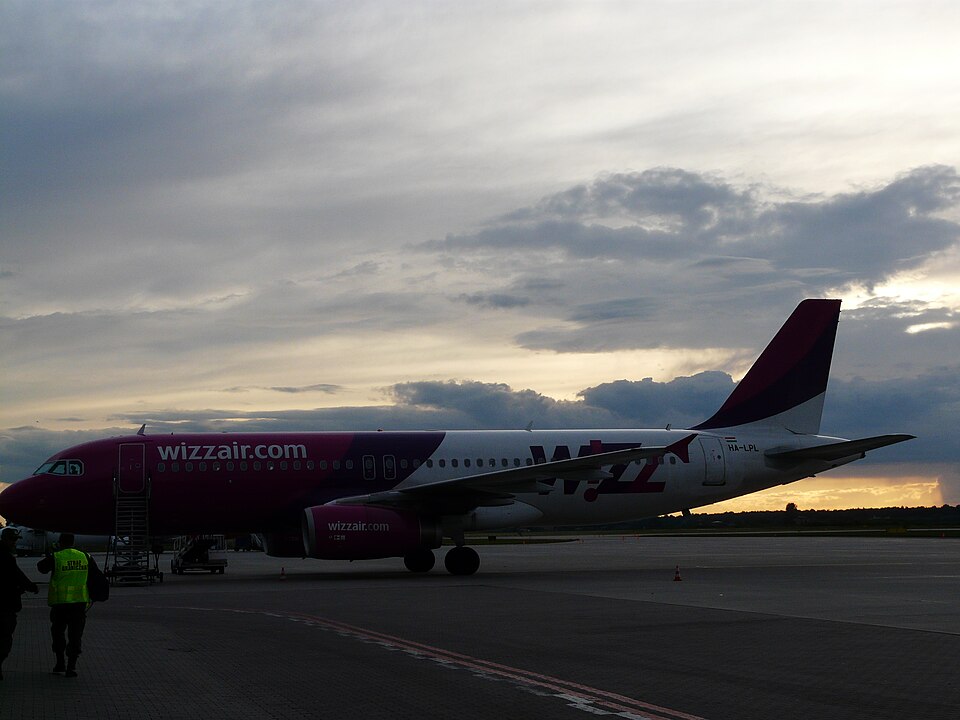
Incident Overview
On 23 March 2019 at 2110 UTC, an Airbus A320-232 (registration HA-LPL) was being pushed back from Stand 2 at Bristol Airport when a major shake was detected from the nose landing gear. Subsequent inspection revealed damage to the torque link lock plate and nut on the nose landing gear. The aircraft was taken out of service, and the scheduled flight was cancelled. No injuries were reported among the 6 crew and 159 passengers.
Sequence of Events
The aircraft had been cleared for pushback, and the nosewheel steering bypass pin was installed. A TLD 200MT towbarless tug was aligned with the aircraft's nose landing gear main forging. The tug was operated by a driver undergoing his first pushback with this model, supervised by a trainer seated in the cab.
As the tug moved forward using its laser guidance system and joystick, the paddles began to close around the nosewheels. The trainer observed movement of the nose gear followed by a bang. The driver immediately stopped, applied brakes, and both exited to investigate. They found that the left-side paddle had contacted and damaged the nut on the torque link centre pivot, with a significant witness mark remaining on the paddle. The aircraft commander and maintenance company were informed.
Investigation and Findings
The handling company conducted a detailed investigation. The damage resulted from the tug paddle first contacting the edge of the torque link nut, then further hydraulic closure causing the nut edge to fail and the paddle to slip past with a jolt.
Several factors undermined correct pickup of the nosewheels. The aircraft had been parked with its nosewheels 10° to 15° off centre, which is unremarkable in most circumstances but became critical here. The tug's laser guidance system had been aligned with the nose gear leg rather than the nosewheels. The handling company's training department confirmed that for this tug model, alignment must be with the nosewheels, not the leg.
The tug's automated positioning system requires selection of an aircraft type; if the correct type is chosen but alignment is to the nose leg rather than wheel position, the system cannot detect the wheel offset and does not prevent paddle closure.
The driver was fully trained in pushback procedures with several years' experience on conventional towbar tugs, and had prior training on the TLD 100E towbarless tug. The trainer was qualified for towbarless pushback tugs. It was unclear why the error occurred, but a momentary lapse in concentration leading to alignment with the nose leg was considered possible, and the 10°–15° wheel offset likely prevented the misalignment from being noticed.
Safety Actions
The handling company identified that aligning with nosewheels is vital; lining up on the nose gear leg can cause misalignments up to 250 mm and potential damage on this and many aircraft types. Four safety actions were taken:
- Towbarless tug training was reviewed to confirm correct procedures, with emphasis on always aligning with the nosewheels.
- Pushback crews were briefed to be more aware of nosewheel position and to request that pilots keep nosewheels straight when possible.
- The handling company is consulting with the tug manufacturer to develop a system that warns of wheel misalignment.
- The A320 was identified as particularly susceptible; when possible, the handling company will use a conventional towbar and tug or the TLD 100E towbarless tug for A320 series aircraft.