Background
London Stansted Airport (STN) had initiated runway repairs near the eastern threshold of Runway 22, requiring a displaced threshold for night operations. The works rendered the ILS unavailable, and a revised RNAV approach (RNAV22C) with a steeper 3.5° glidepath was promulgated for use during reduced runway length operations.
History of the Flight
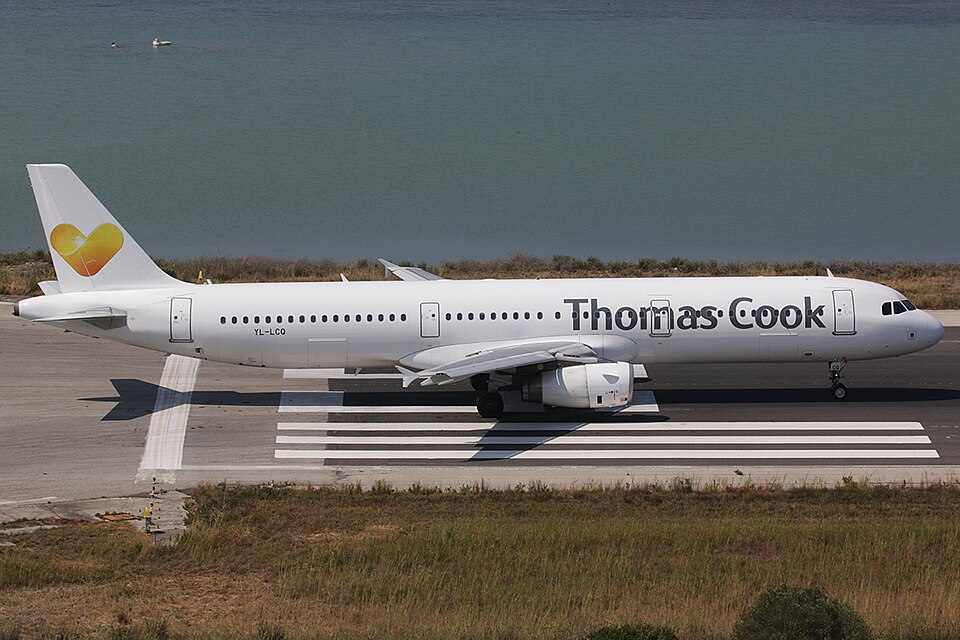
On the evening of 22 July 2019, YL-LCQ was the first aircraft to approach after the displaced threshold was established. The pilots did not realize that they needed to fly the RNAV22C procedure and instead flew the standard RNAV22 approach, which targets a 3.0° glidepath and a threshold crossing height of 49 ft at the normal threshold. The ATC tower controller observed the aircraft appeared slightly lower than expected and issued landing clearance with a caution about the displaced threshold and reduced landing distance, instructing the pilots not to fly below PAPI indications. The crew misinterpreted this as “do not follow the PAPIs.” Radar data confirmed that YL-LCQ was consistently lower than subsequent aircraft that correctly flew the RNAV22C procedure. The aircraft overflew the works area and touched down near the displaced threshold. The crew reported no obstructions and noticed nothing untoward.
Airfield Information
UK AIP Supplement 24/2019 detailed the works and the displaced maintenance threshold (THR 22C). The works were scheduled for two blocks of four consecutive nights between 21 July and 1 August, with runway closures from 2300 hrs for lighting changes. Temporary PAPIs set for a 3.5° approach angle were deployed. The RNAV22C procedure began at waypoint UPGIR, whereas the standard RNAV22 began at TOTVO, and had a 3.5° final approach angle with a 50 ft threshold crossing height over THR 22C.
Recorded Information
ATC radar transcript shows that YL-LCQ was initially instructed to hold at ABBOT during the runway closure. ATC provided another aircraft with runway opening time and reduced operations details, then confirmed with YL-LCQ that they had copied the information. The crew acknowledged “rnav approach rw22c” but later queried “just confirm rnav approach rw22.” ATC reiterated “vectors for rnav approach rw22c displaced threshold.” When cleared direct to UPGIR, the crew did not query the routing and replied with a clearance readback that included “rnav approach rw22c,” though they had not planned for UPGIR. The crew’s thick accent may have contributed to unclear transmissions.
Flight Documentation
The pilots’ flight pack contained two NOTAMs about the works, but they did not have access to the referenced SUP 024/2019. Their electronic flight bags included a temporary airfield chart for reduced runway operations, but that chart incorrectly stated that works occurred on “Sunday and Wednesday night” rather than Sunday through Thursday. The chart manufacturer later identified the data transposition error.
Human Factors
The pilots reviewed the NOTAMs and charts, leading them to believe the works were not active on Monday night. Despite ATC repeatedly referring to RNAV22C and the displaced threshold, the crew did not recognize the need for the revised approach. The investigation noted confirmation bias: the crew expected a standard RNAV arrival and did not perceive cues for the alternative procedure. The terminal controller may also have been influenced by confirmation bias when not challenging incomplete readbacks.
Analysis
The radar data and witness testimony confirmed that YL-LCQ was lower than expected over the works area. The error in the temporary airfield chart misled the pilots into thinking the works were inactive. Consequently, they planned for and flew the standard RNAV22 approach instead of RNAV22C. Neither the holding during the closure nor ATC’s repeated references triggered a realisation that the works were taking place. The crew exhibited confirmation bias. The tower controller’s warning not to fly below PAPI indications was given because the aircraft was low, but the pilots were unaware of their low position.